Meetingpoint Music Messiaen Görlitz / Zgorzelec
European Centre for Education and Culture — Meetingpoint Music Messiaen, Görlitz/Zgorzelec, Poland
1st Prize in the competition for the architectural and urban design concept
On the site of the former prisoner-of-war camp Stalag VIIIa, Olivier Messiaen completed his Quatuor pour la fin du temps during his captivity. The work was first performed in the camp on 15 January 1941 and is today regarded as one of the most important chamber music compositions of the 20th century. At this historically significant location, the Meetingpoint Music Messiaen was conceived as a European centre for remembrance, education and culture.
Ruairí O’Brien’s winning design connects the memory of the site with contemporary creative activity, creating a place for encounter, exchange and reflection.
The concept is structured around two areas: the “Island of Remembrance” and the “Island of Hope”. Together, they describe a movement from the past into the present and onwards into the future. Generous, rounded forms shape both the architecture and the landscape, forming a deliberate counterpoint to the rigid, grid-based and purely functional thinking of the National Socialist system.
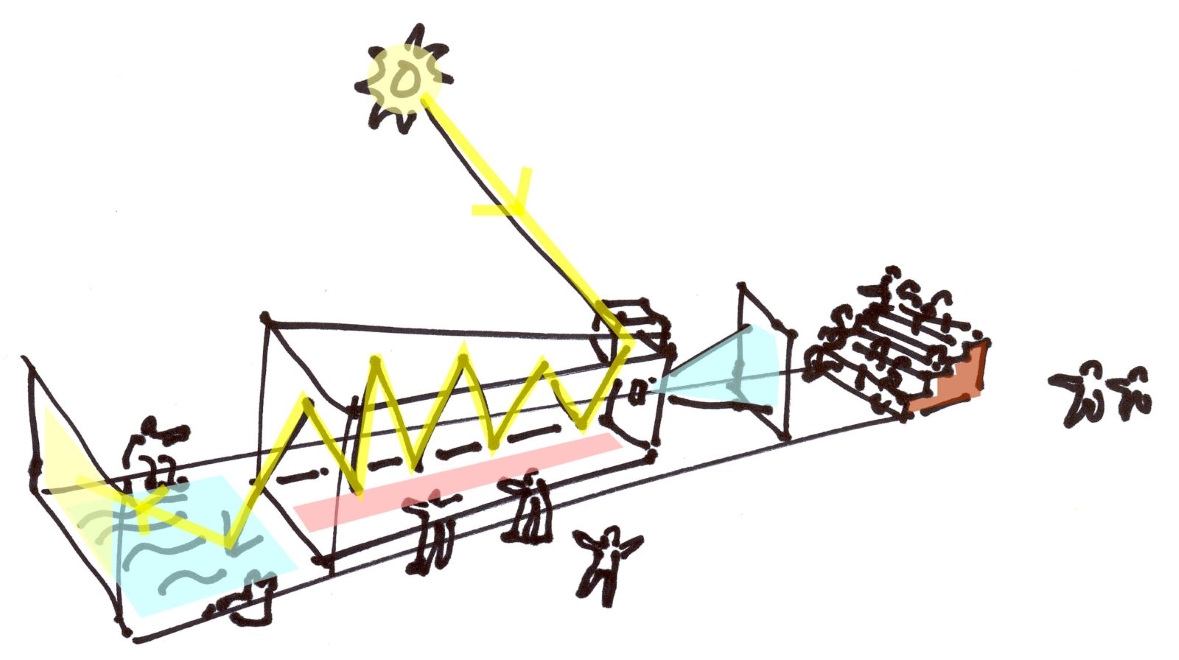
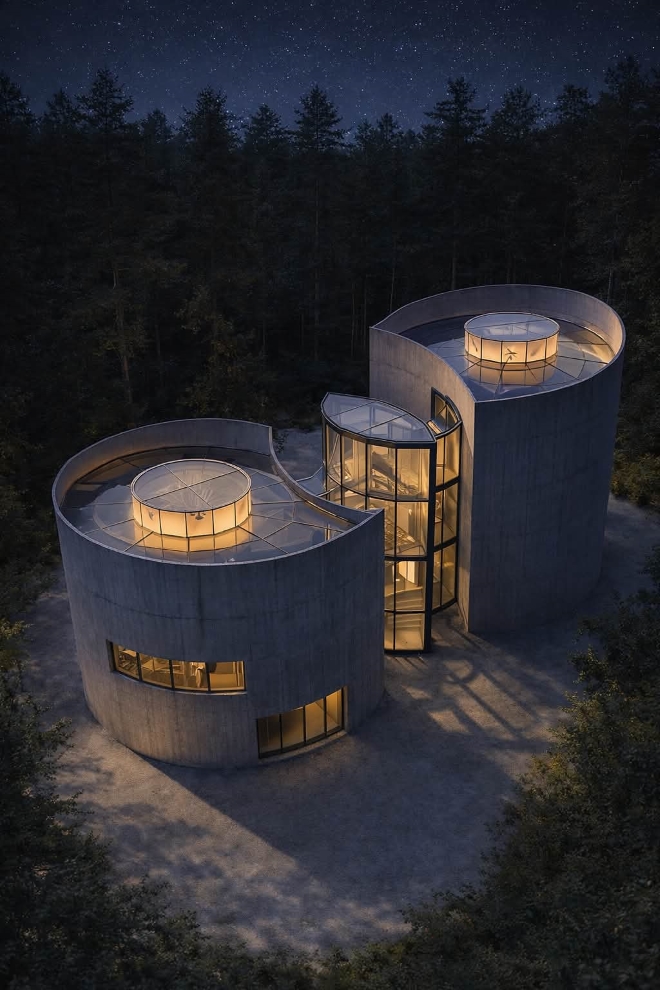
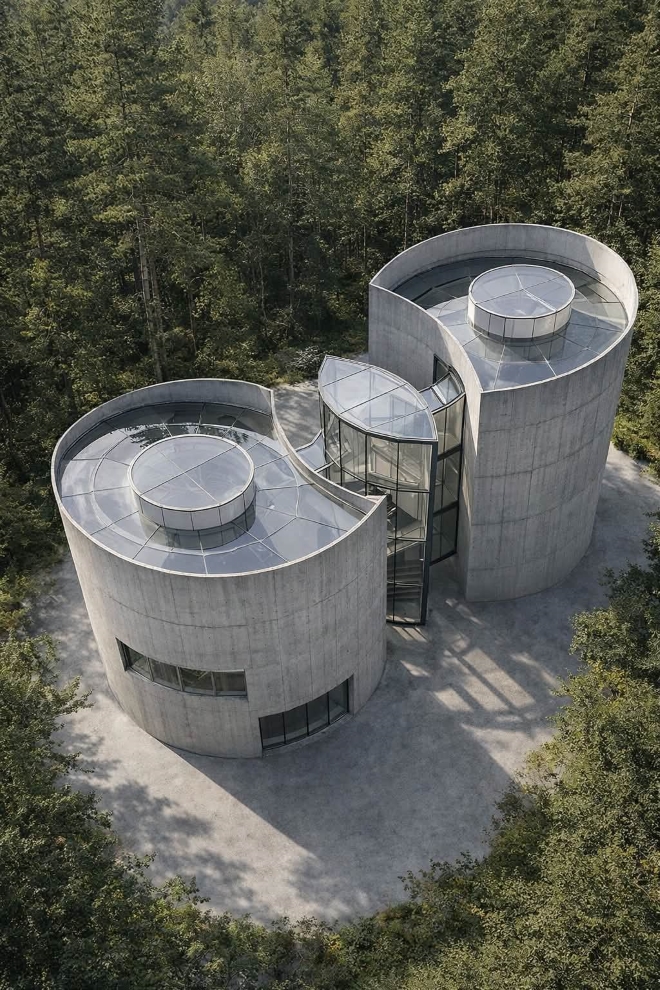
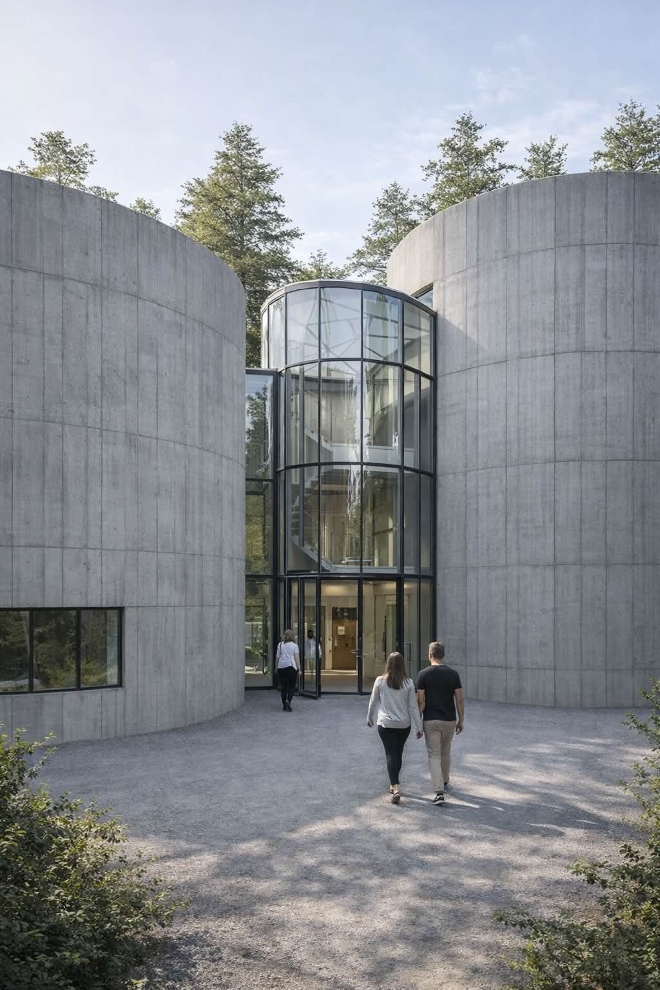
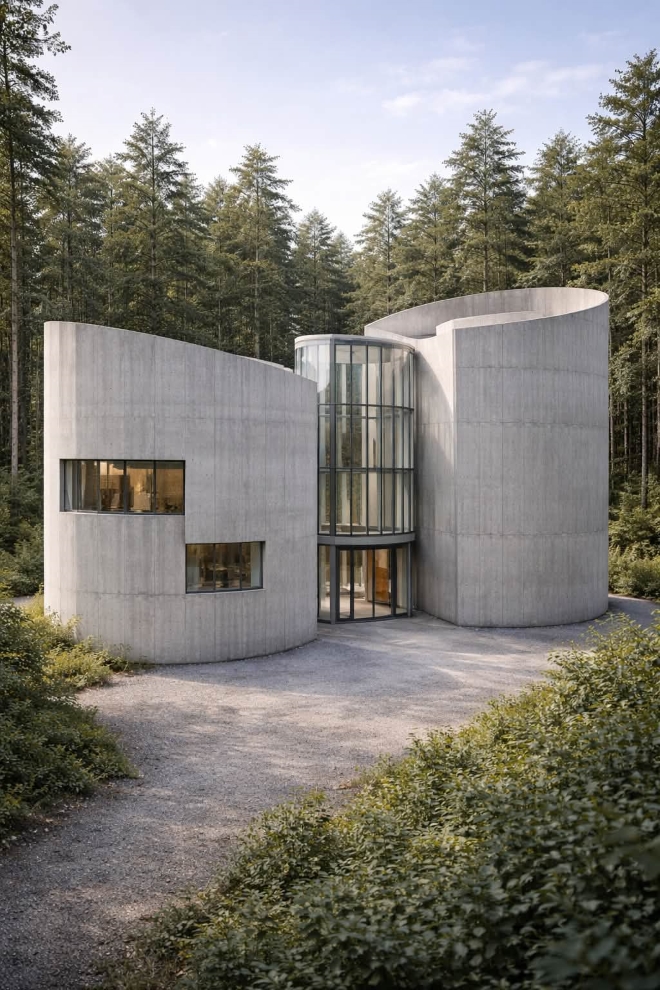
On the “Island of Remembrance”, two cylindrical buildings stand as calm yet striking figures in the landscape. Already visible from the road, they appear like a spatial exclamation mark: unfamiliar and at the same time inviting, timeless and quiet. The smaller cylinder accommodates the supporting functions of the memorial site — including the entrance to the permanent exhibition, café, cloakroom, seminar rooms, library, lecture hall and archive.
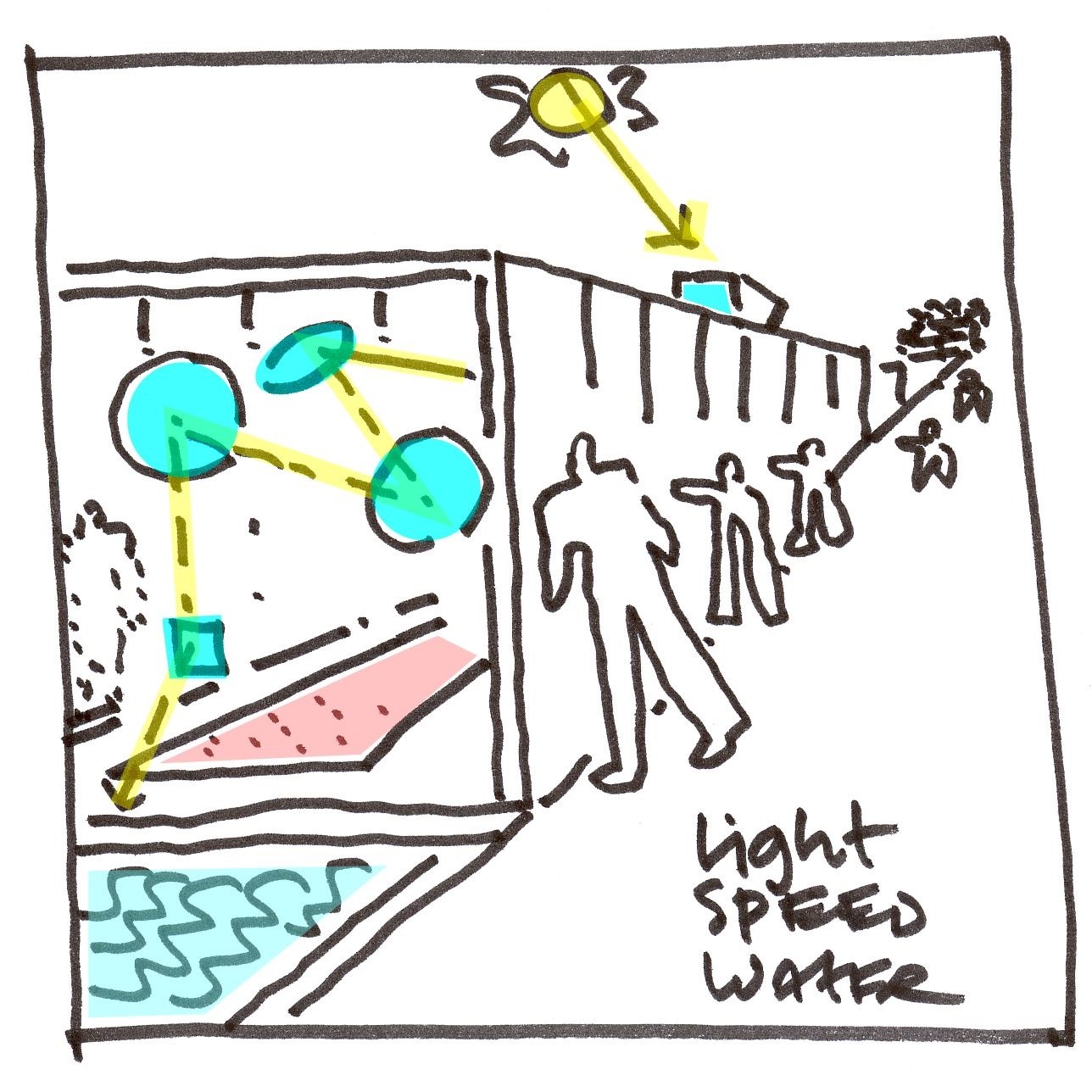
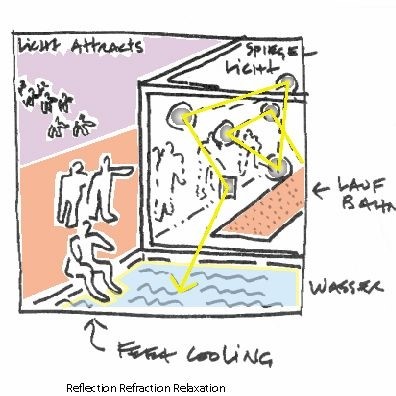
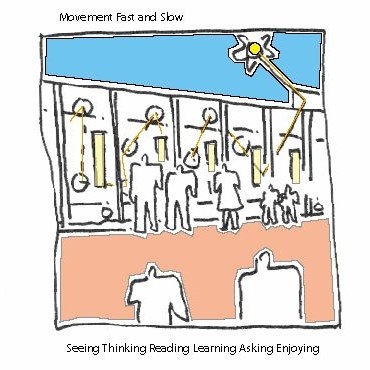
A glazed bridge leads into the second cylinder, the Void of Remembrance. Here, light enters the space from above. The gaze is drawn first to the water in the floor and then upwards through the levels to the open glass roof, beyond which only the sky is visible. Display boxes and columns tell the story of the site. On special occasions, the silent space becomes a resonant setting for music, memory and the present moment.
The “Island of Hope” complements this place as an area for encounter, communication and education. The Maison Olivier Messiaen offers space for creativity, retreat and shelter, while the theatre building is designed for events, theatre, cinema and concerts.
O’Brien’s design creates an ensemble that understands remembrance not as a closed chapter, but as a living process: history is preserved, questioned and carried forward into the future through cultural activity.
Services: HOAI work phases 1–3, basic evaluation, preliminary design, design, 2009–2012
Promoter and client: Meetingpoint Music Messiaen e.V., Görlitz
Building owner: Fundacja Centrum Wspierania Przedsiębiorczości w Zgorzelec