Ruairí O’Brien LICHTDESIGN

Ruairí O’Brien LICHTDESIGN

RUAIRÍ O’BRIEN. LICHTDESIGN. is a company of the architect and lighting designer Ruairí O’Brien, especially in the field of lighting design. One of its main focuses are concepts for interior design with light and color and the lighting of public places, streets, buildings and facades.


The services of RUAIRÍ O’BRIEN. LICHTDESIGN. include all facets of lighting design, from “phase zero”, through concept/design to realization. In addition, RUAIRÍ O’BRIEN. LICHTDESIGN. is also active in an advisory capacity for clients, architects, landscape architects or specialist planners.

Ruairí O’Brien studied architecture and lighting at universities in London, Edinburgh and New York and worked for various architectural firms in England, the USA and Germany before founding his own practice in Dresden in 1995
In 1995 he founded his own lighting design company Archevolucio Lighting Design Ltd. in London and Dresden. 2016 renamed RUAIRÍ O’BRIEN. LIGHT DESIGN.


O’Brien’s interdisciplinary work spans a broad spectrum: outdoor and indoor lighting for both private and public buildings. The illumination of marketplaces and public spaces, the development of lighting master plans and master plans, sustainable lighting concepts for the built environment, and unique lighting installations.

Ruairí O’Brien’s work in lighting design combines technology and design, science and art in theory and practice. To achieve special quality, technological understanding meets extensive knowledge and many years of experience in the fields of light, architecture and art. The resulting innovative solutions are energy-conscious, in keeping with today’s technology as well as the spirit of the times, yet always possess great respect for the cultural and heritage of the past.


Ruairí O’Brien has also worked on a variety of innovative light and light art projects, sculptures and installations. In 2003 he founded the light poetry festival “Light and Word” in Dresden.

As holder of an adjunct professorship in architecture and lighting at Wismar University of Applied Sciences, O’Brien was instrumental in establishing the international master’s program in Architectural Lighting Design (the first of its kind in Europe) as coordinator and helped the program achieve full accreditation in 2005. O’Brien regularly teaches at various universities in Germany and abroad, including the Czech Republic and Russia.


In 2014, Ruairí O’Brien founded the Mobile School of Lighting Design, a pioneering project that brings lighting design education and teaching to a global audience in an innovative and mobile way.

Ruairí OBrien is one of the founding members of the Federation of International Lighting Designers (FILD), established in 2014, and served on the board as vice president of the professional association until the end of 2018.


Since 2017, Ruairí O’Brien has been Associate Professor and Head of the Architecture and Visual Design Department at the German University in Cairo – GUC.
Memberships in Chambers and Associations: FILD (Federation of International Lighting Designers) MSLL (Society of Light and Lighting) LiTG (Deutsche Lichttechnische Gesellschaft e.V.) RIBA (Royal Institute of British Architects) AKS (Architektenkammer Sachsen), Board of Directors (2013 – 2017), Chairman Committee for Public Relations (2013 – 2017).

Posted in Uncategorized

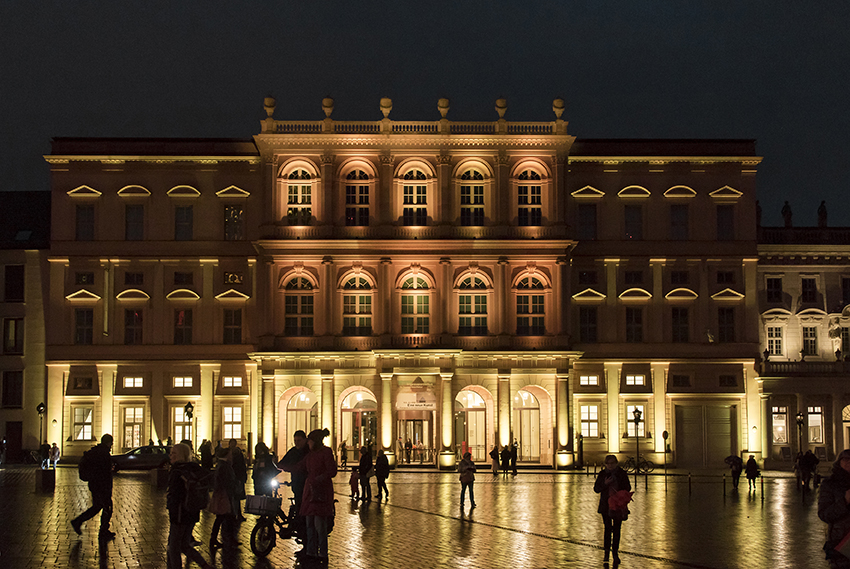
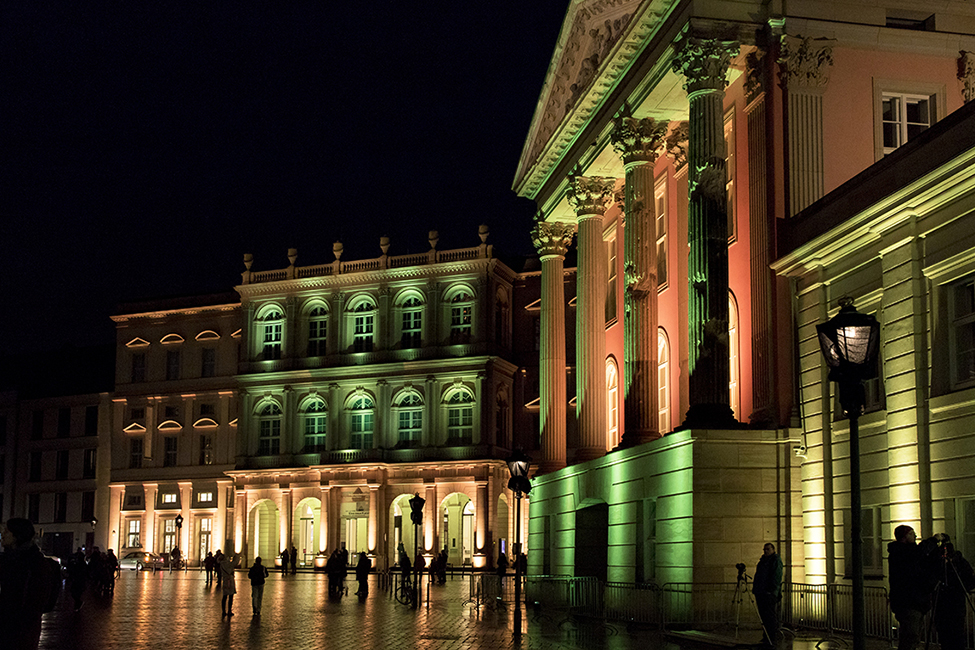
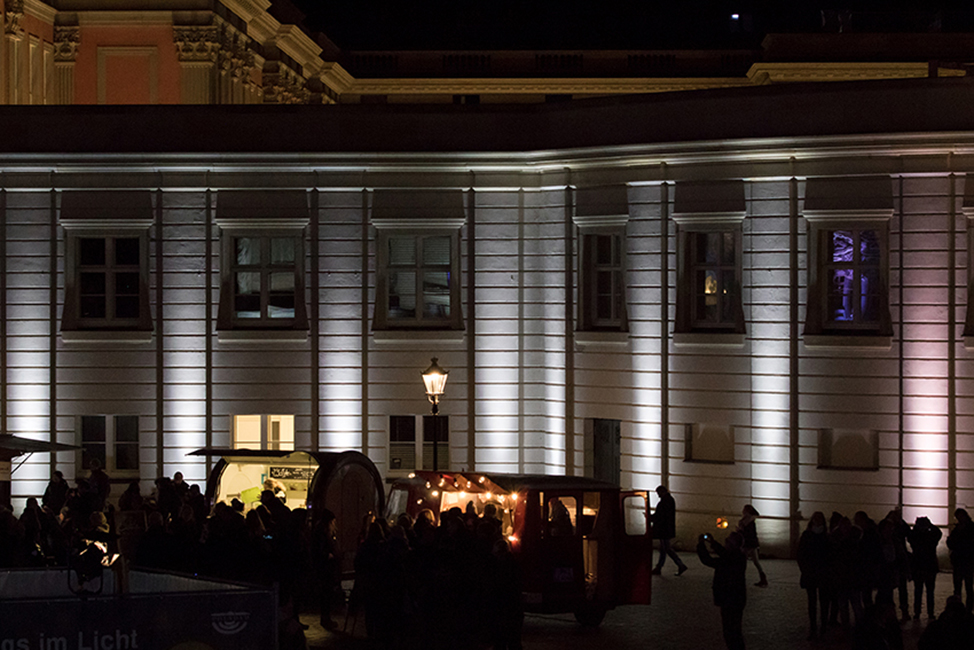
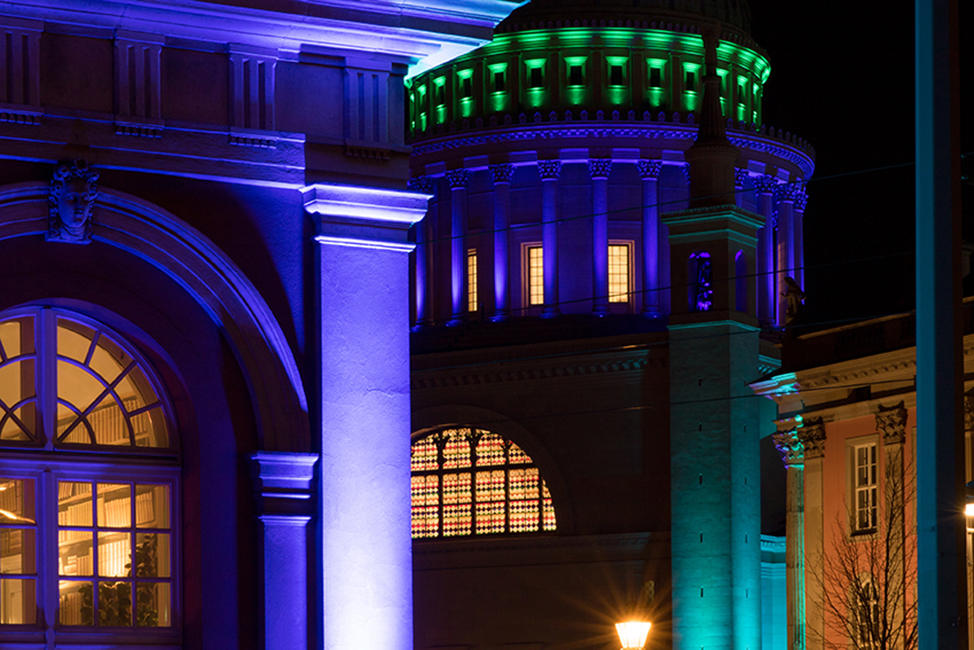
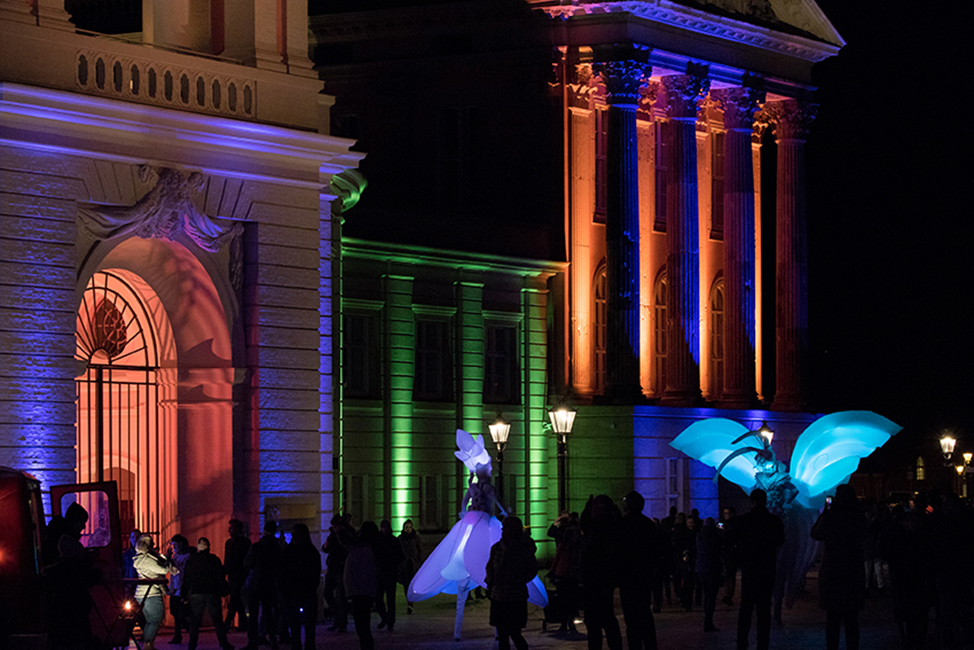
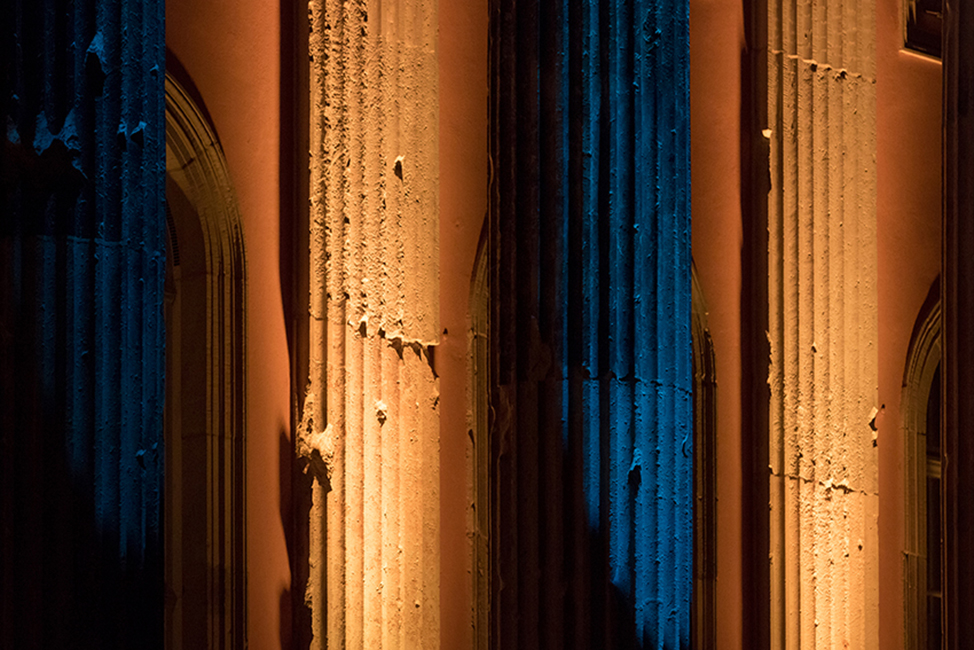
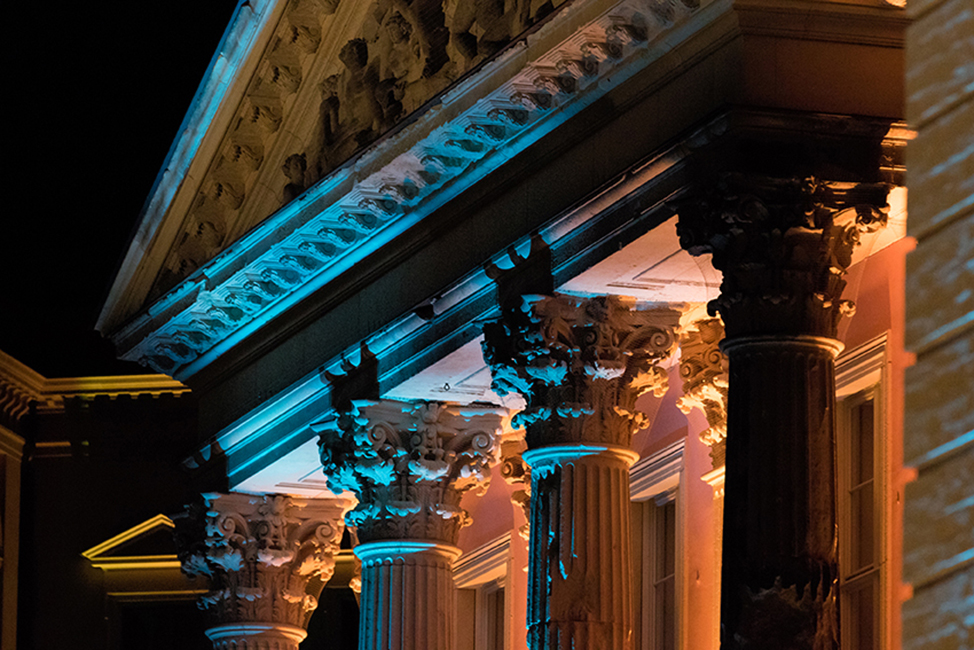
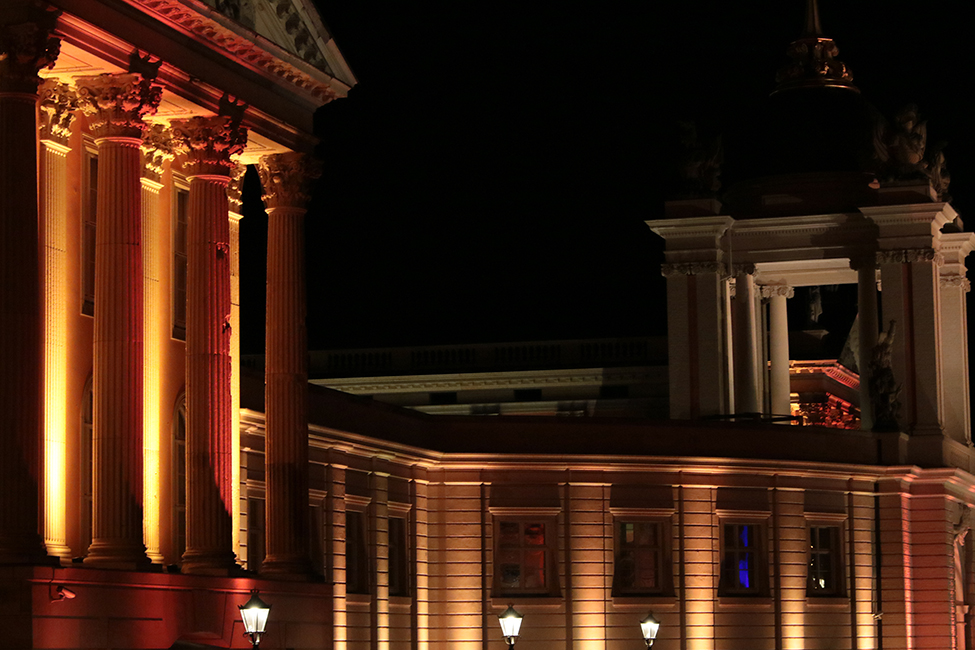
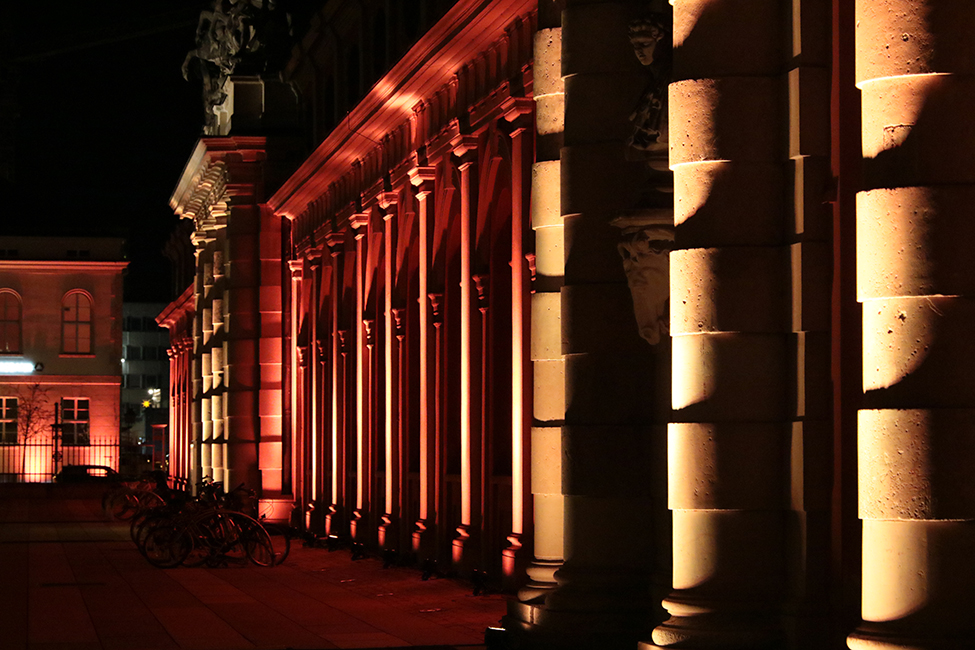
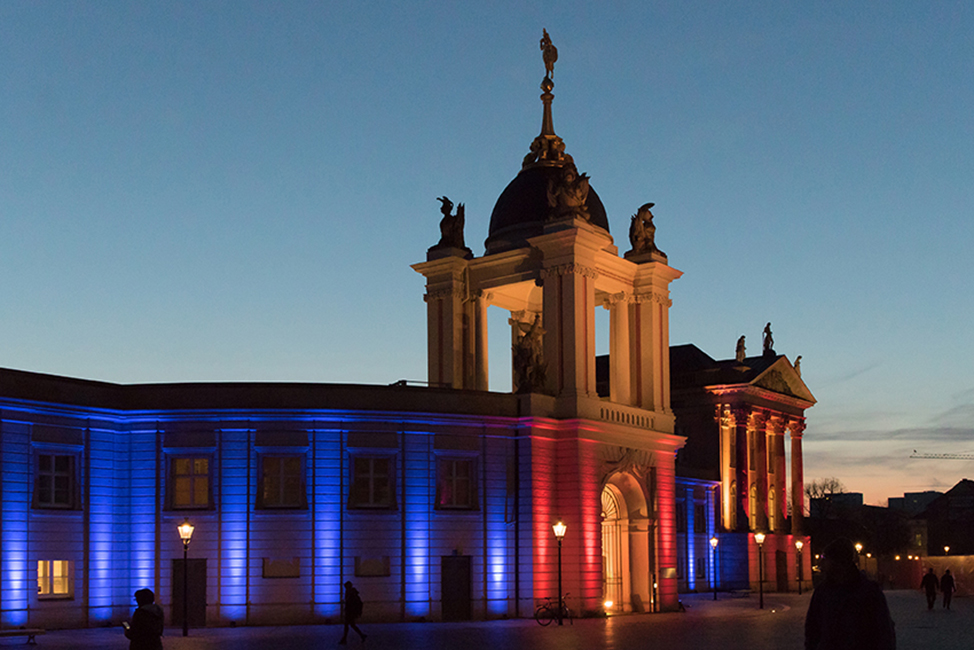
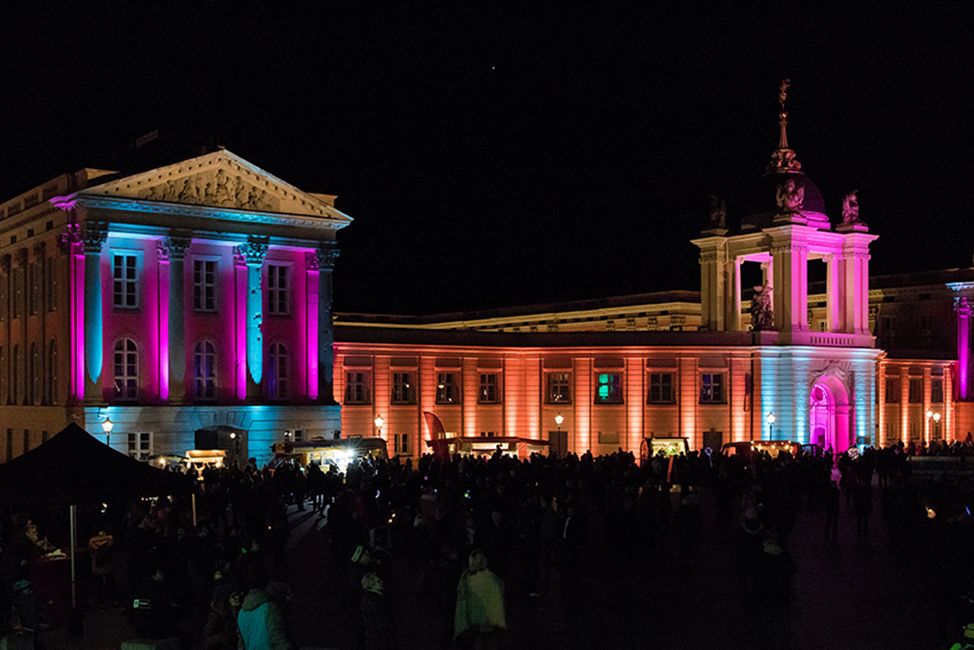
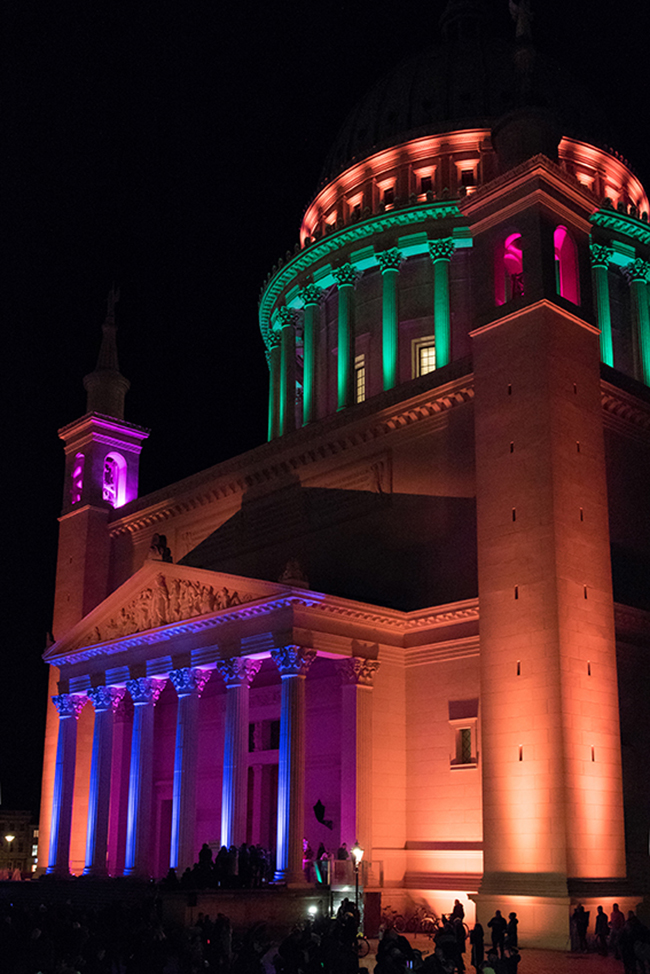
On the way in light 2020, Potsdam

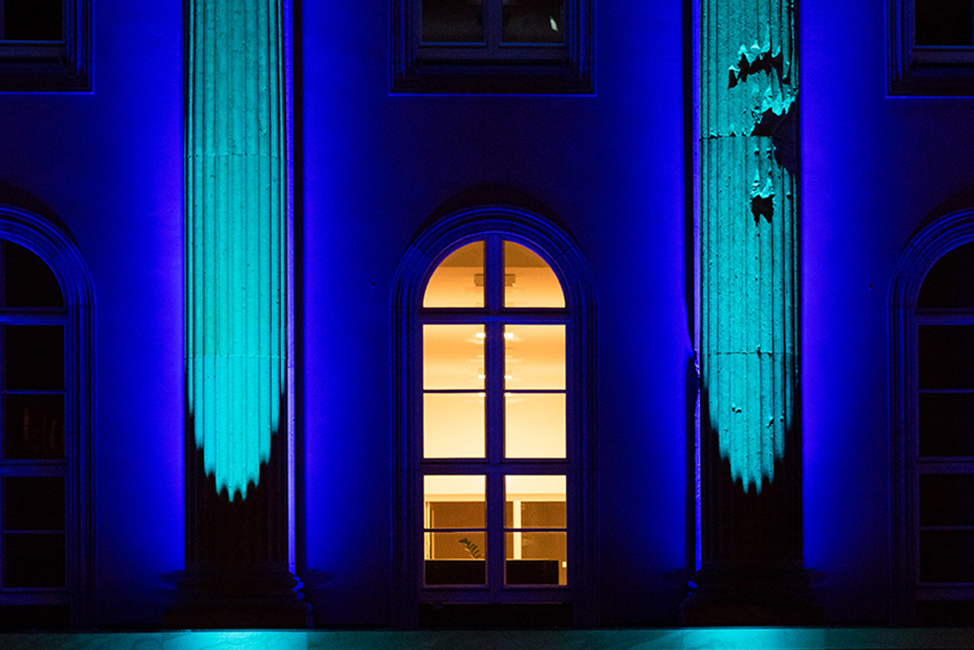
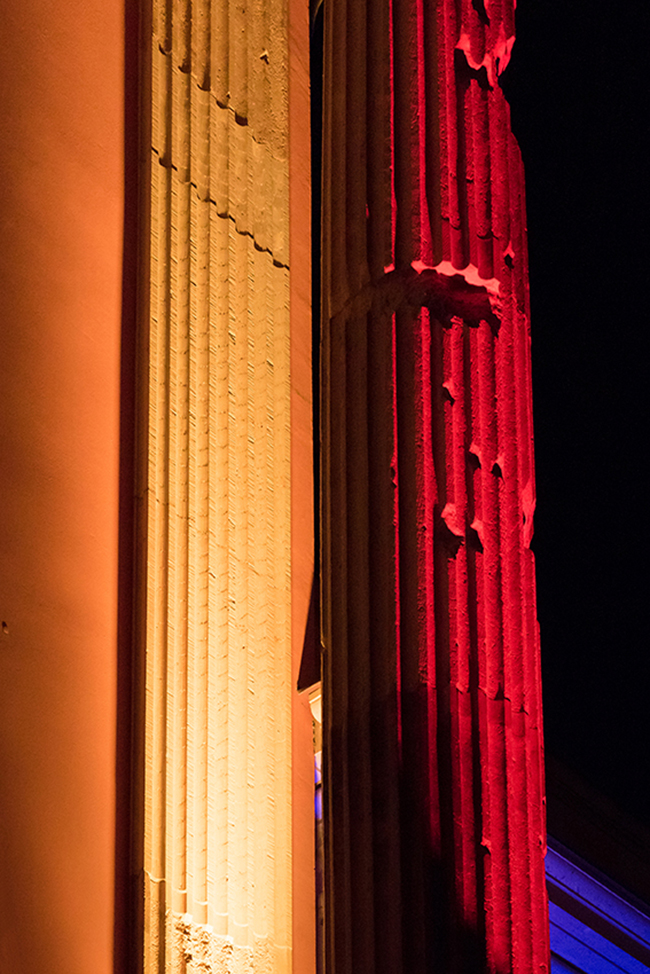
On the way in light 2020, Potsdam

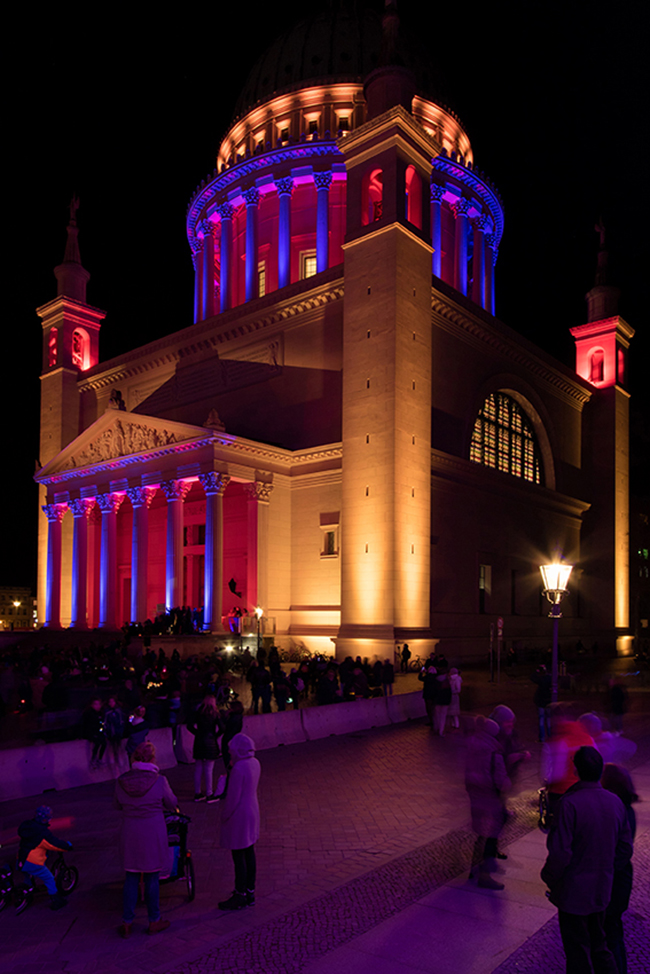
Temporary event lighting Potsdamer Mitte

The images show excerpts from Ruairí O’Brien’s lighting composition for Potsdam Unterwegs im Licht 2020, including the Brandenburg State Parliament, the Nikolaikirche and the Filmmuseum Potsdam. “With an authentic concept, high-quality technology and a selective choice, you can achieve more in lighting design. To create poetic and exciting lighting atmospheres, you have to understand how time, space, materials, darkness and light can be brought together and how they can be set against each other.” Ruairí O’Brien

Link:

Read more here

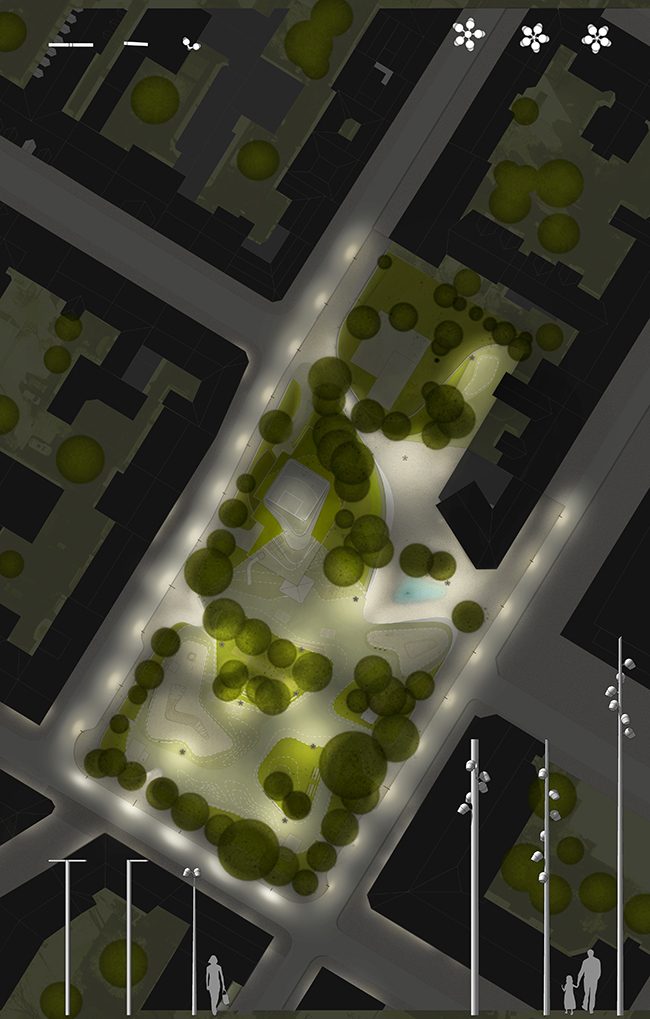
Light concept Swanseaplatz Mannheim

Light concept Swanseaplatz Mannheim

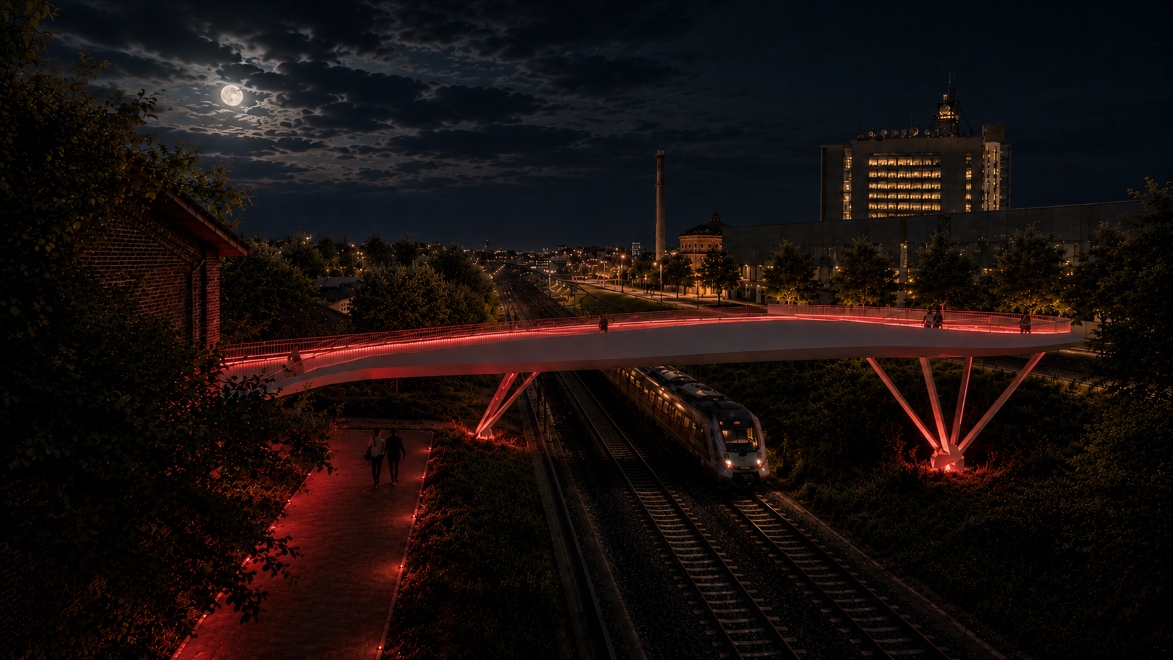
Entry in the competition for the redesign of Swansea Square

Together with Huttereimann Landscape Architecture

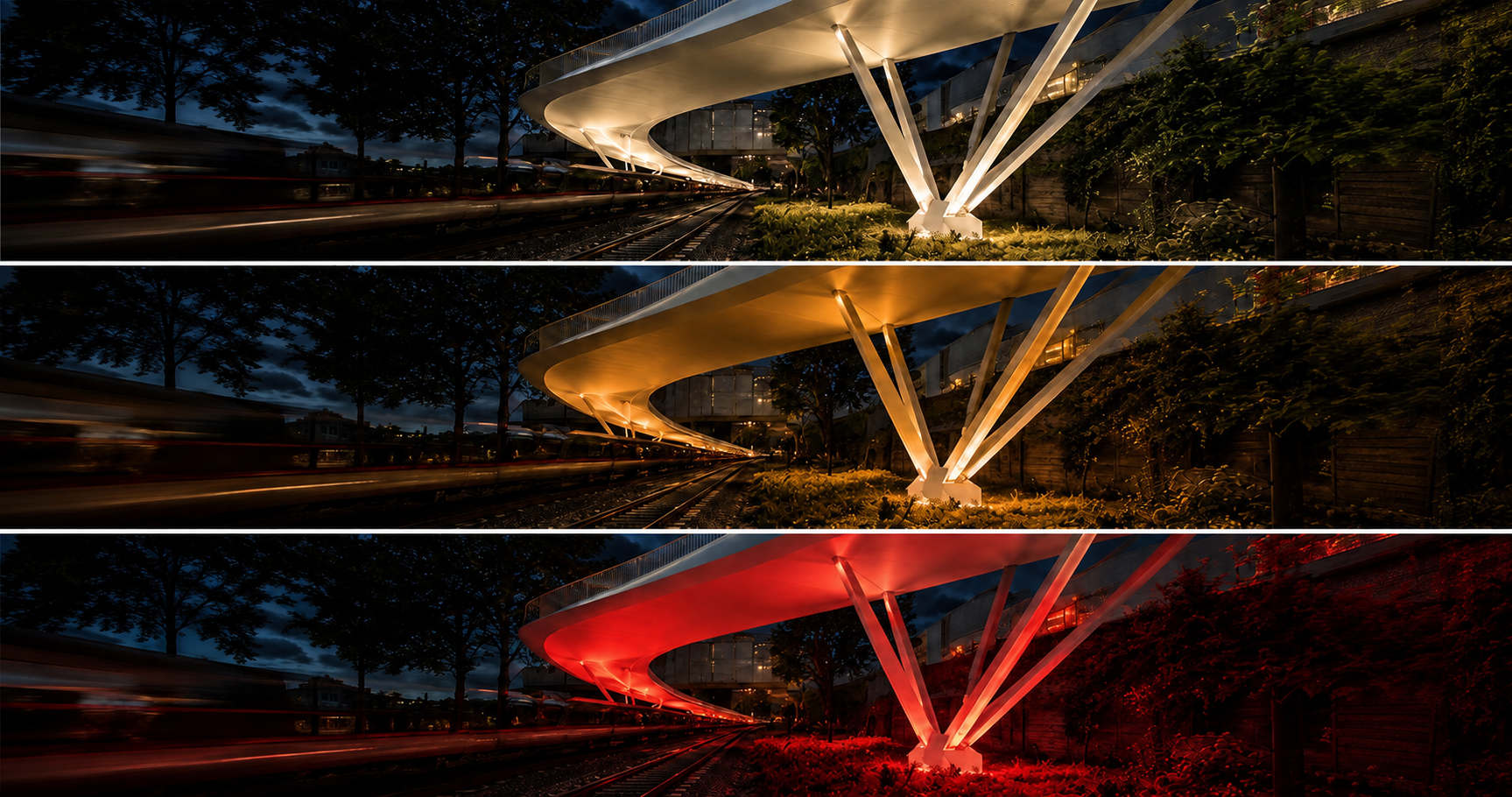
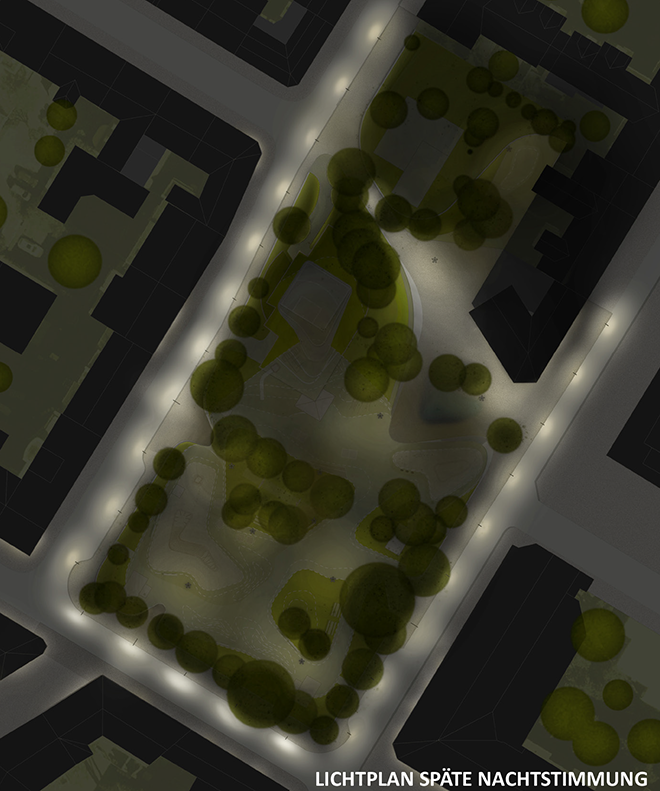
Lighting scenes:

  1. Early night hours (lighting plan at the top): full lighting level according to the programmed power as per the lighting concept.
  2. Late night hours (centre images): reduced, energy-saving lighting

By means of phase-controlled half-night switching (HNS), the luminaires are switched to reduced power operation (reduced luminous flux) during the night. This ensures a minimum lighting level to guarantee safety and orientation on the square. In areas without use or individual luminaires that primarily serve spatial modelling and atmosphere (e.g. at the “Schaukelwäldchen”), the lighting can be switched off completely in consultation with the City of Mannheim. Even in the late half of the night, the path area remains illuminated in such a way that the standard-compliant illuminance is maintained. Optionally, intelligent dynamic lighting control with radio-networked luminaires can be used to make the lighting dependent on use. To prevent vandalism and increase cleanliness and safety, the lighting in the kindergarten area is controlled by presence detectors.

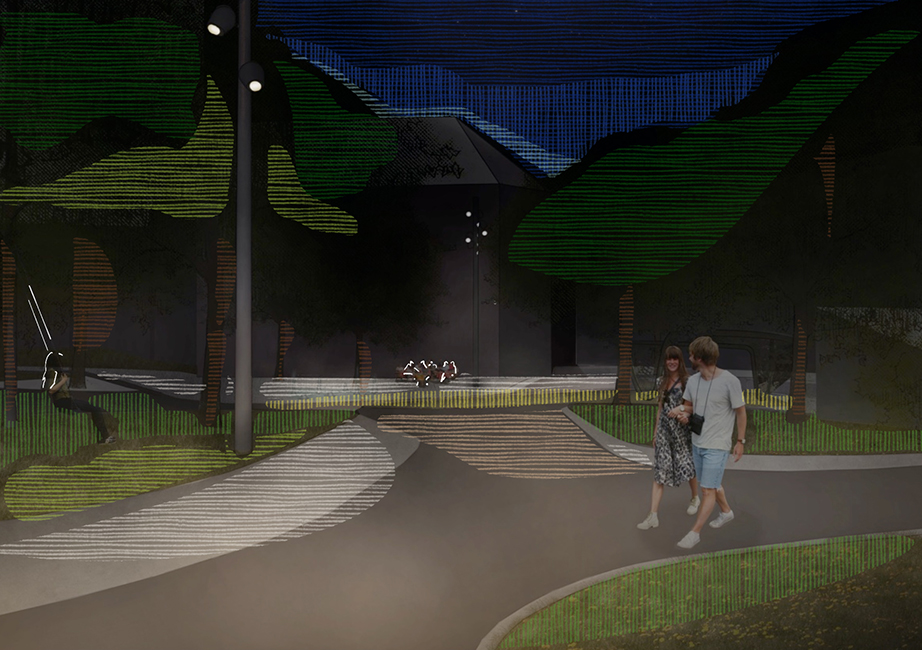
Early night atmosphere:

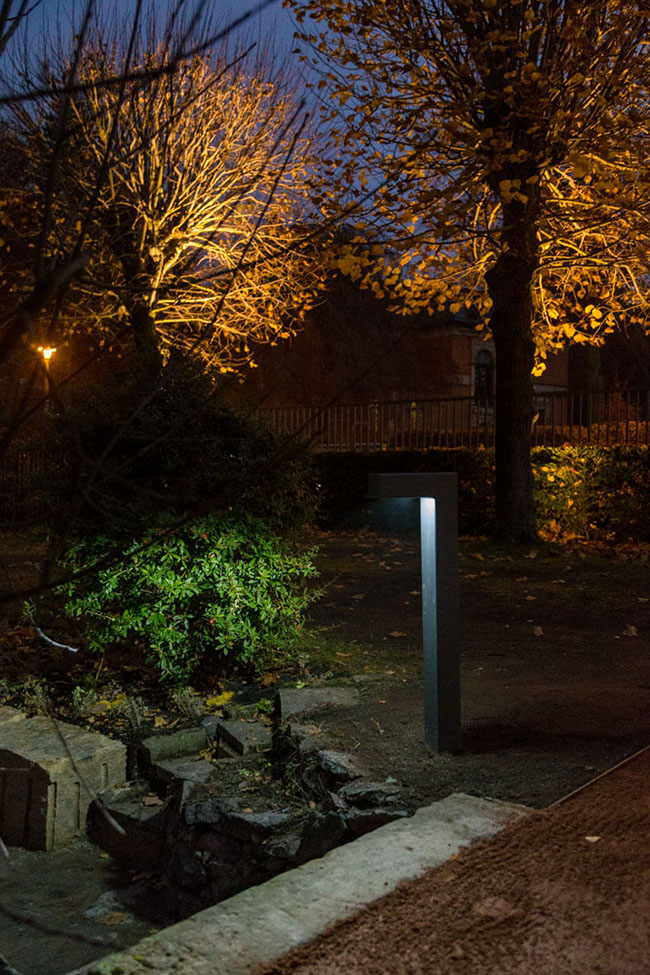
The downward light prevents a boring and monotonous lighting atmosphere and creates a lively carpet of light with nuances of light and dark. The luminaires can also set accents, e.g. grazing light on tree trunks without scattered light into the night sky. The tree-like shape of the selected luminaires matches the park landscape.

Late night atmosphere:

According to the use, rear park areas are darkened, the path remains illuminated. The square is in darkness and only the main path is fully illuminated, for safety when crossing and for orientation.

Environment:

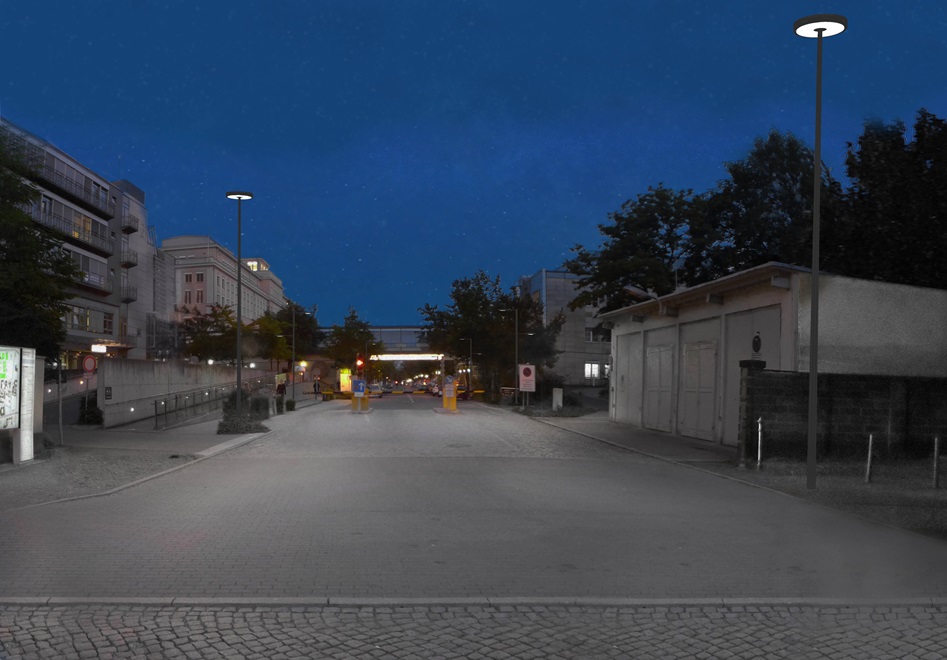
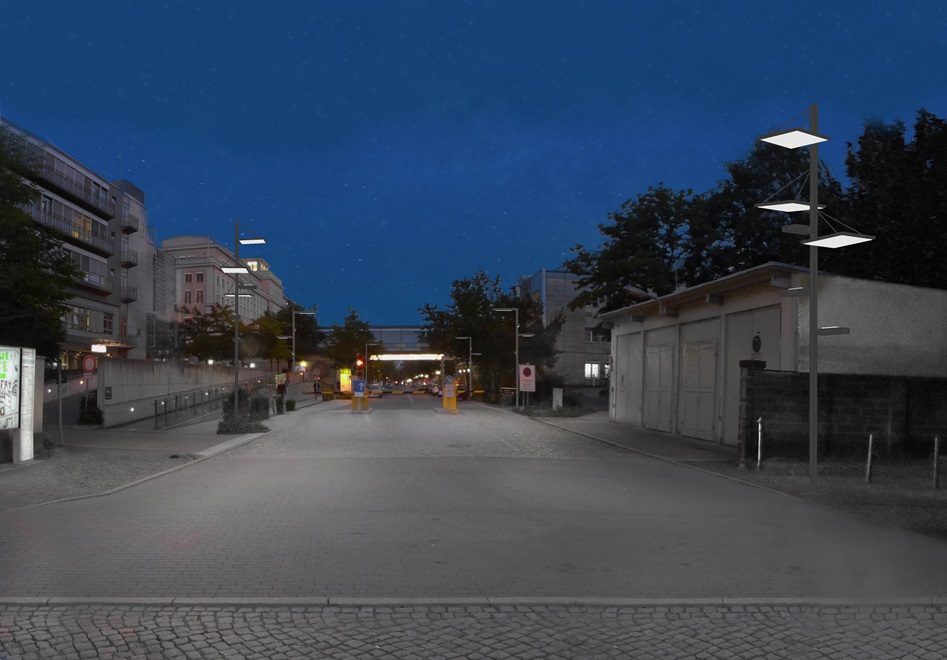
Reduced illuminance levels and directed light from above at small half-scatter angles maximally reduce unwanted stray light and prevent unnecessary light pollution. The warm light colour of the luminaires in the square creates a stimulating and calm atmosphere. In addition, this lighting offers the highest possible level of insect and bird protection due to its low blue component. For optimal colour recognition and improved facial recognition, to increase safety and the subjective feeling of security, the area of the passageway and the café is illuminated with 3,000 K.

Obermarkt Freiberg

Obermarkt Freiberg

Lighting concept for the market square

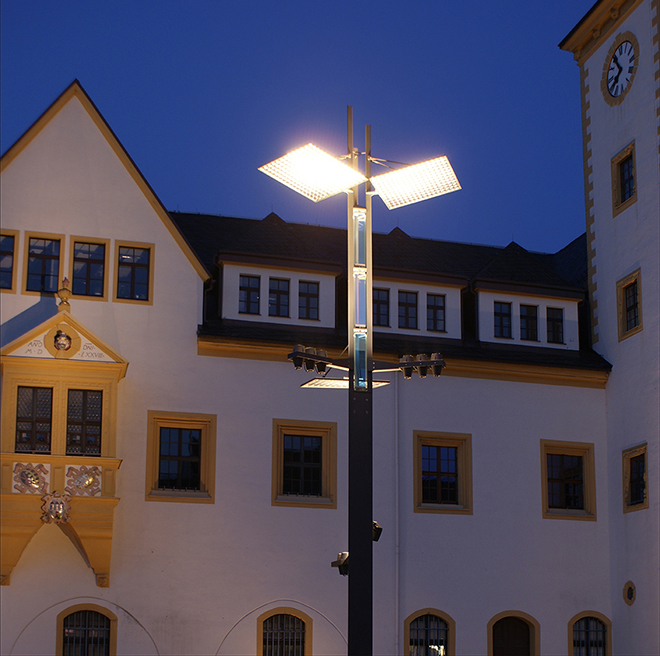
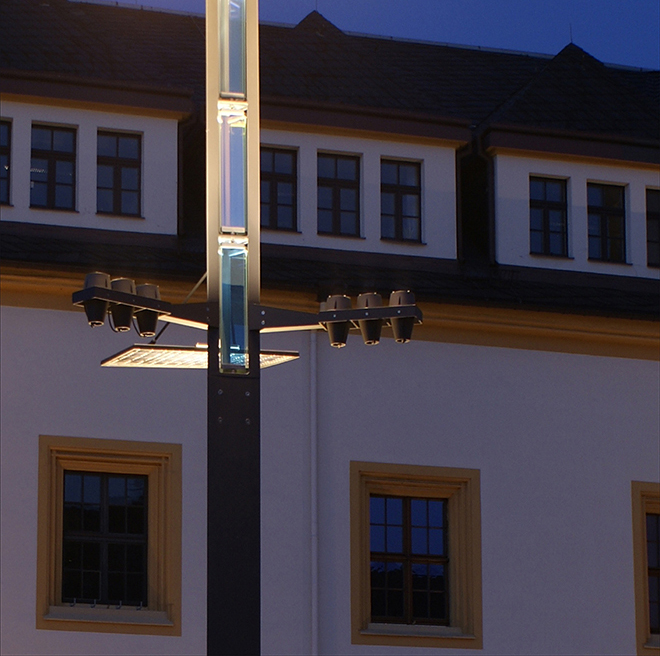
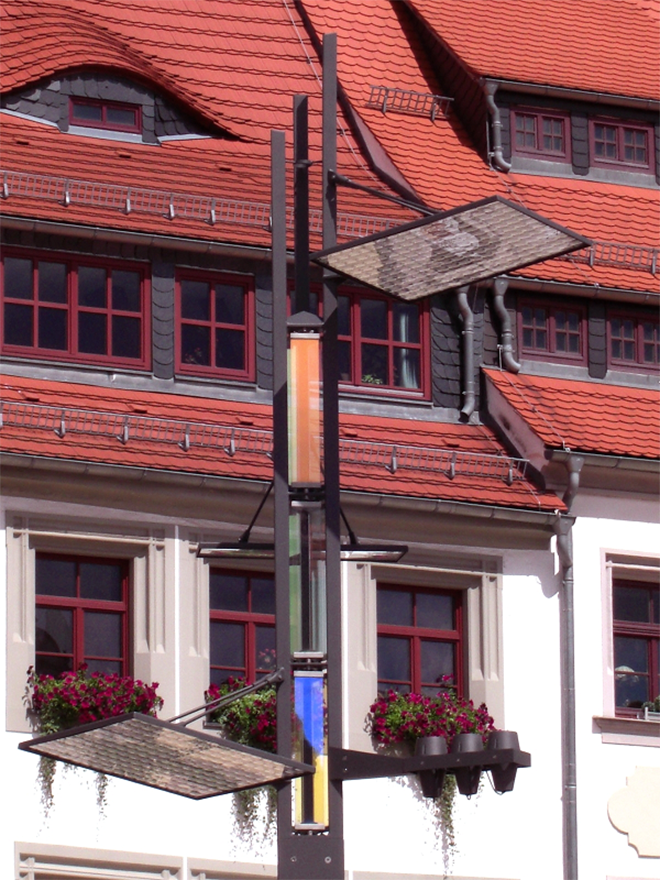
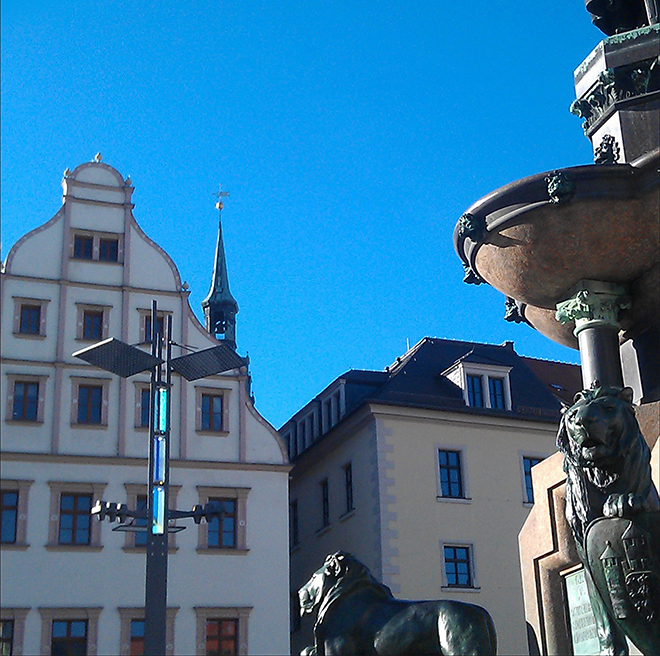
The new market square lighting in Freiberg broke new ground in lighting design in urban development. The unique light poles, specially designed for the historic Obermarkt Freiberg, combine the technically functional object with the artistic light sculpture in their own duality.

Innovative technology meets contemporary architecture, art meets science. In addition to illuminating the market square in the evening, the light poles (reflector system) can also be individually controlled or dimmed depending on the need for use in the public space. During the day, dichroic glasses in the upper mast act in a solar-geometric play with the sun, immersing the market square in a subtle, lively play of colour. This work of light and architecture, tailor-made for the historic Obermarkt, is complemented by the illumination of the historic Otto fountain, the listed façade of the town hall, as well as the water features and the unique granite seating furniture, also designed for the Obermarkt, which invite visitors to linger on the prestigious market square.

The lighting of Freiberg’s Upper Market was nominated for Elisa – the Energy Efficiency Award of Saxony 2014. With the nomination, the lighting of Freiberg’s Upper Market was distinguished by the expert jury as a practical example and highlighted as a multipliable, proven, sustainable as well as efficient example of Saxony or for Saxony as a corresponding incentive for energy-efficient solutions.

Hotel Bellevue

Hotel The Westin Bellevue Dresden

Lighting in the conference / banqueting area

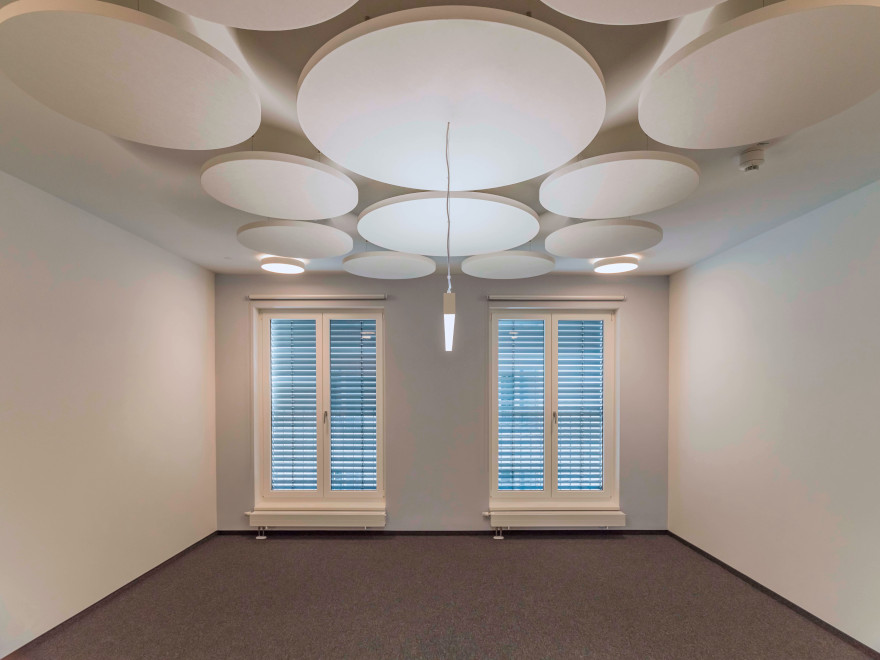
The aim was to convert to LED luminaires, replacing the existing lighting while retaining the luminaire locations. New LED ceiling downlights in warm white and cool white light replace the old luminaires with compact fluorescent lamps. They can be controlled in different lighting moods depending on the use (whether conference or evening event).

The ceiling downlights, planned to match the interior design and available in three different sizes, blend perfectly into the redesign of the rooms and provide a high quality of light. At the same time, the new luminaires consume only about ¼ of the energy previously required. The maintenance effort can also be significantly reduced, as the previously frequent replacement of lamps will no longer be necessary in the future due to the long operating life of the LED luminaires.

The traditional Dresden hotel has been given a contemporary new lighting system, which supports its character as a modern conference and congress centre as well as an event location in the best possible way, both functionally and in terms of design.

Photo: Hotel The Westin Bellevue Dresden

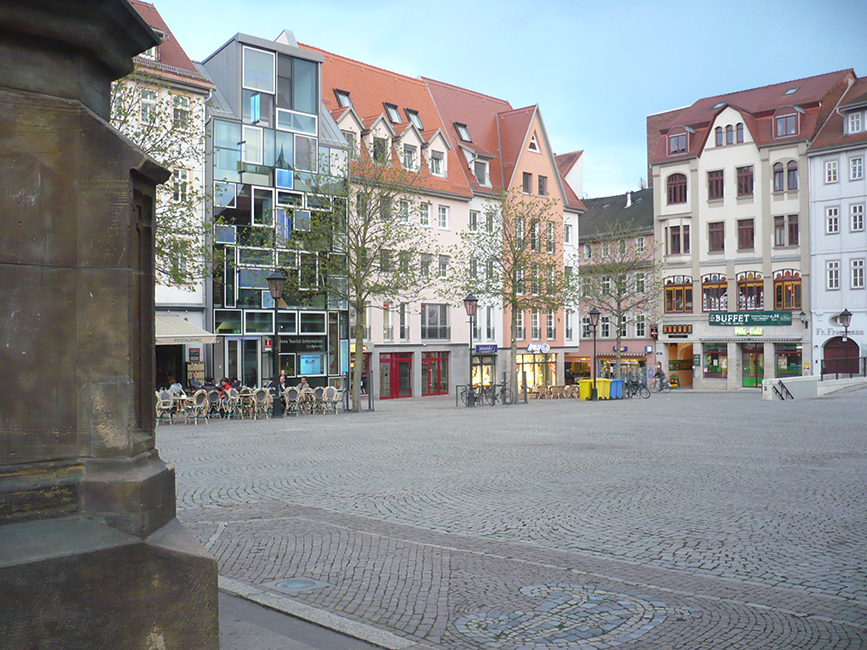
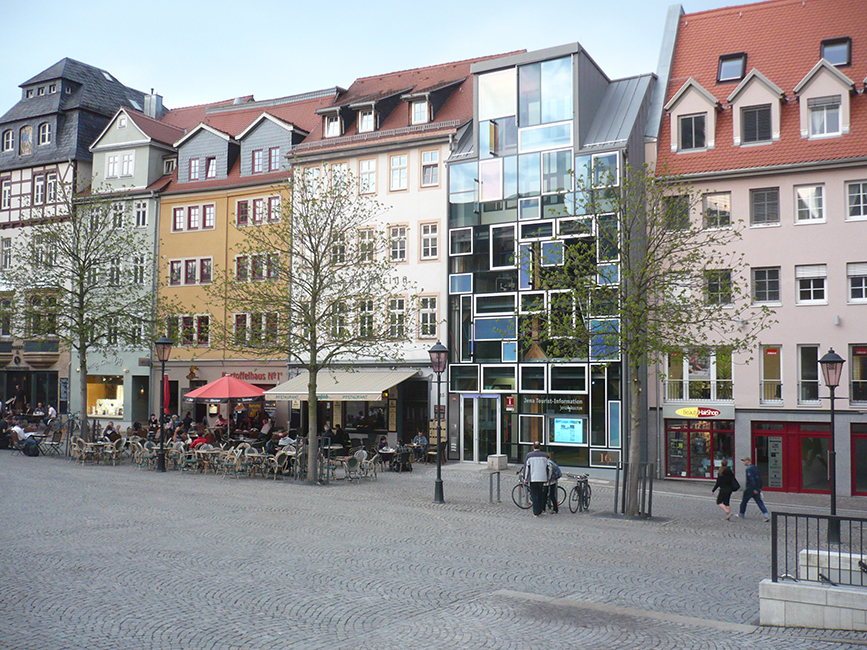
Stadtspeicher Jena

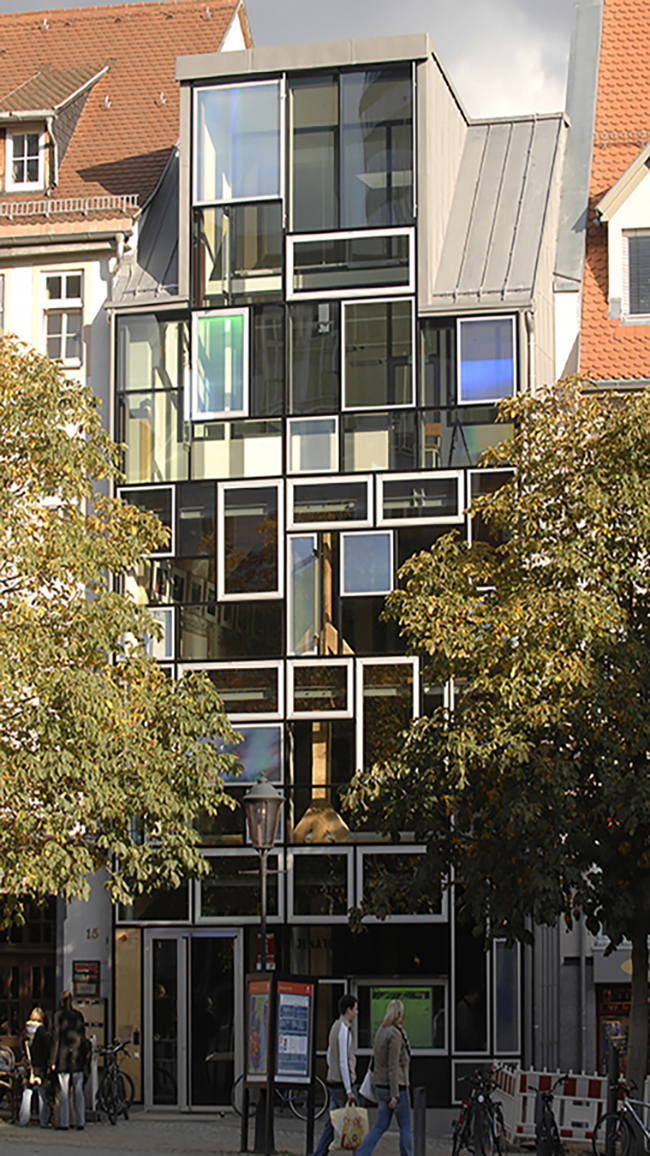
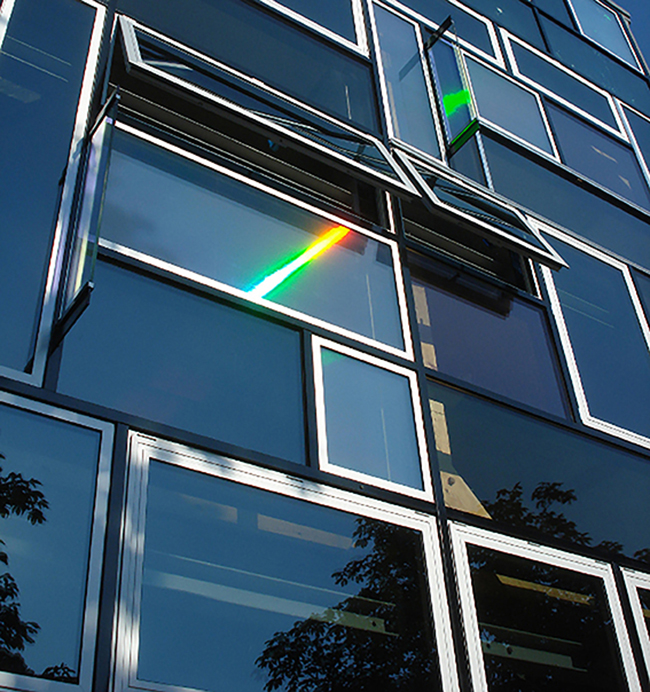
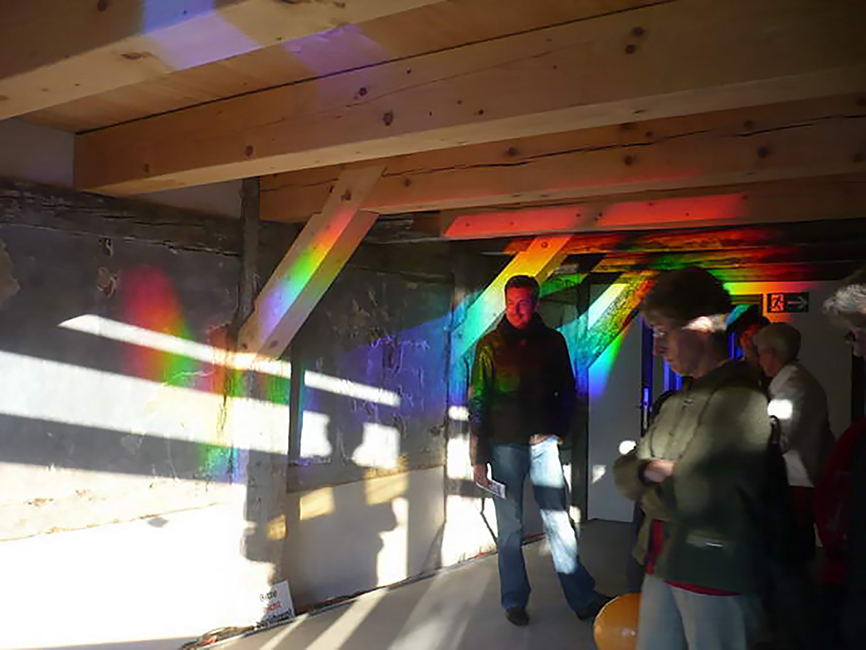
Hologram facade daylight, city store Jena

Light sculpture of the city store of Jena

Approved as a work of art, the hologram facade is a 16-meter-high, walkable day+night light sculpture. Different types of glass represent the identity and history of the city of Jena and at the same time make it possible to experience the valuable building in the interior as well as the surrounding exterior space, protect and at the same time show many details important for the preservation of historical monuments.
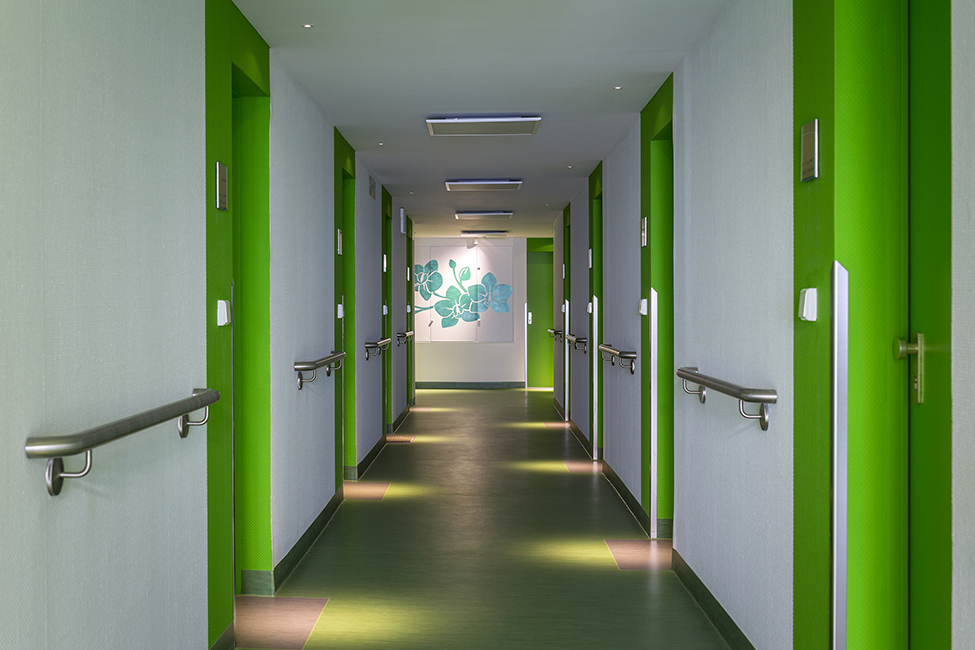
Pirna Sonnenstein

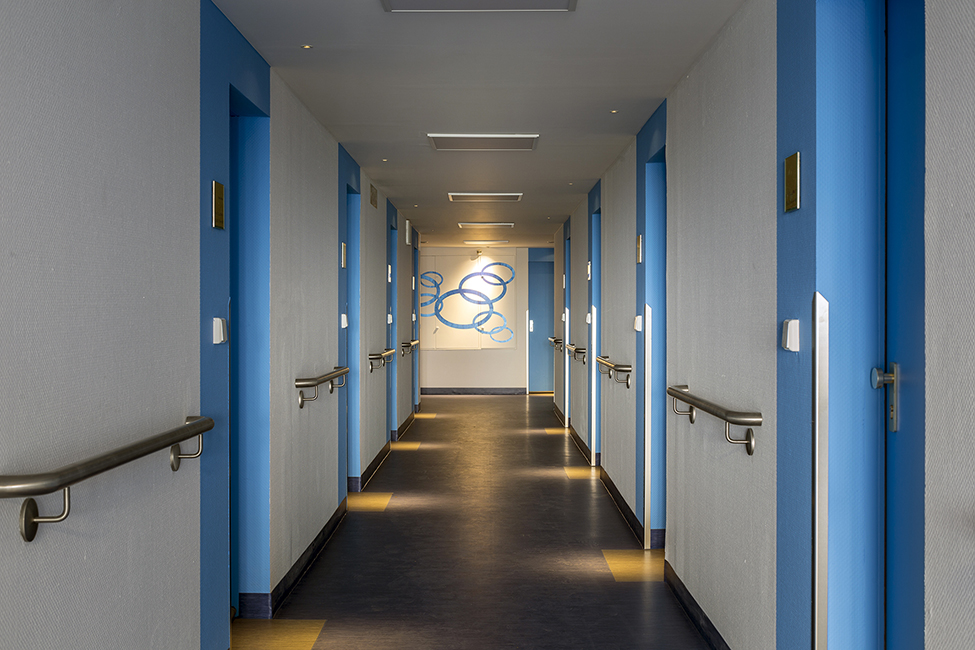
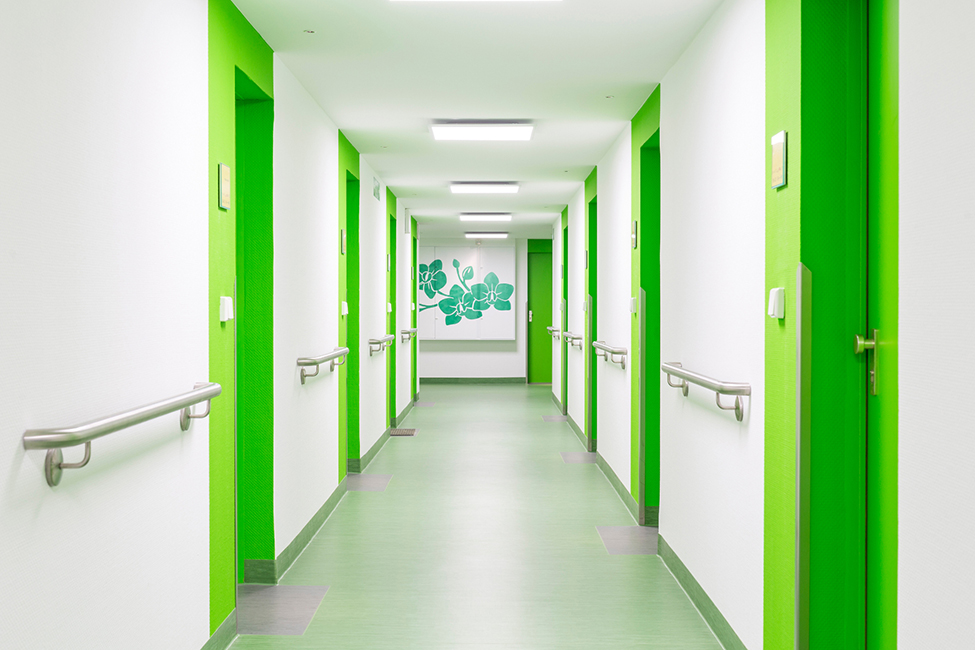
High-rise residential buildings Pirna Sonnenstein

Lighting concept for the corridor areas

Within the measures for redesigning the public corridor areas, we developed an individual, attractive and energy-efficient lighting concept that generally increases the quality of stay and also takes into account the needs of older residents in particular.
Square surface-mounted luminaires with neutral white light illuminate the corridor area, ensure low shadow casting and very good facial recognition. Individual spots with warm white light above the apartment doors mark the entrances and serve as permanent lighting for orientation and safety. At the end of the long windowless corridors, an illuminated wall motif provides a special focal point. Through the interplay of the various elements, materials, colors and lighting moods, an attractive positive overall image was created in the public high-rise areas where people meet, whose optimistic basic mood welcomes residents and visitors.

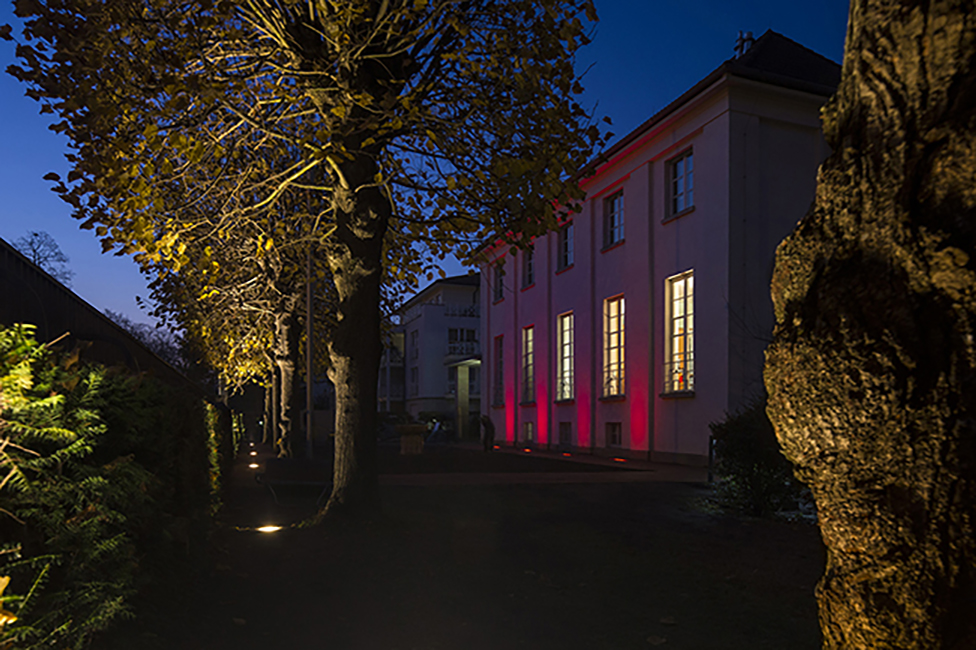
House of Architects, Dresden

House of Architects, Dresden

Facade lighting for the Saxony Chamber of Architects

For the House of Architects in Dresden, headquarters of the Saxony Chamber of Architects, Ruairí O`Brien developed appropriate and sophisticated permanent architectural lighting that incorporates architectural elements on the building. The row of trees in front of the building shines in a warm white light, the vertical elements of the façade are illuminated with a discreet cool light, and can also be illuminated in colour for special occasions.

Memorial grove Zeithain

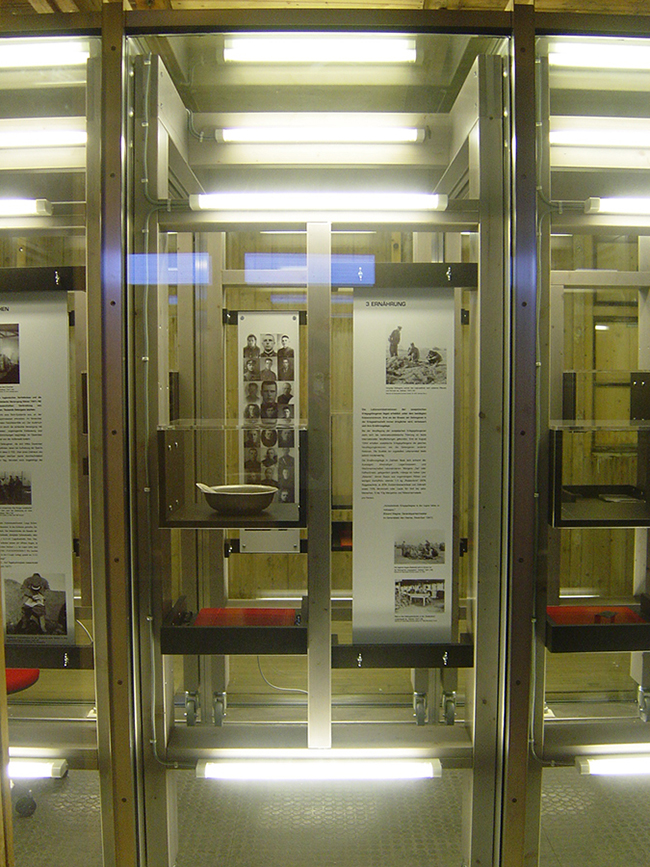
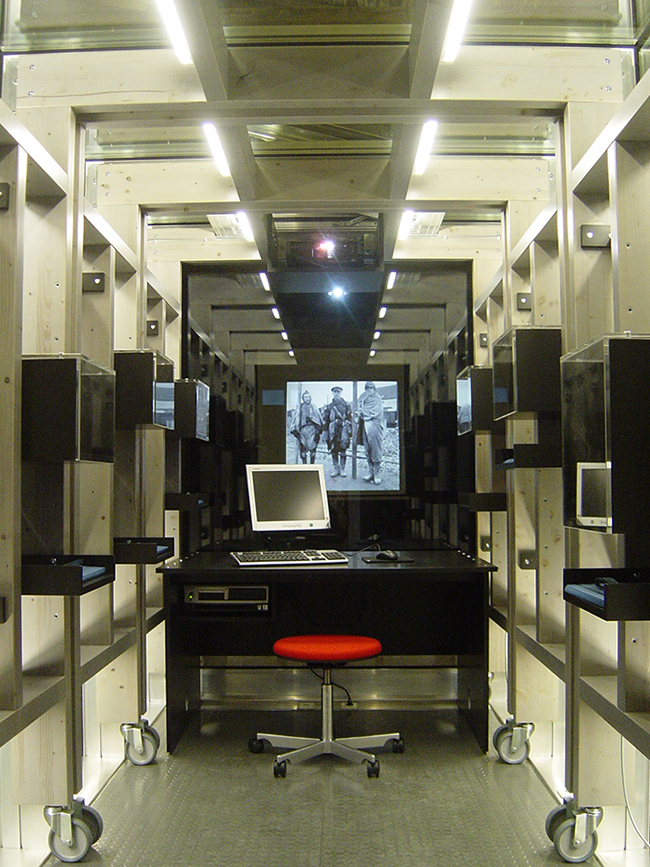
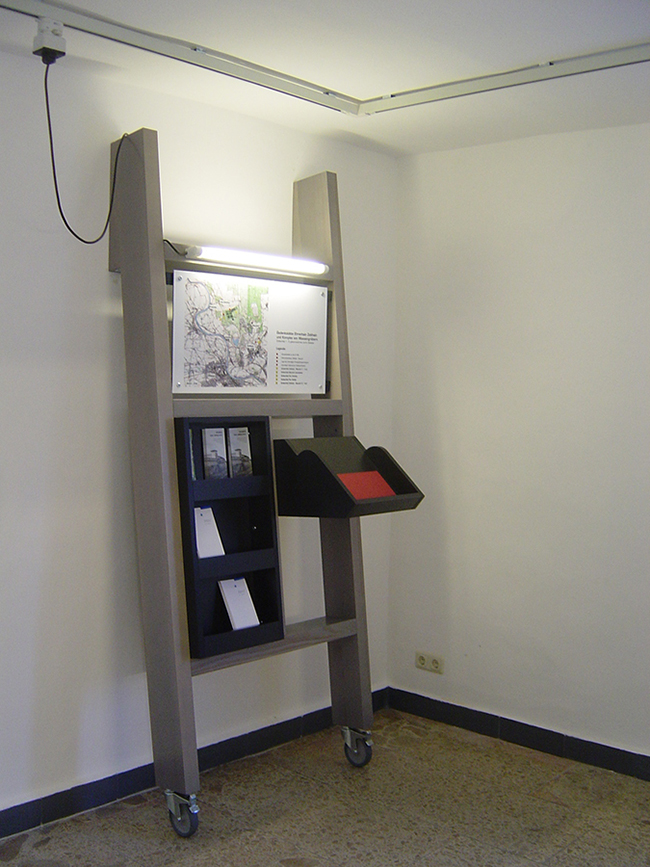
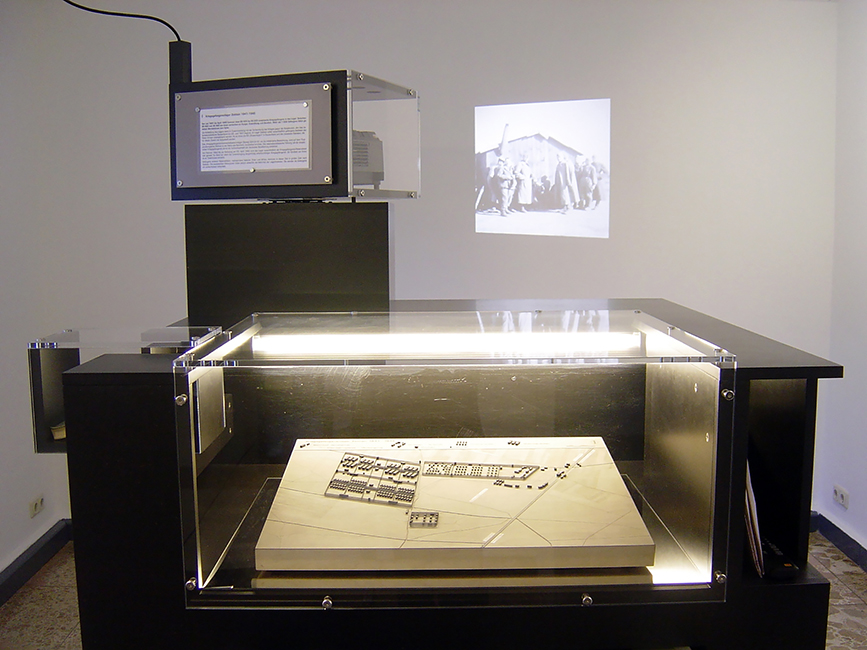
Exhibition lighting memorial Ehrenhain, Zeithain

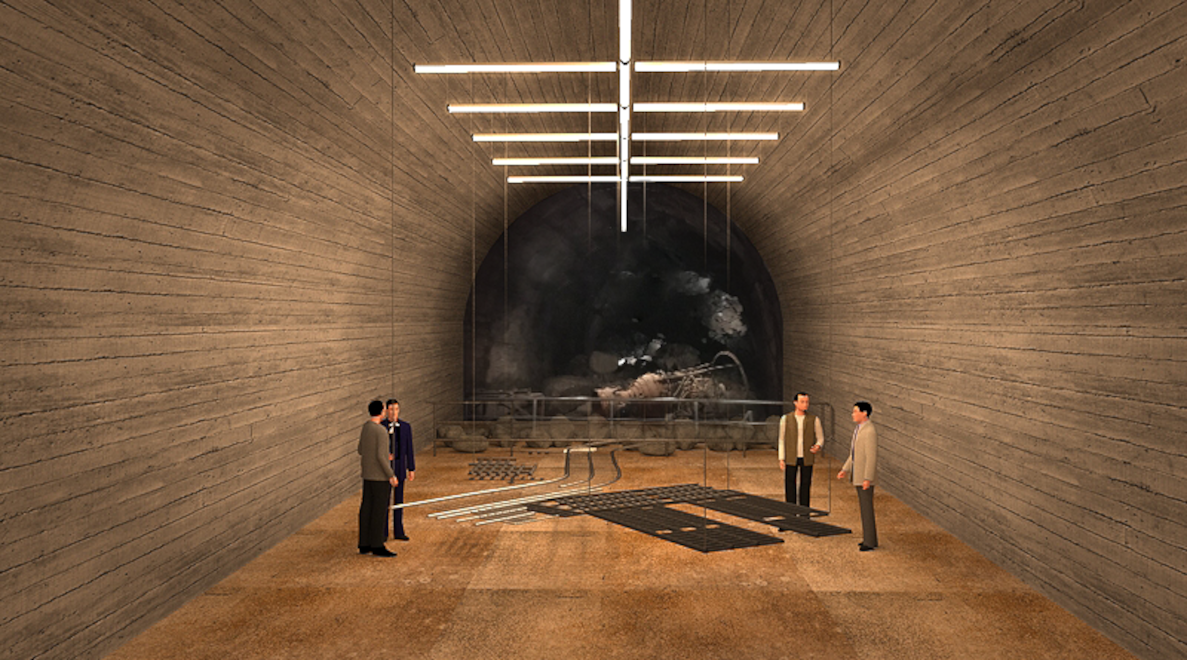
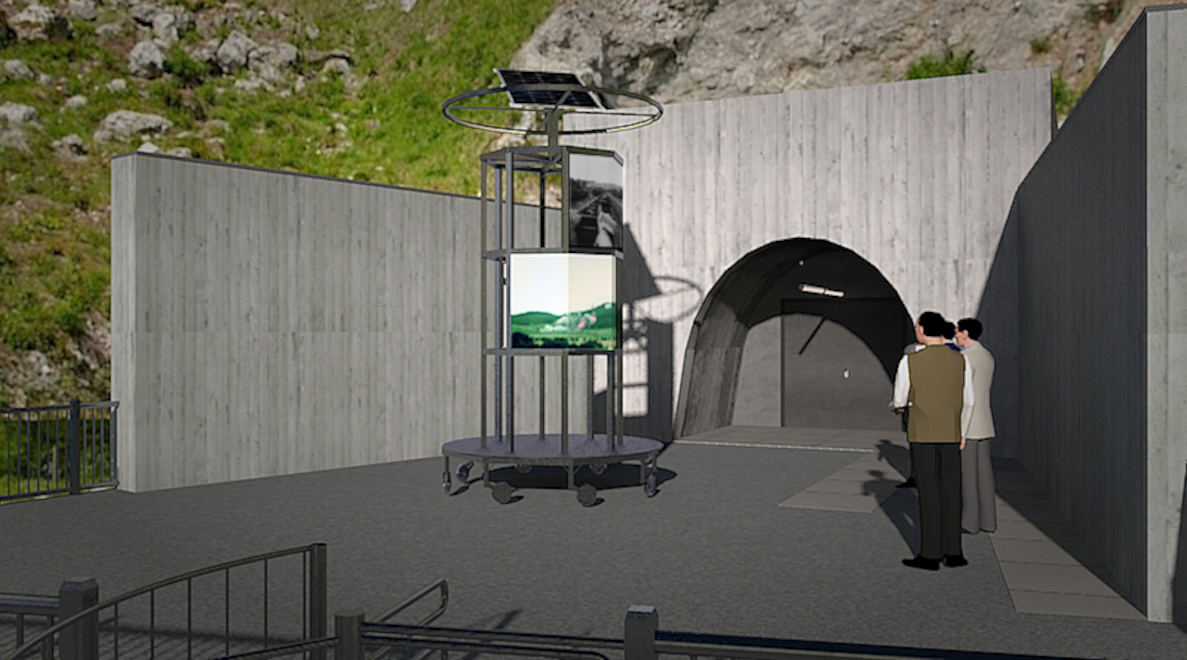
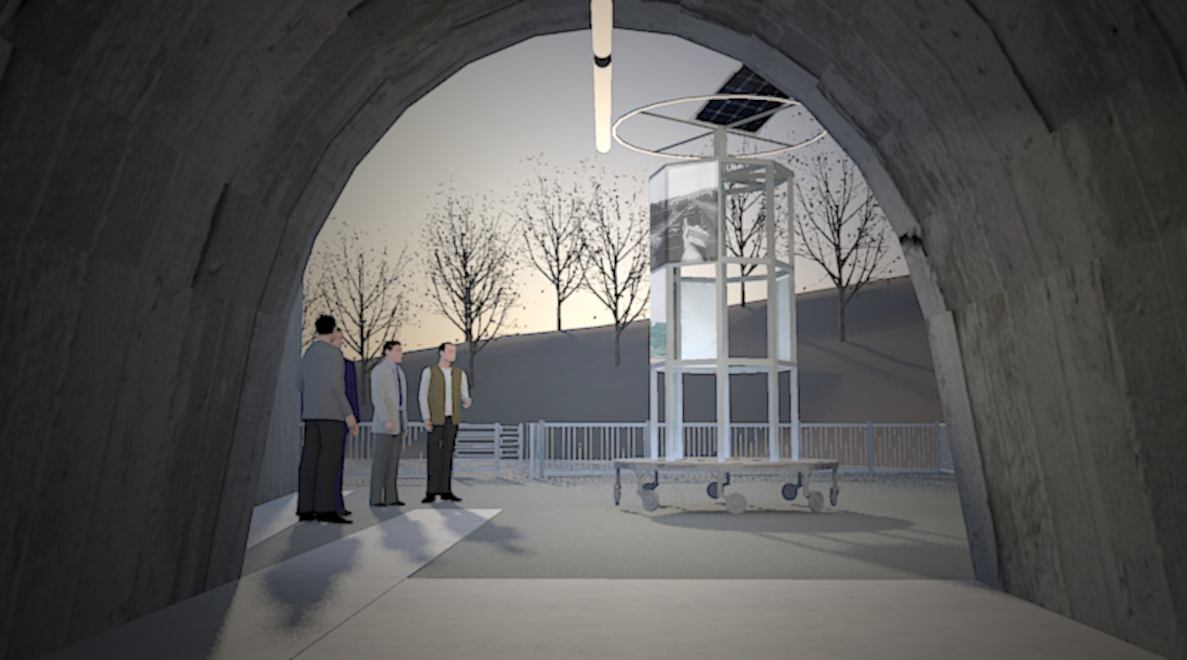
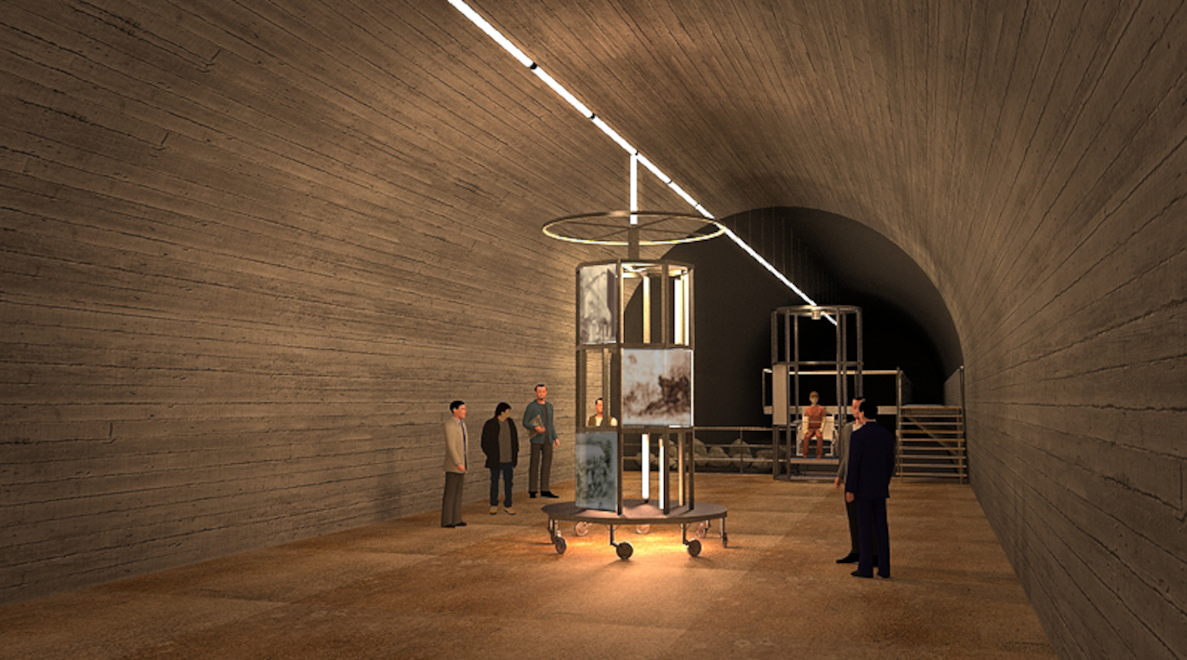
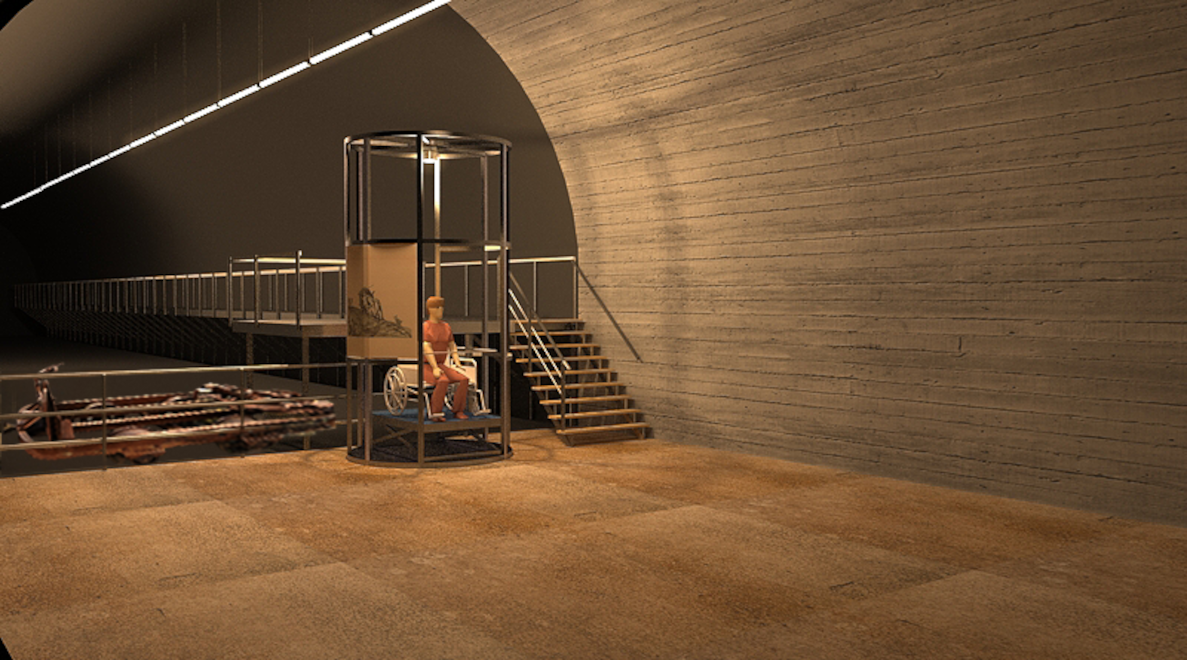
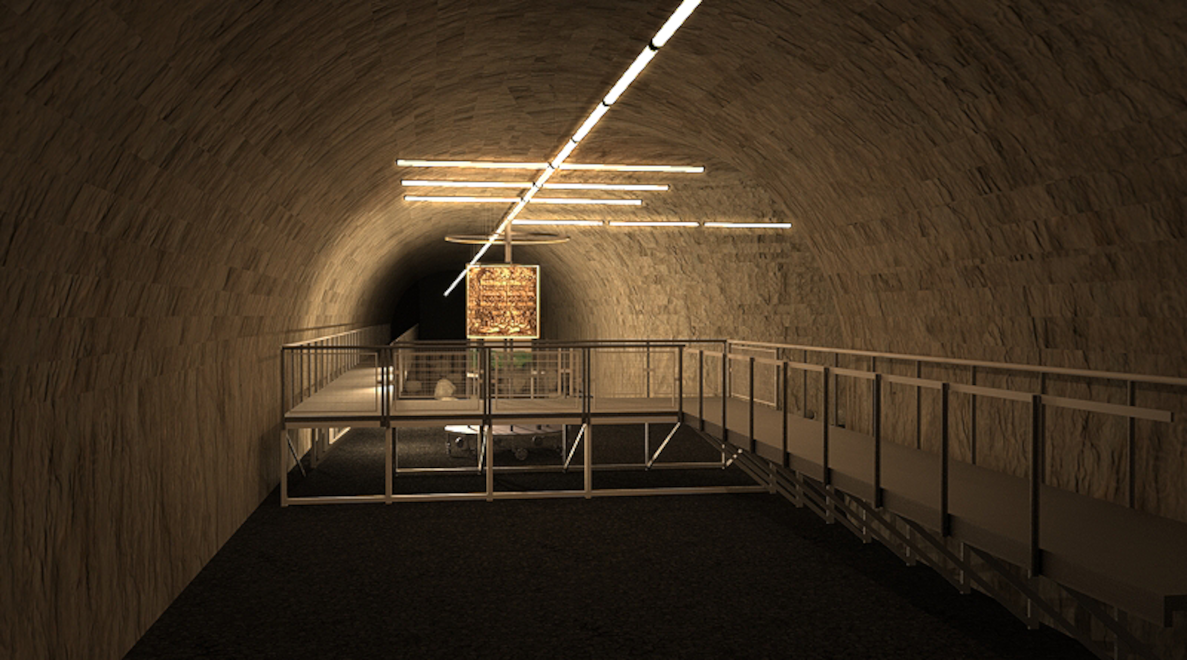
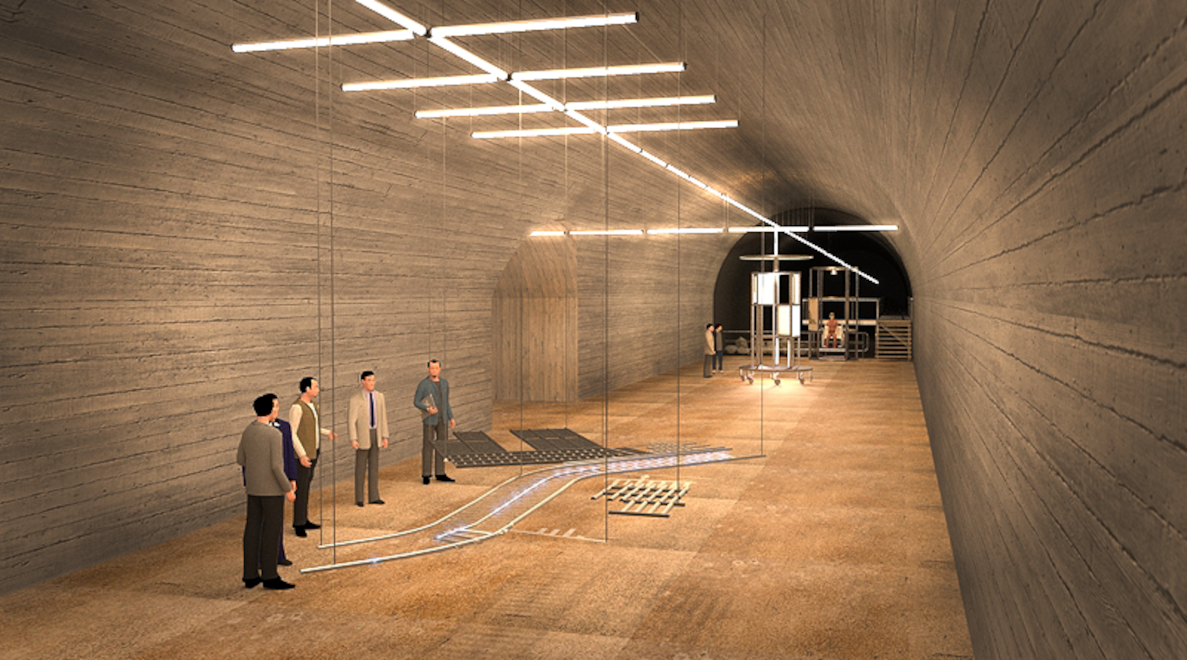
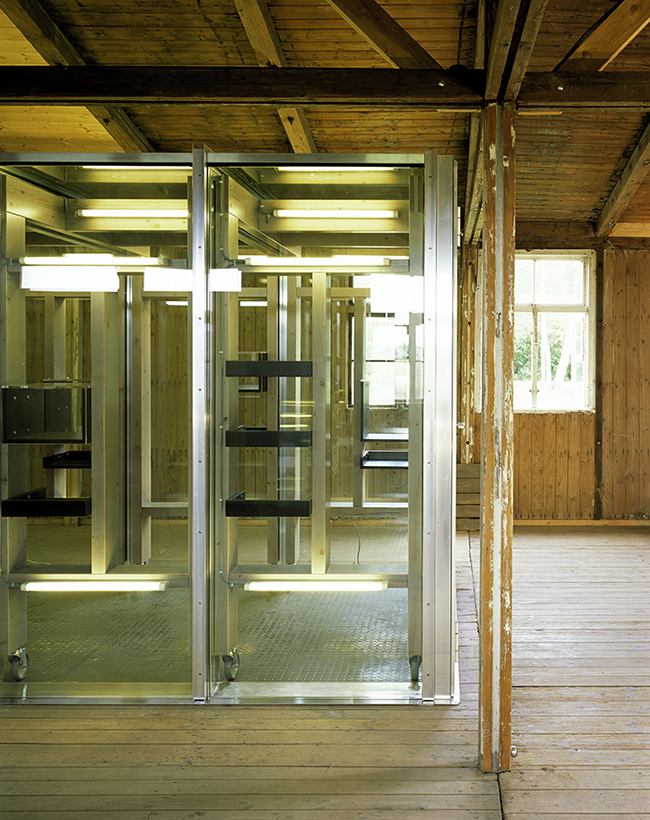
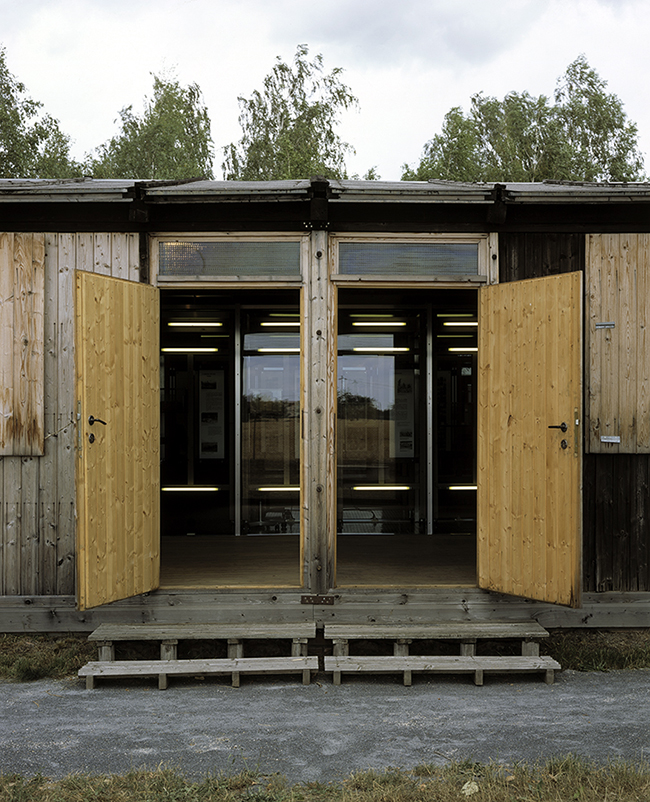
With the literal planting of a new architectural-thematic heart, the “walk-in showcase” as a micro-architectural implantation in the historical RAD barracks preserved from the former Zeithain prisoner-of-war camp, the bridge between the (structural) past and the present is successfully built.
This glass building, a microclimatic sound-proof object, thematizes not only time but also space in a special way and, as a time capsule in a place with a special auratic effect, creates a deliberate irritation that sensitizes the visitor to the exhibition theme. In the document house, the visitor has the possibility to work on the offered thematic focuses in the operable micro-architectural information sculptures, which are executed in the same exhibition language, on their own, whereby new visual axes are offered again and again and an intensive reference to the content material is created with light/ mirrors.

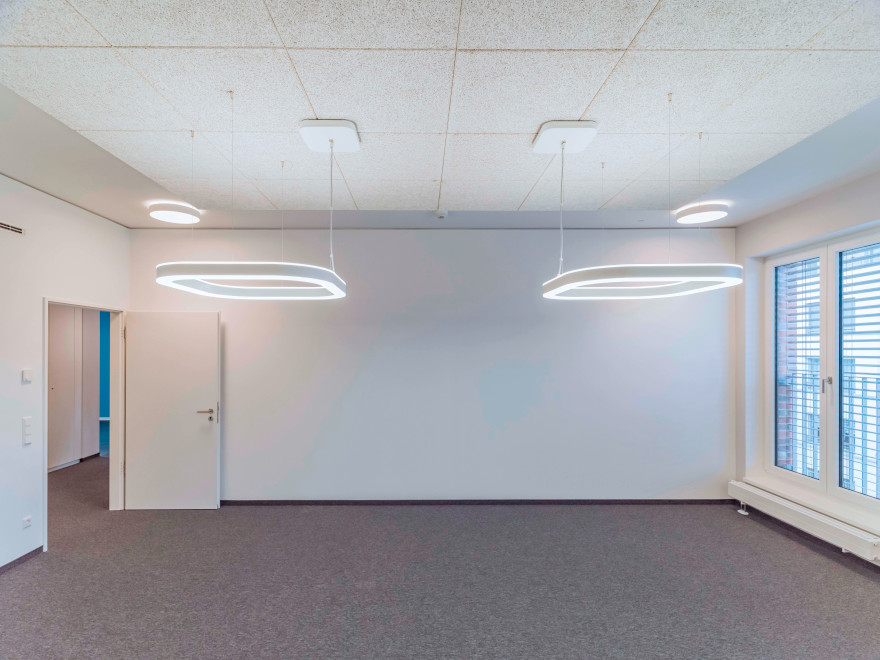
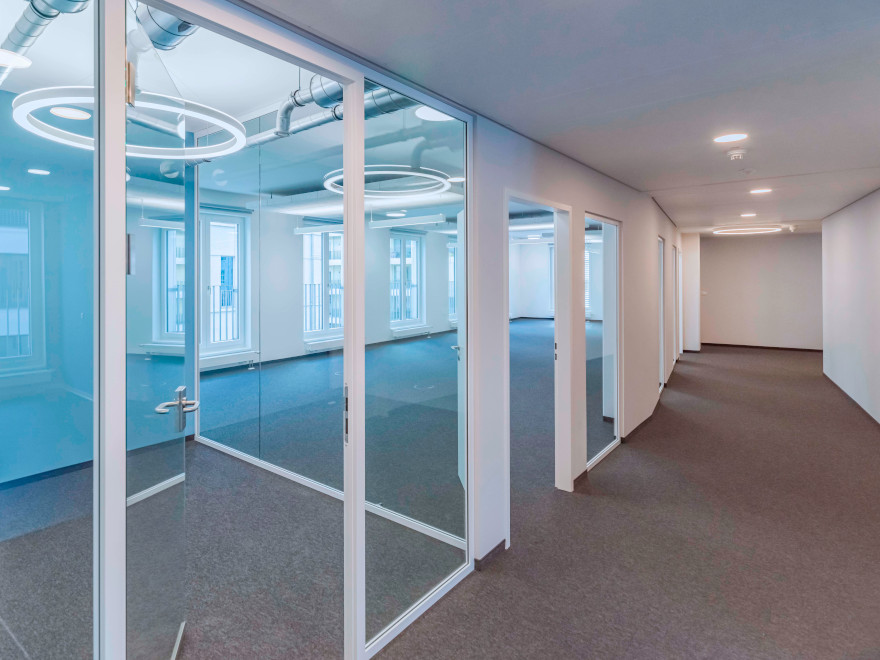
Dean’s office university hospital Dresden

Dean’s Office University Hospital Dresden

Office lighting concept

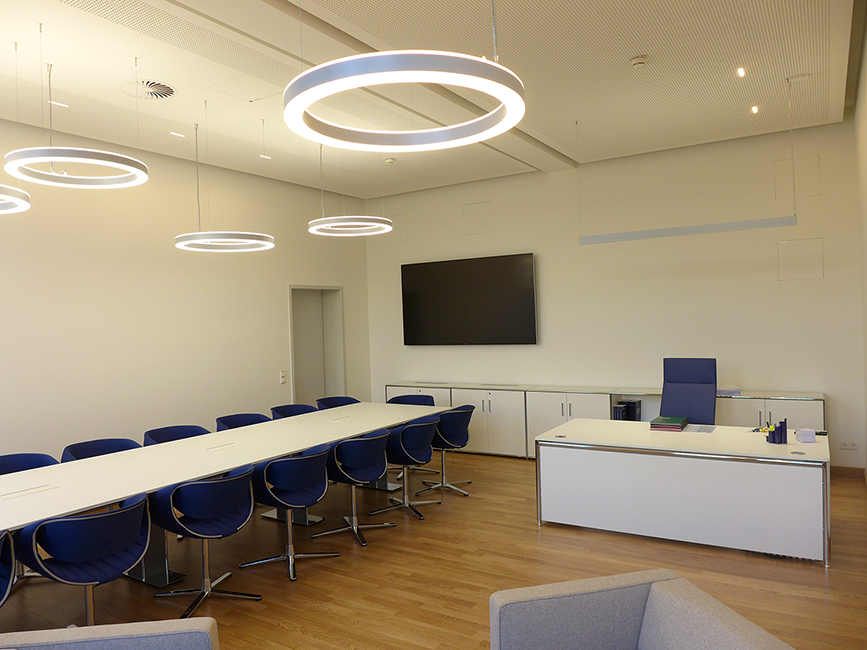
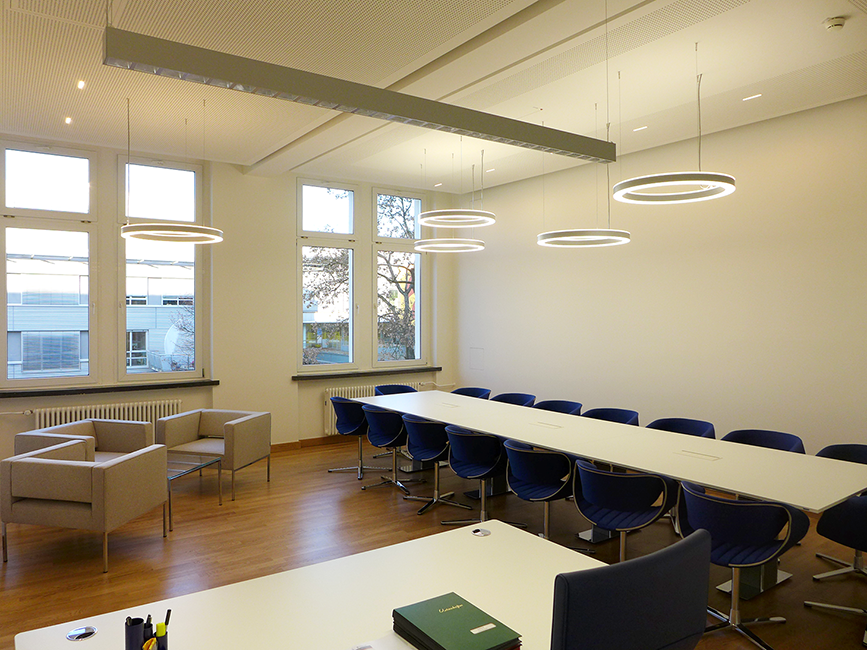
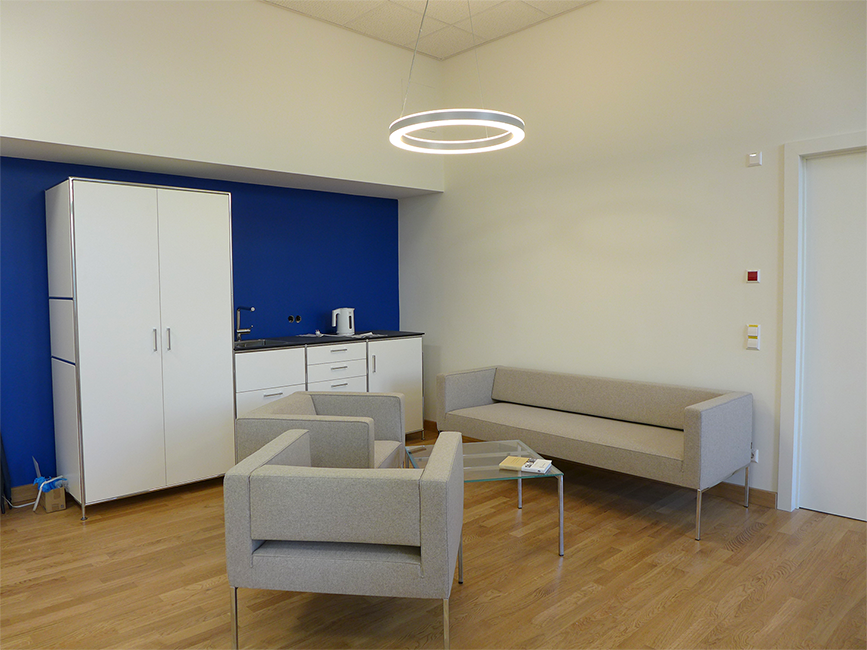
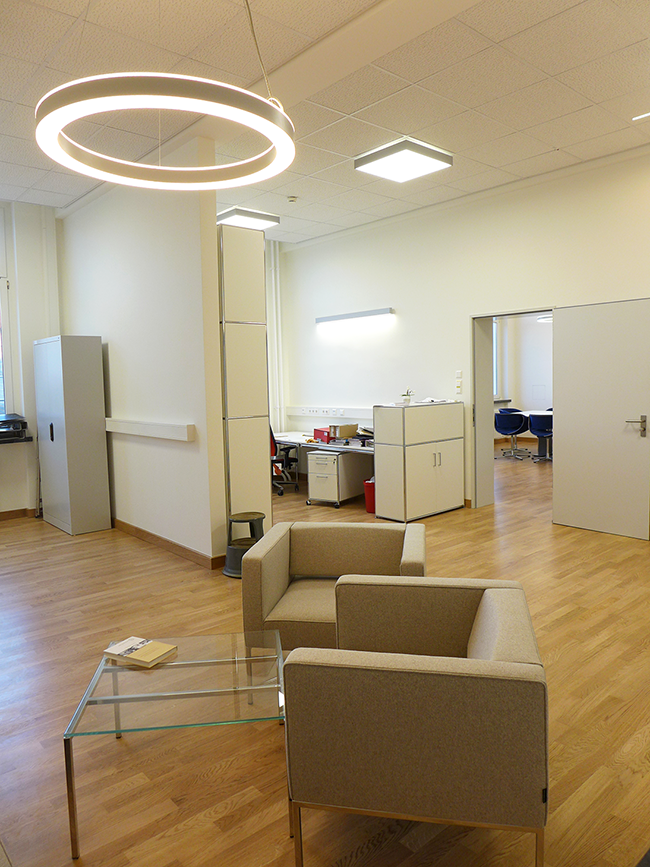
Our lighting concept for the offices of the Dean’s Office of the Carl Gustav Carus Medical Faculty of TU Dresden combines lighting functionality with attractive lighting design. In addition to everyday work activities, the rooms are also used for meetings and small conferences as well as for receiving guests. These different functional areas are precisely supported by the lighting. At the same time, the luminaires and the high-quality lighting design form an important part of the interior design of the deanery.

The basic lighting provided by wide-area ceiling luminaires is supplemented by individual task lighting for optimal working. Wallwashers attractively highlight the artworks on the walls, and “floating” ring luminaires above the communicative areas create a visual link between the different rooms as a recurring element in a varied arrangement. Individual, attractive lighting moods can be created for many different situations through simple, flexible control of colour temperature and brightness.

Slaughterhouse Five

Slaughterhouse-Five, Messe Dresden

Memory wall and information

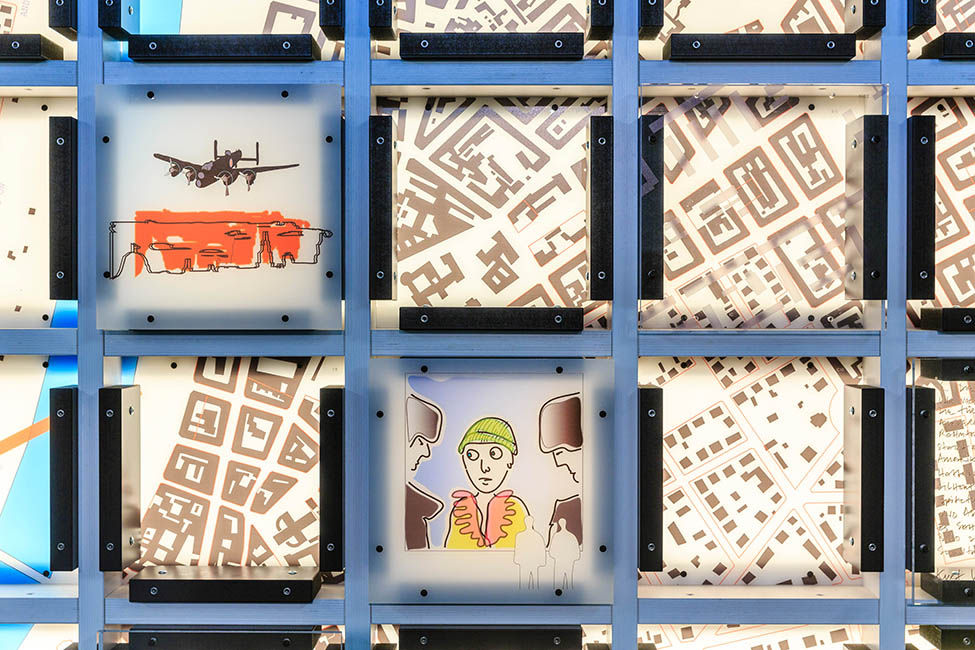
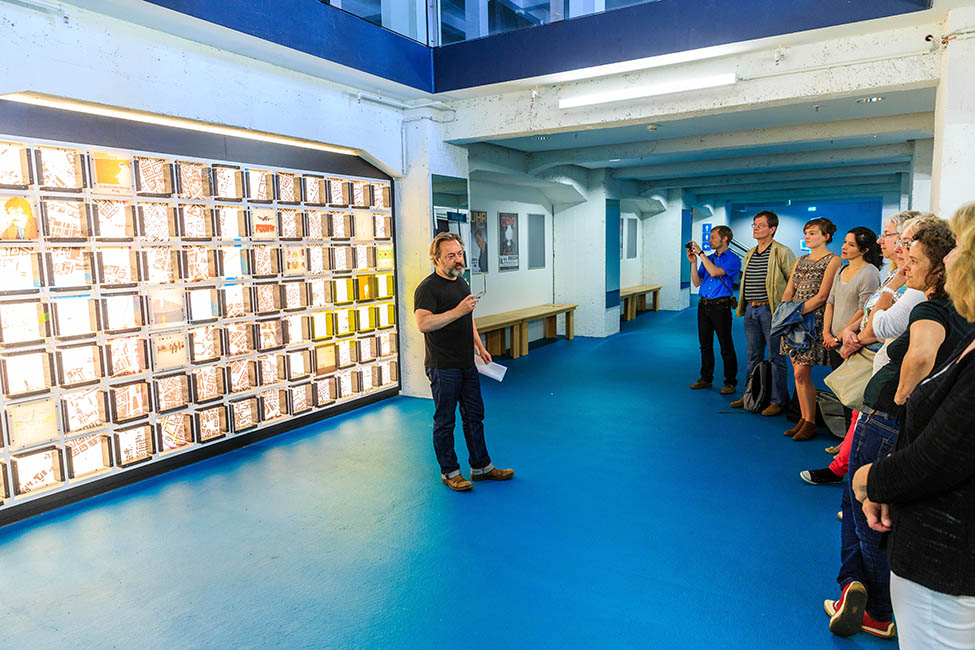
The artistically designed information light sculpture / memorial wall “Slaughterhouse Five” is visited all year-round by tourists from all over the world.
In the basement of the former slaughterhouse, the American author Kurt Vonnegut – like his protagonist Billy Pilgrim – survived the Allied bombing of Dresden on February 13, 1945 as a prisoner of war. By means of the multimedia literary sculpture, the viewer can experience the metamorphosis of the city of Dresden.
Through the artful superimposition of drawings, paintings, photographs, and city map excerpts, embedded in a complex grid of wood and Plexiglas, different time levels of the city’s history and at the same time the collage-like nature of the novel become visible. Illuminated from behind, the structure appears plastic, light and shadow become part of a larger picture.
Radebeul Cultural Railway Station

Radebeul Cultural Railway Station – East

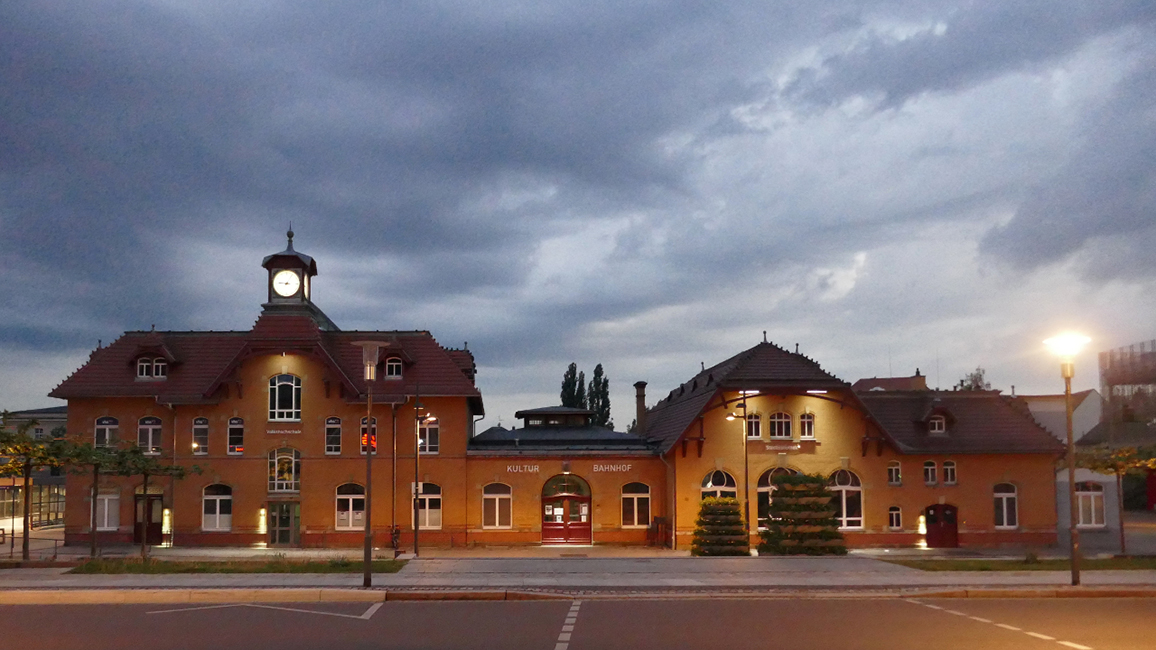
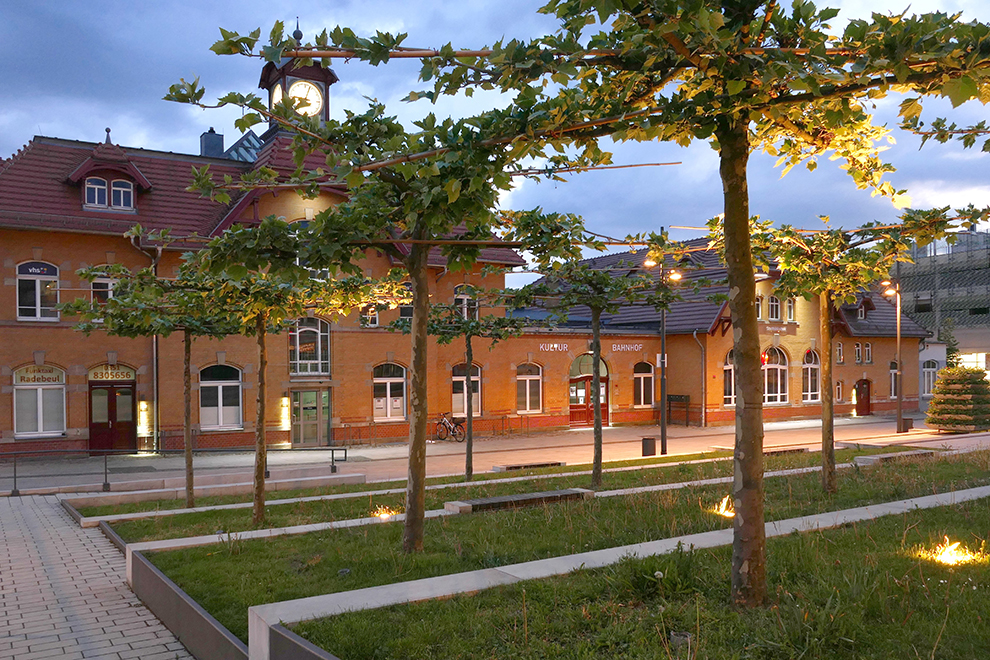
Lighting concept for the Kulturbahnhof area

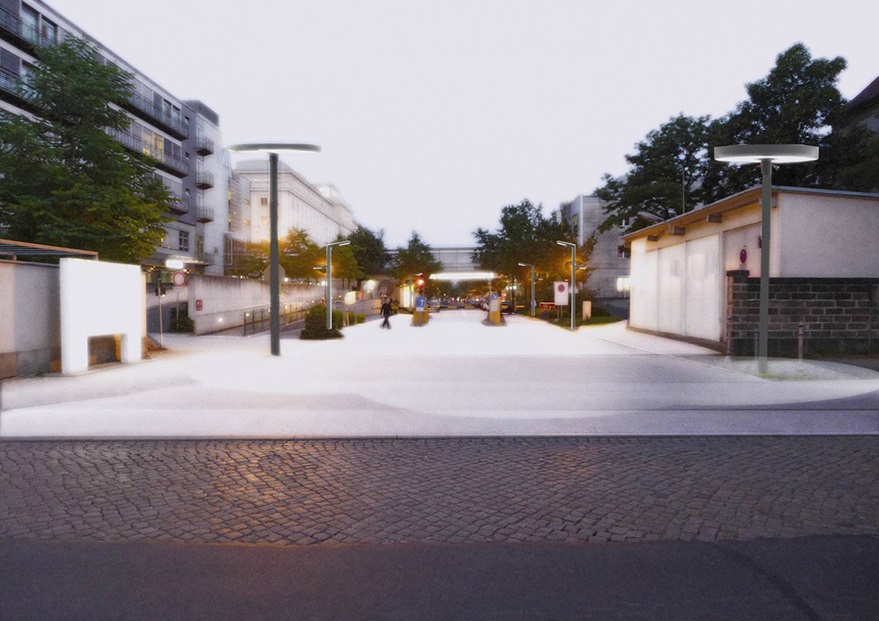
The city of Radebeul intends to redevelop / convert the Kulturbahnhof Radebeul-Ost area into the new citycenter east. Our lighting concept, proposed on the basis of an urban development analysis, takes up the urban development significance and use of the central square in an identity-forming way. Our luminaire design integrates organic elements of the existing forms in the art nouveau building (Kulturbahnhof) in a modern way. The sub-project Bahnhofsvorplatz Kulturbahnhof Radebeul-Ost received recognition as part of the 2013 Saxon State Prize for Building Culture.
Marketplace Torgau

Marketplace Torgau

Lighting for market place and town hall

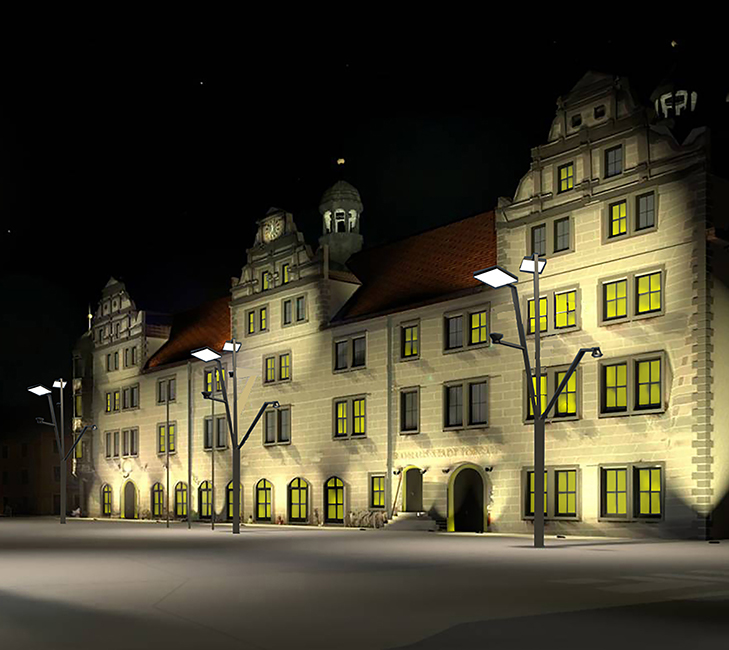
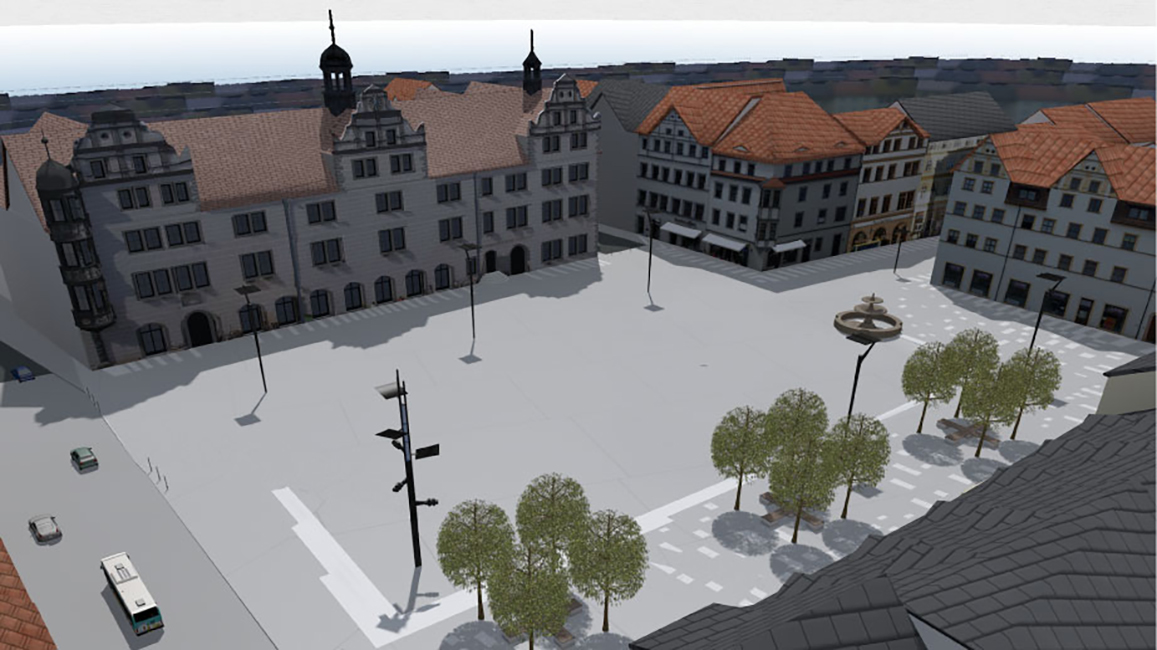
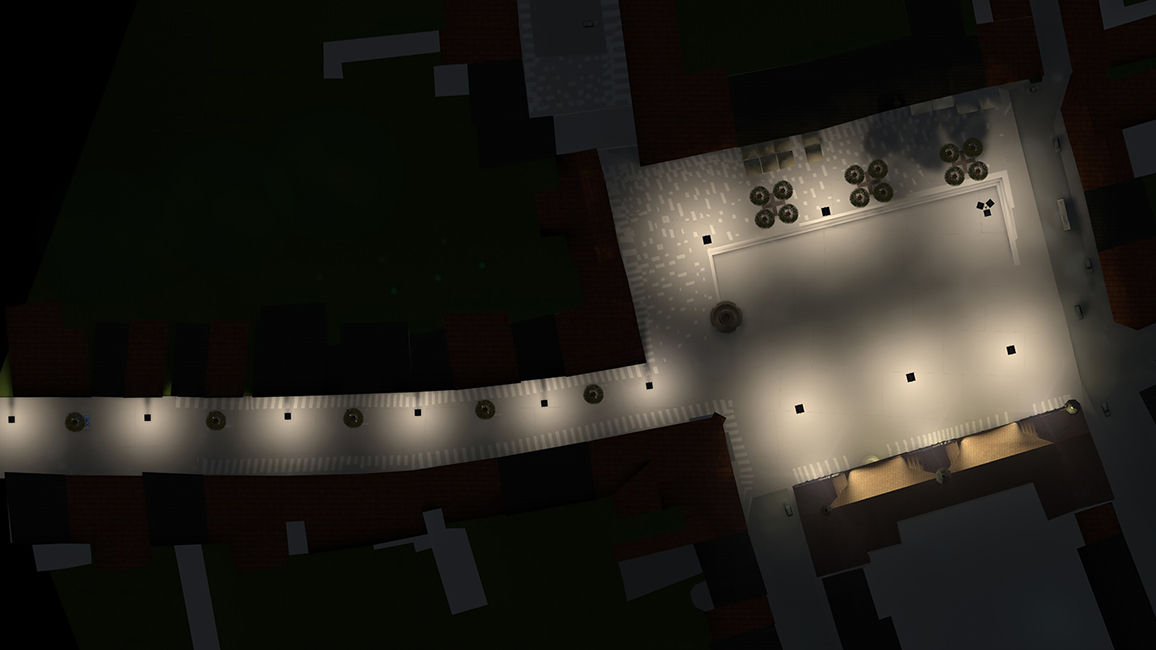
Development of proposals for lighting the market with the town hall and adjacent streets. For the city of Torgau, as part of the redesign of the lighting of the historic city center, we developed lighting proposals for a contemporary individual lighting of the market, the town hall and the adjacent central streets, which respectfully fits into the valuable historic townscape.
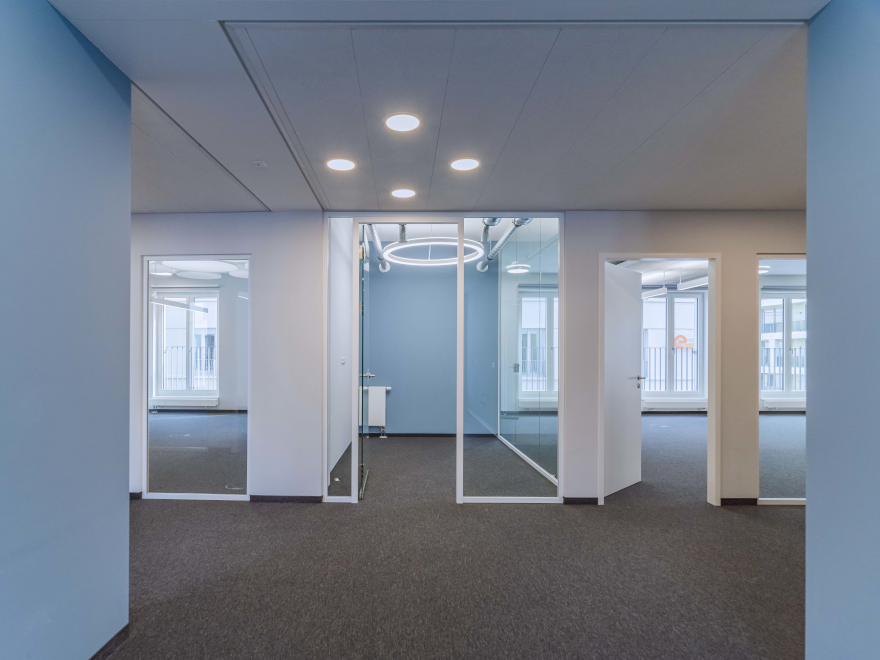
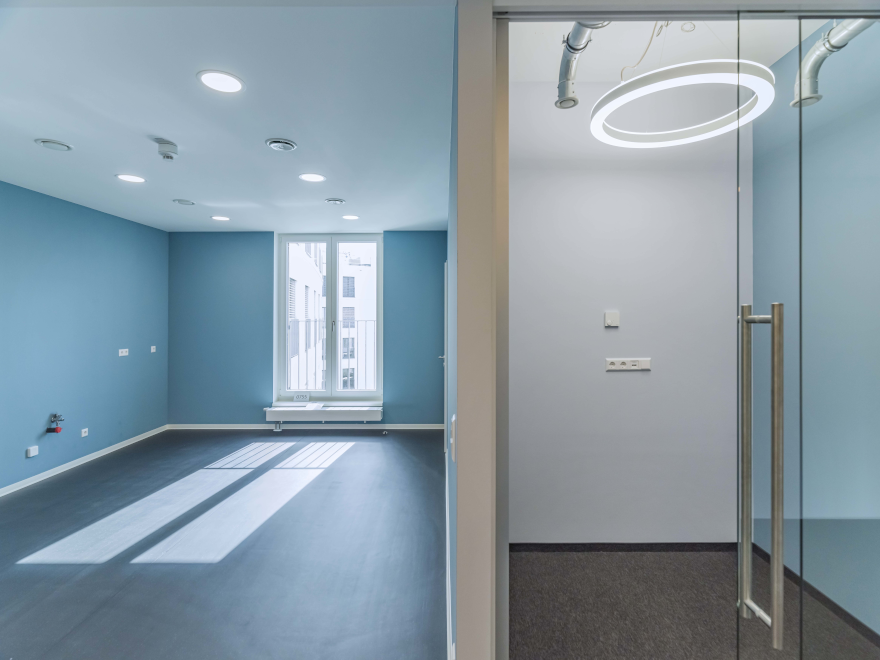
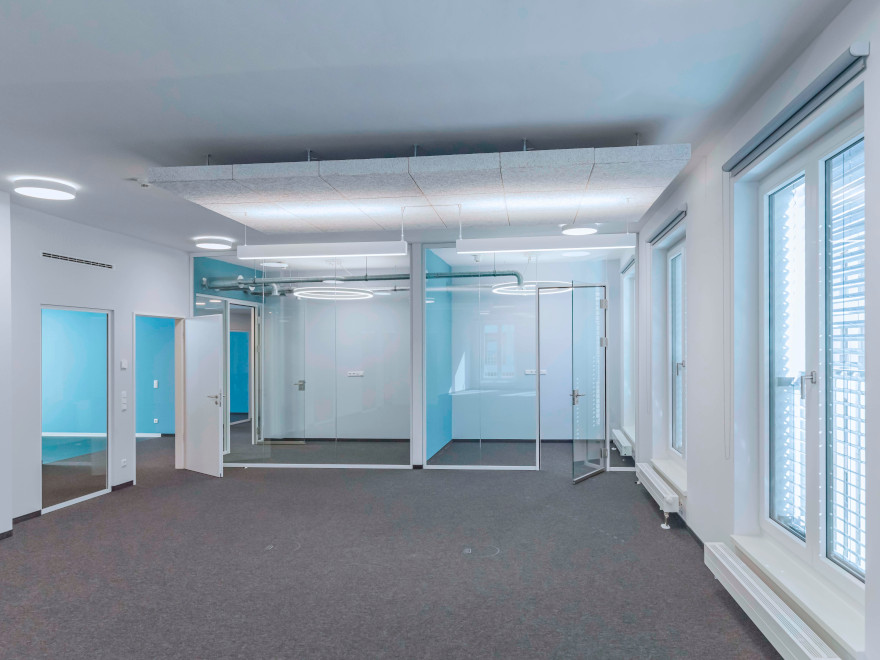
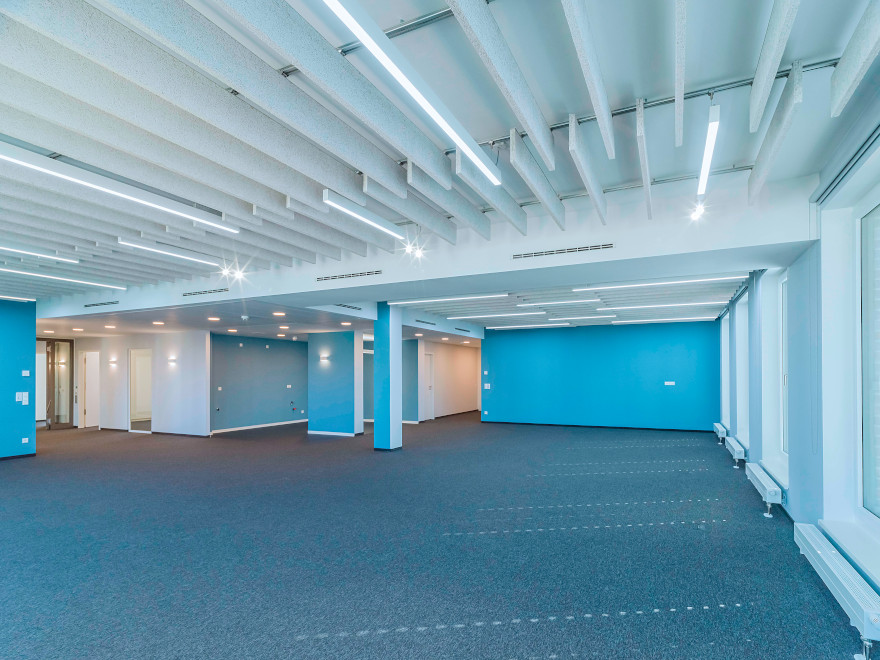
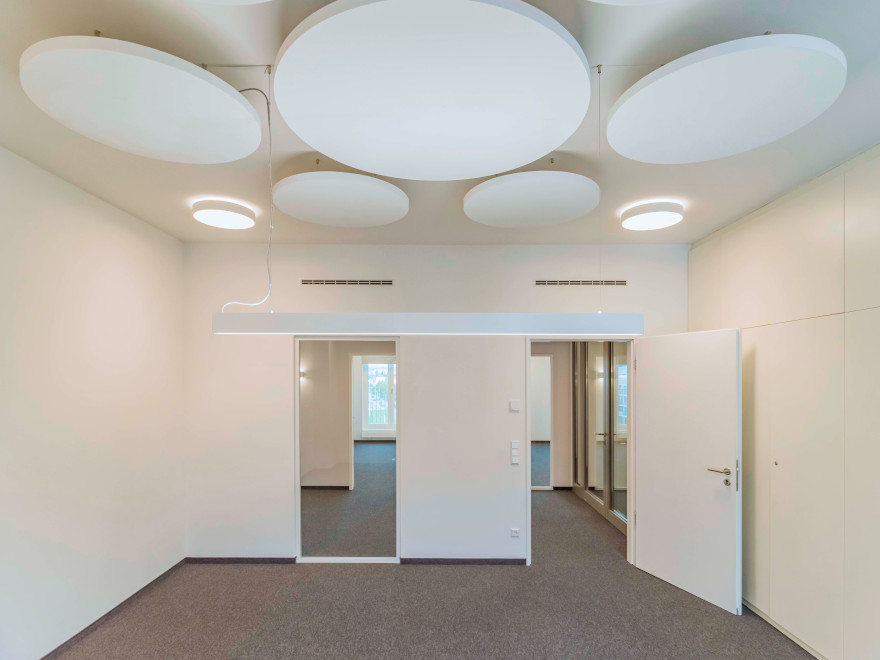
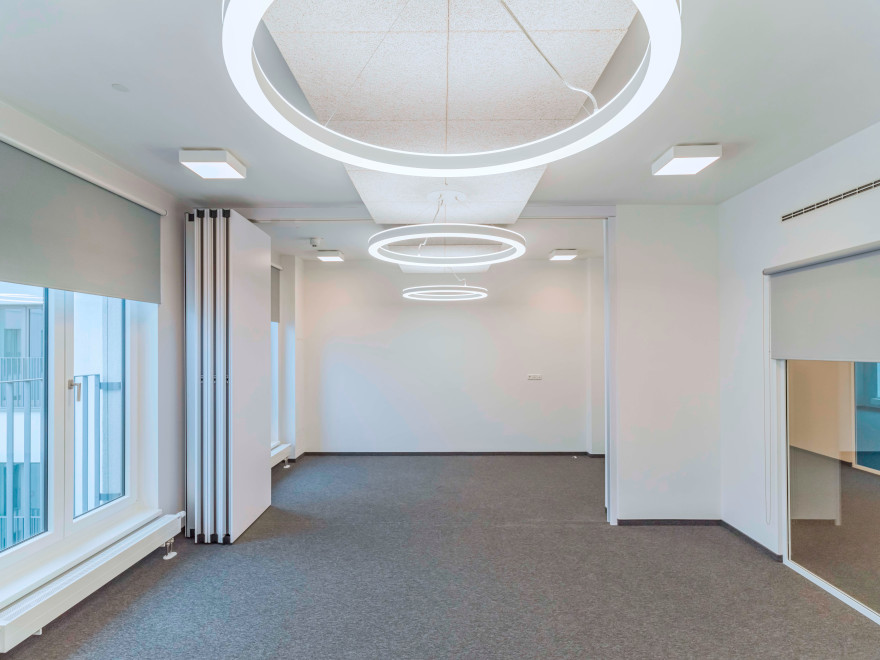
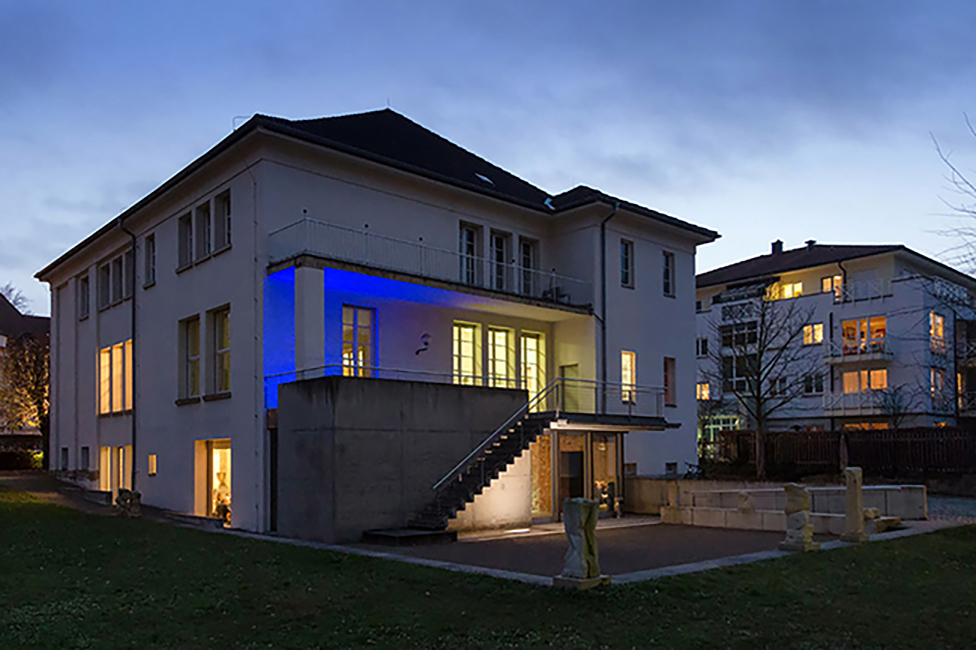
Colour and light concept Villa Regerstraße

Colour and lighting concept Villa Regerstraße

Psychotherapy Institute for Children and Adolescents

German Society for Behaviour Therapy in Saxony, Germany. Institute for Children and Adolescents in Dresden (2021-2022).

The new location of the institute is a freshly renovated, listed villa in Dresden-Blasewitz, Germany.

Light, colour and choice of materials play an important role in creating the right atmosphere for all age groups and the different scenarios of discussions, presentations and meetings that take place at the institute. As those responsible for the interior design, it was of utmost importance for us to balance the heaviness of the old, characterful building with bright, friendly, appealing and even thought-provoking interiors. The choice and use of different colours, lighting fixtures, mirrors, materials and decorative elements that tell stories give the reception, offices and therapy rooms their own identity. The impressive staircase is celebrated as a special space that connects the floors. The dark basement needed special attention to be able to use it for seminars and training purposes. At the Psychotherapeutic Institute in Dresden, child and youth psychotherapists and psychological psychotherapists are trained with a strong practical orientation. In addition, outpatient psychotherapeutic treatments are offered in the institute’s outpatient clinic.

Requirements for the current use are as follows:

  • Working Office / Administration
  • Treatment patients / therapy rooms
  • Training / seminar rooms
  • Flexible uses – adaptation / change between seminar and group therapy uses

Photos: Peter Fischer

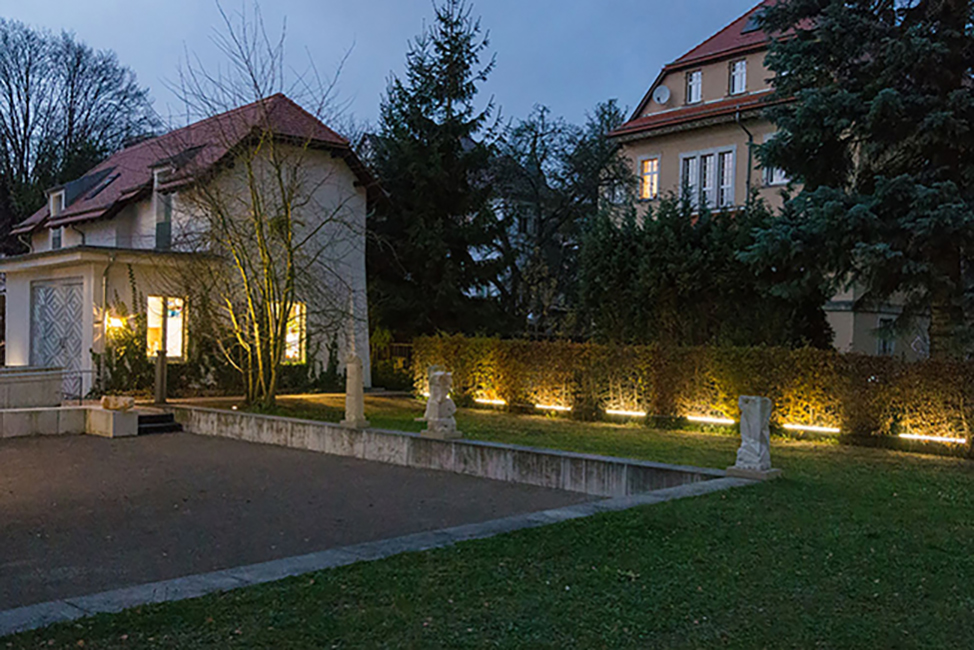
Lighting concept house 1, University Hospital Dresden

Lighting concept house 1, University Hospital Dresden

Facade lighting concept for the central administration building

The main focus of Ruairi O’Brien’s lighting concept was on the central administration building of Dresden University Hospitals. The carefully accentuated lighting of the facade and the roof, which was approved under monument protection law, increases the perceptibility of the building and thus does justice to its central importance.
Elements in the surroundings, such as the pedestrian entrance and the avenue of trees in front of the main portal of the building, were also integrated into the lighting design.

Lighting concept church tower Garnisonkirche Dresden

Lighting concept church tower Garnisonkirche Dresden

Temporary light art installation on the occasion of the ÖRNÖ art festival

On the occasion of the 21st Dresden Art Festival ORNÖ, Ruairí O’Brien designed an artistic architectural light show for the tower of the Garrison Church of St. Martin in Dresden.

The tower was highlighted by accentuating the edges of the building. By means of discreet use of light – the openings of the tower were specifically accentuated with light – the imposing appearance of the building could now be experienced even in the dark, thus drawing the public’s attention to the building and the festival venue.

Exterior lighting St. Joseph Stift Hospital, Dresden

Exterior lighting St. Joseph Stift Hospital, Dresden

Lighting concept west wing hospital, Dresden

By 2018, the St. Joseph Stift Hospital in Dresden had constructed the new west wing. With this future central outpatient clinic, an important new main frequency point of the hospital was created.  Ruairí O’Brien developed the lighting design and a holistic orientation system for the exterior of the hospital.
For the exterior lighting, we considered this new hospital area in five local areas / spaces with different functions and developed appropriate lighting proposals for each.

Access and entrance area emergency ambulance (night entrance, ambulance access)
Entrance underground parking
Bicycle parking
Entrance area with canopy, external stairs, ramp
Patient garden
Entrance to residential area for nun

In addition to supporting the various functions, our lighting design also takes into account the legal lighting requirements and the optimal fulfillment of safety aspects, such as a glare- and shadow-free design of the lighting of circulation areas, good facial recognition and optimal illumination of the space. Supporting the hospital’s new exterior orientation system was another design concern. Different brightnesses, light colors and accentuations, e.g. of the entrance, create a lighting hierarchy that supports intuitive human orientation. For the canopy as an asymmetrical element, we proposed a lighting design that supports its architecture and creates a strong visual connection between the exterior and interior. The entrance becomes more easily perceived as such from far and near.

Erich Kästner Museum

Lighting for the micromuseum® for Erich Kästner in Dresden

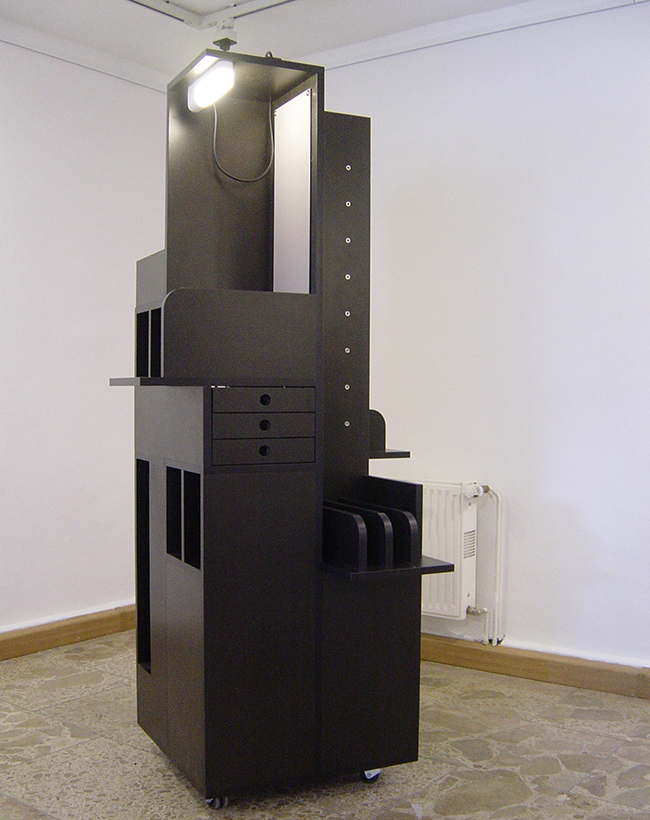
Designed by Ruairí O’Brien, the micromuseum®, a modern piece of architecture, artwork and interactive working toolkit, reflects the multifaceted personality and work of the world-famous children’s book author, poet, media man and journalist Erich Kästner.

The careful insertion of a new “heart” into the listed Villa Augustin on Albertplatz, into the former home of Kästner’s uncle, by means of a microarchitectural implantation of a house into the house -consisting of a multimedia core and 13 mobile life-size information modules- creates a lively bridge between past, present and future as well as all generations. By examining and operating the life-size building blocks as well as the multimedia components, visitors gain access to the exhibition content and are granted insights into the complex Erich Kästner world, which they can explore along a self-directed route and at their own pace.

Light concept spinning machine building Chemnitz

Lighting concept and lighting master plan for a historic industrial monument

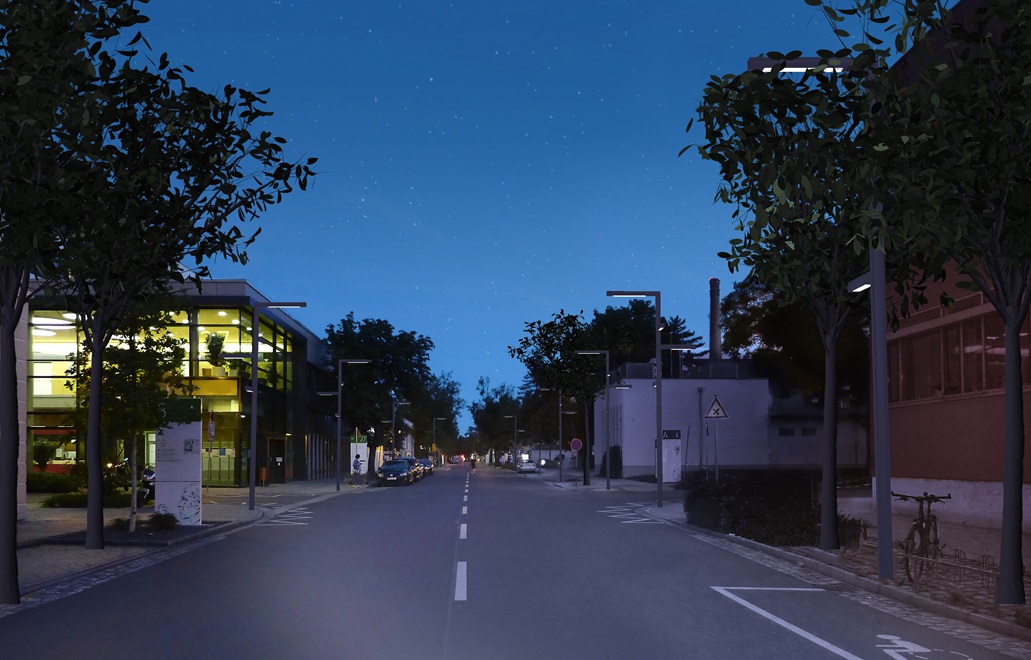
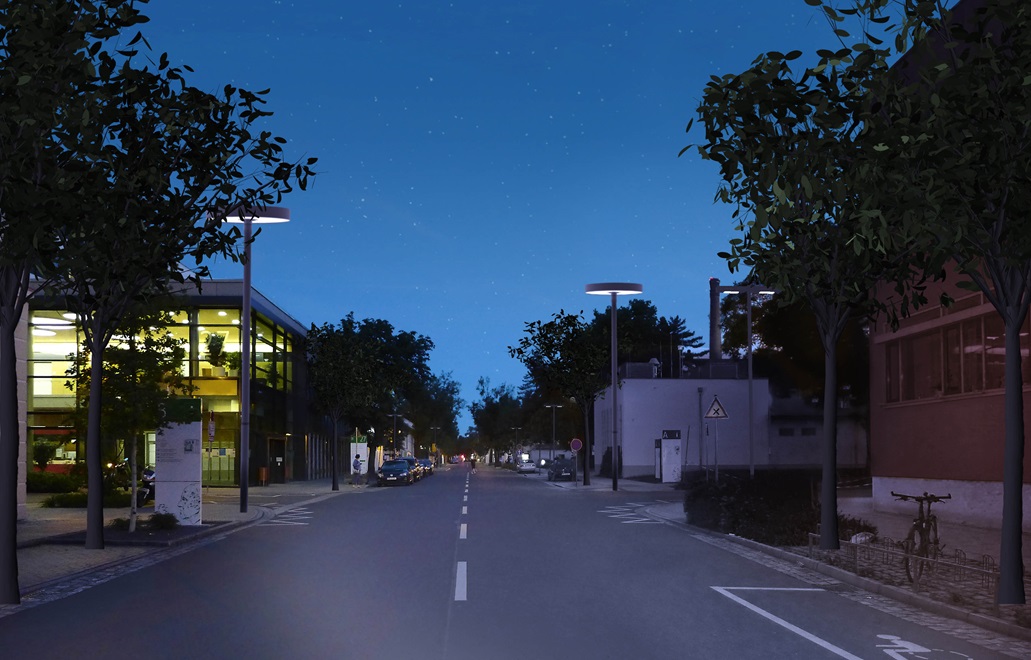
In Chemnitz Spinnereimaschinenbau, where around 2,200 people worked in GDR times, more and more smaller companies have been settling for several years, using the old industrial halls as open spaces, workshops or storage rooms. The future lighting situation is intended to remove the current scary spaces, some of which are caused by darkness. These were created by the lack of scattered light from the industrial halls, which used to be lit 24 hours a day. To support the long-term and sustainable development of the building complex, which is partly listed, into a lively and actively used area, Ruairí O’Brien.Lichtdesign was commissioned by the city of Chemnitz to develop a lighting concept that does justice to the many new possible uses.

The lighting picks up on the historical lighting situation while at the same time taking into account current lighting requirements. The industrial heritage value of the building ensemble can still be experienced after dark. With the help of a sustainable lighting concept consisting of energy-saving, reduced lighting that avoids unnecessary light emissions, visitors are intuitively guided to the site. The realisation on the entire grounds of the Altchemnitz spinning mill can take place gradually over the next few years, as various intermediate scenarios have already been considered in the lighting concept.

The lighting concept for the Altchemnitz spinning mill was developed as part of the EU project “URBACT 2nd Chance”, which aims to revive the large old factory complex of the Altchemnitz spinning mill.

You can download the lighting concept at the following link: https://www.chemnitz.de/chemnitz/media/unsere-stadt/stadtentwicklung/eu-foerderung/urbact/2018-08-28-lichtkonzept_spinnereimaschinenbau_kurz.pdf

Light and Word, Cities by the Sea

Light and Word, Cities by the Sea

Light Performance by Ruairí O’Brien

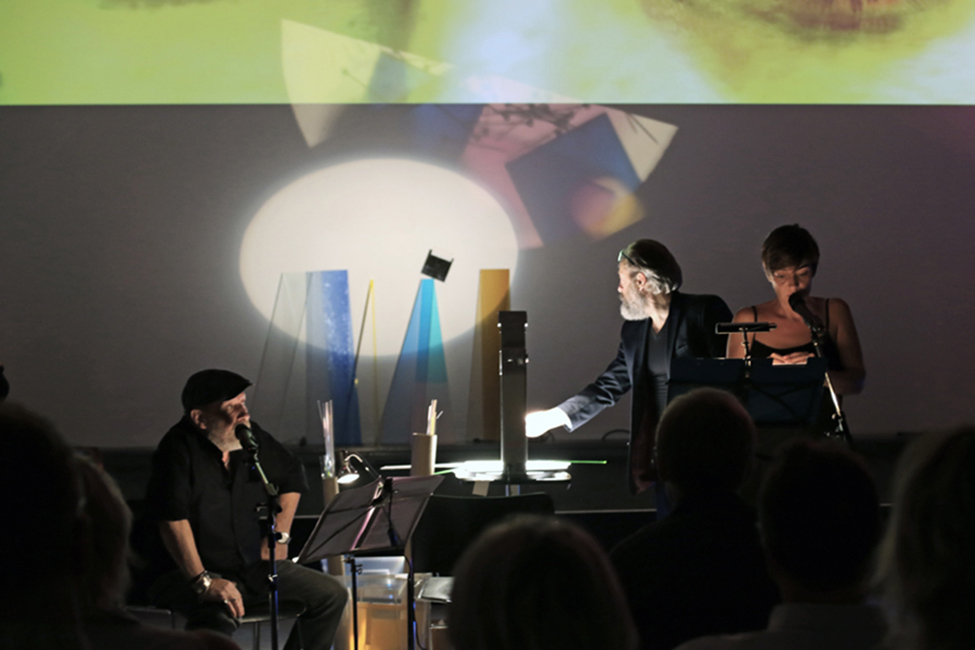
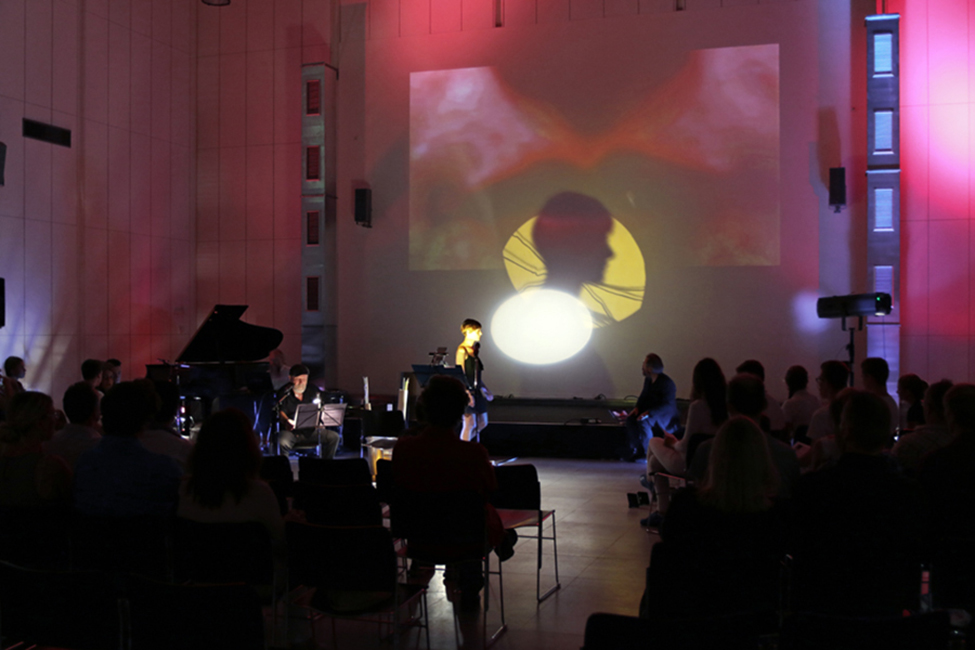
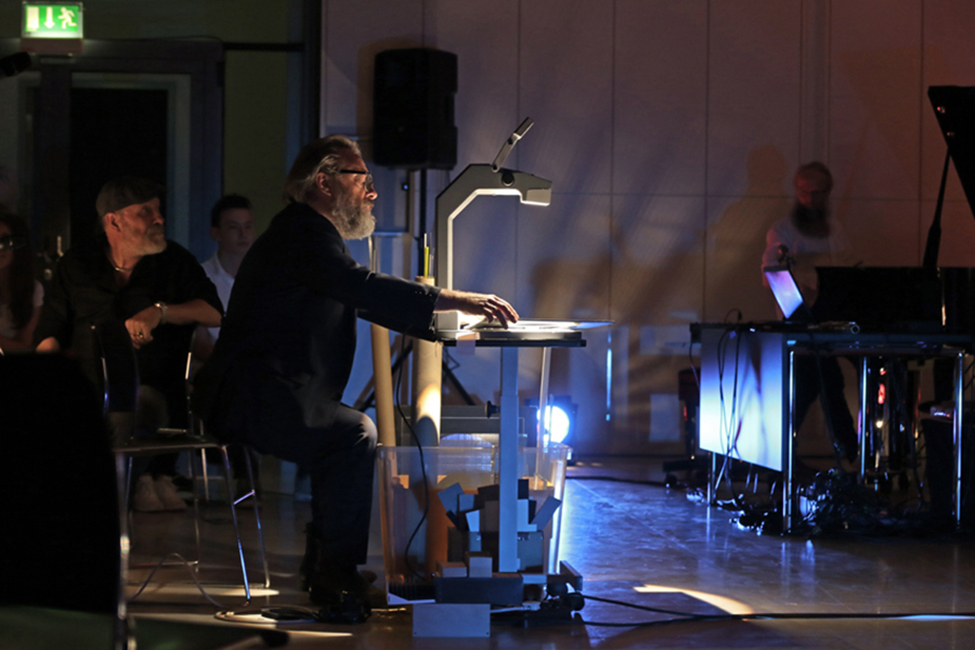
Three arts, one theme: Ronald Lippok (sound), Thomas Kunst (poetry) and Ruairí O’Brien (light) presented the BARDINALE theme “Cities by the Sea” in 2005.

The focus was on the diversity of poetic forms of expression and at the same time the uniqueness of poetry, sound art and light poetry was emphasized. The three artistic interpretations were presented in separate sequences, so that the audience had the chance to experience and compare the realization of one and the same theme in three poetic expressions. The dramaturgy of this Gesamtkunstwerk in terms of time and content allowed each genre the greatest possible creative freedom and sole attention.

www.bardinale.de