A Landscape Between Confinement and Hope
The memorial is not conceived as a single object, but as a spatial experience that reveals itself gradually through movement.
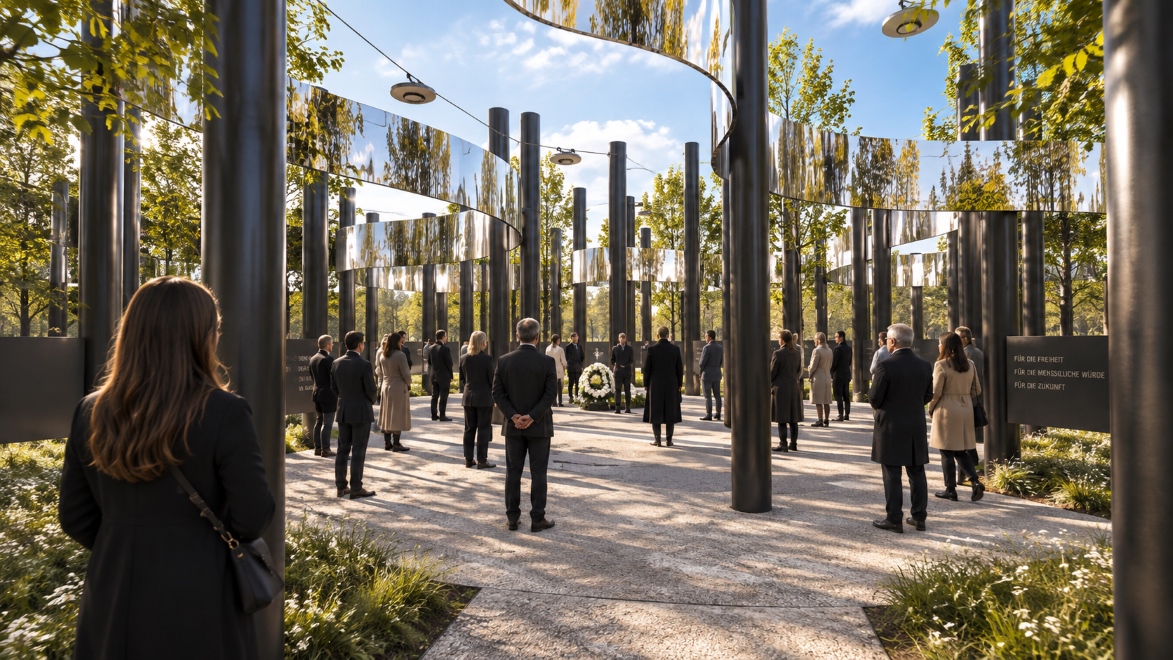
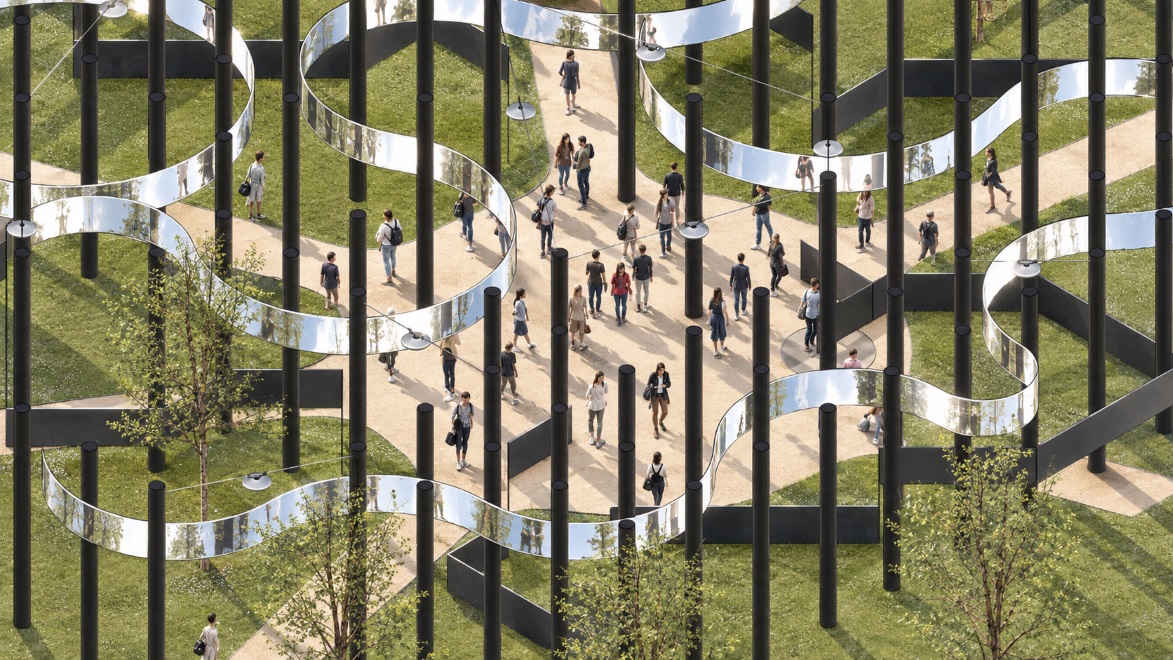
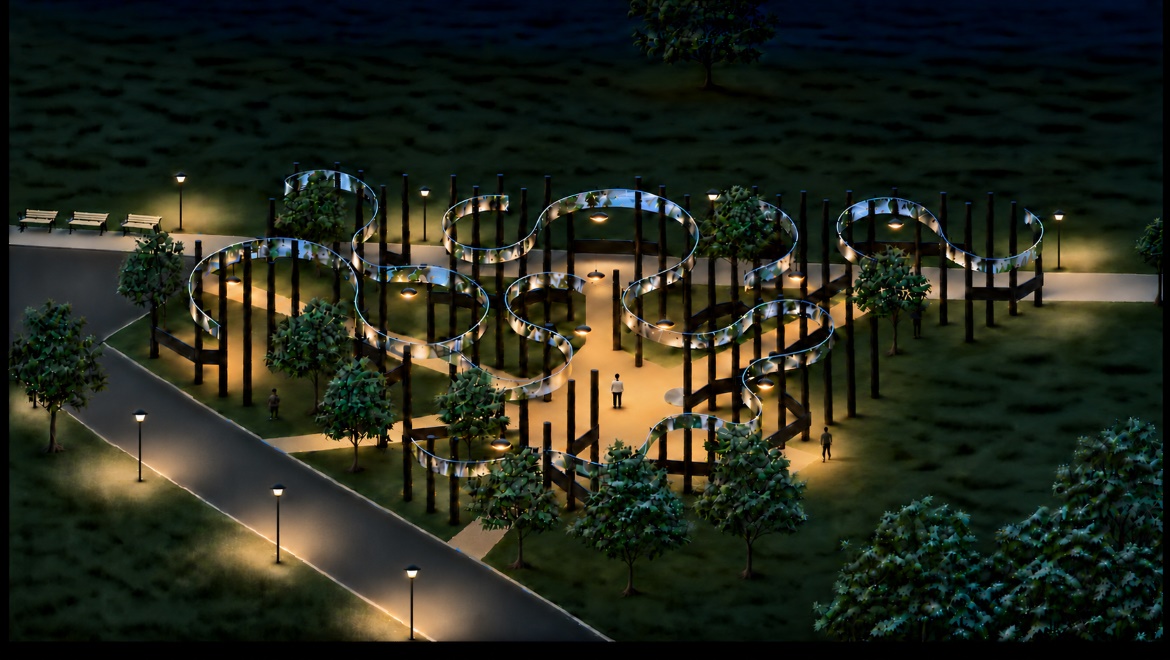
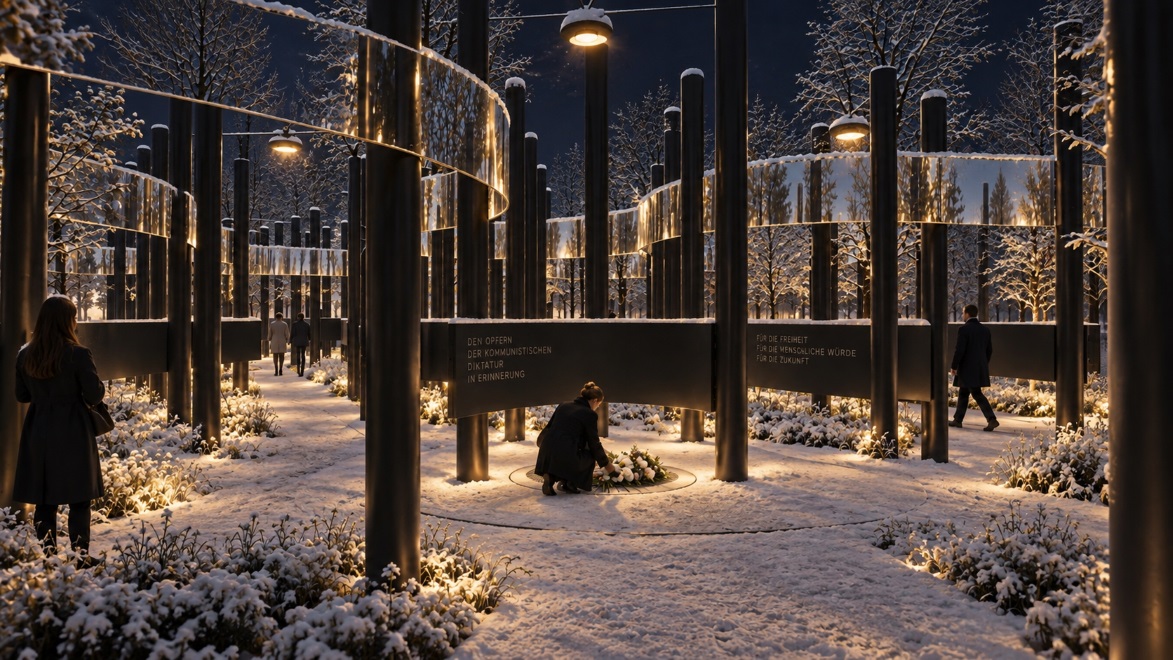
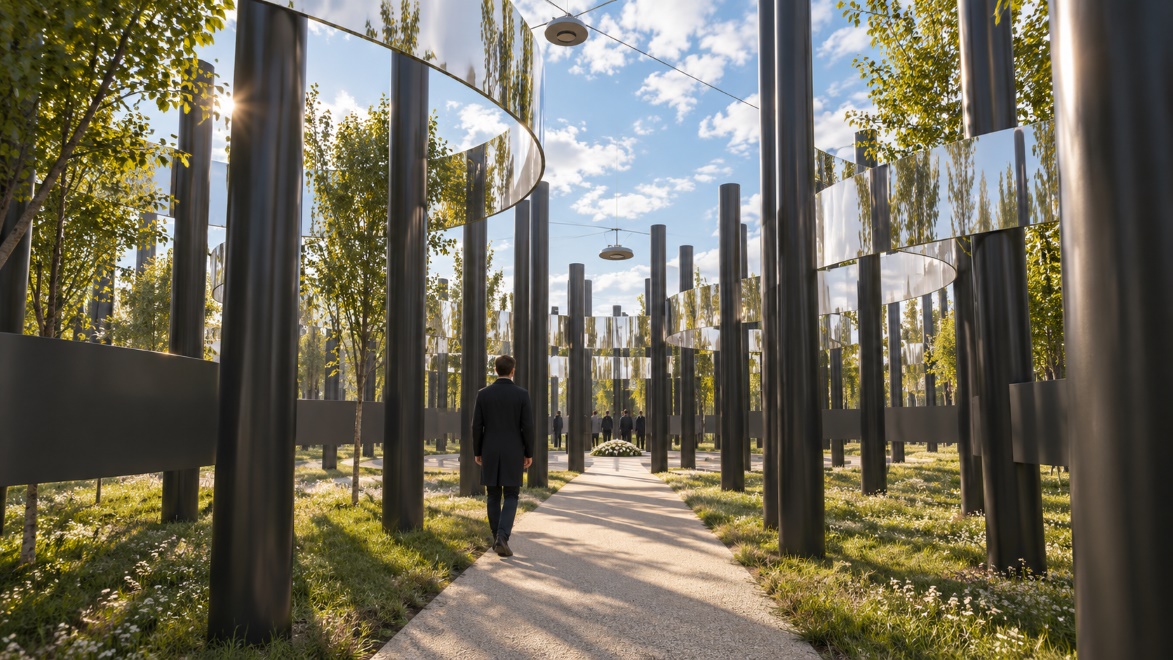
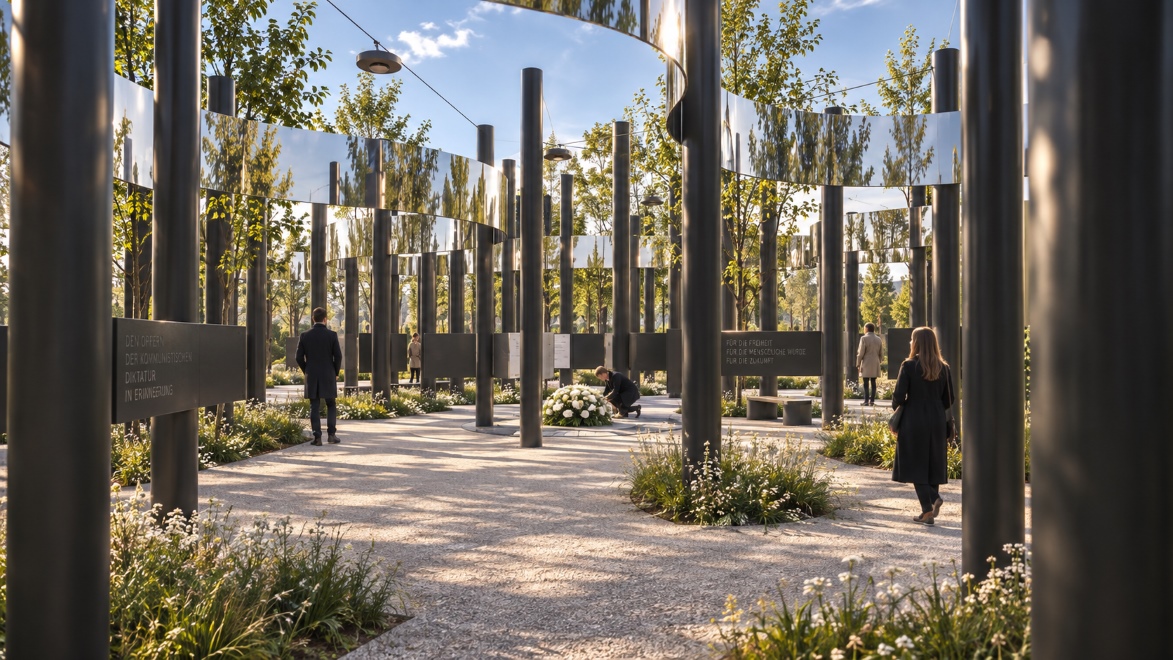
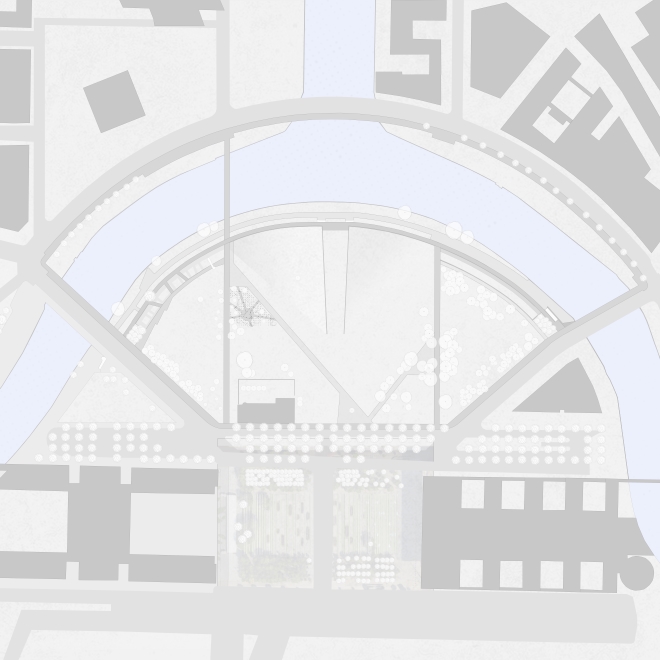
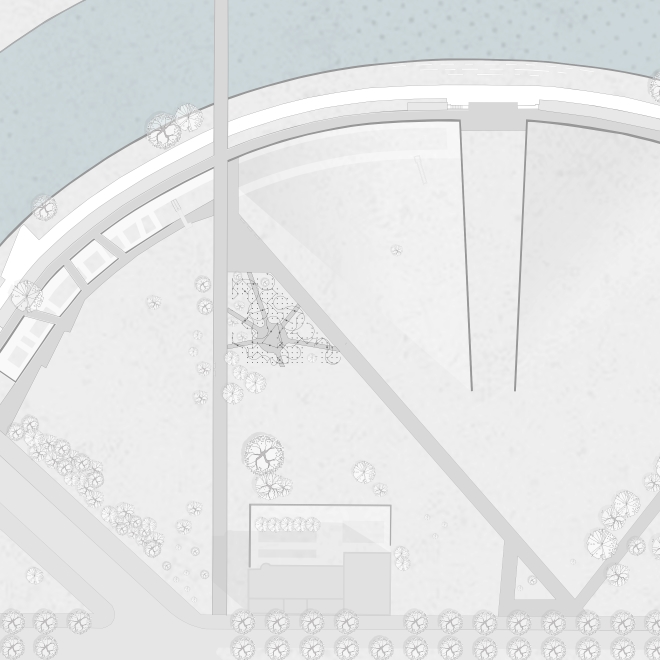
At ground level, existing and newly created pathways lead into the memorial from different directions. They guide visitors towards a central open space where up to 50 people can gather for commemorative ceremonies. At its heart lies a more intimate place for laying flowers and for a personal moment of remembrance.
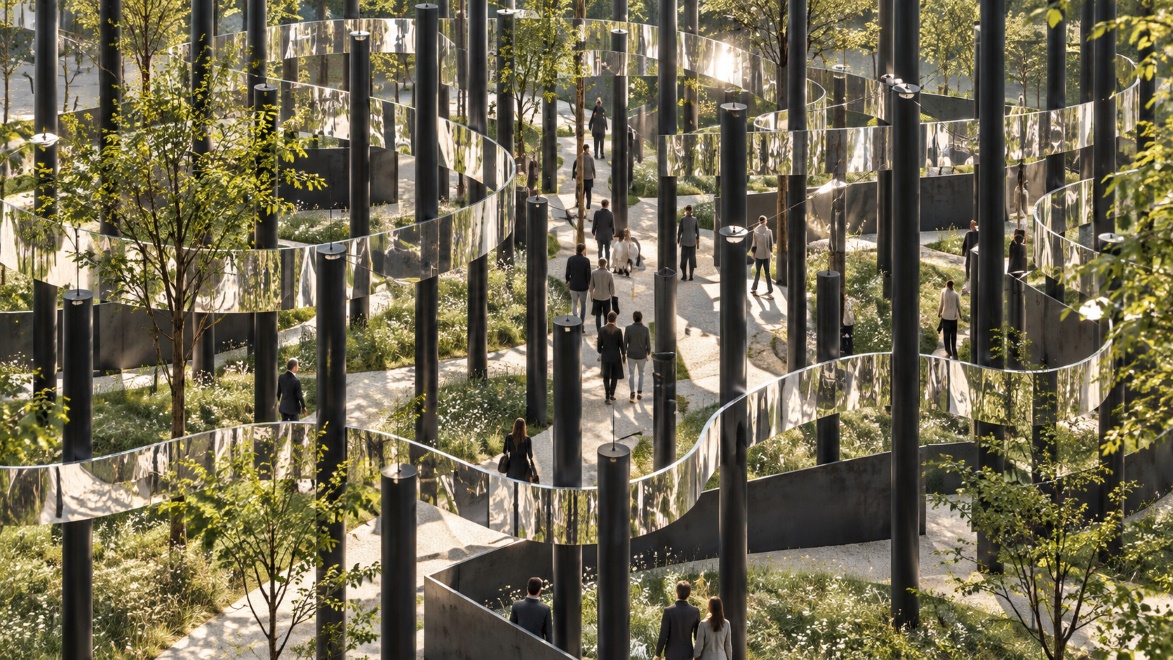
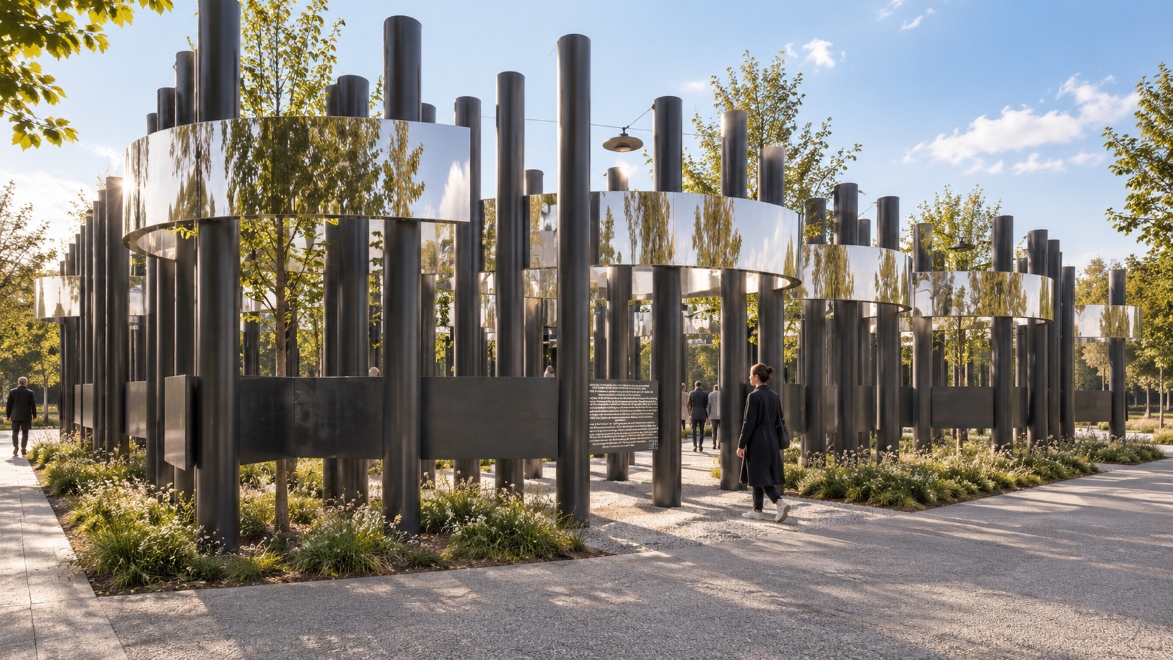
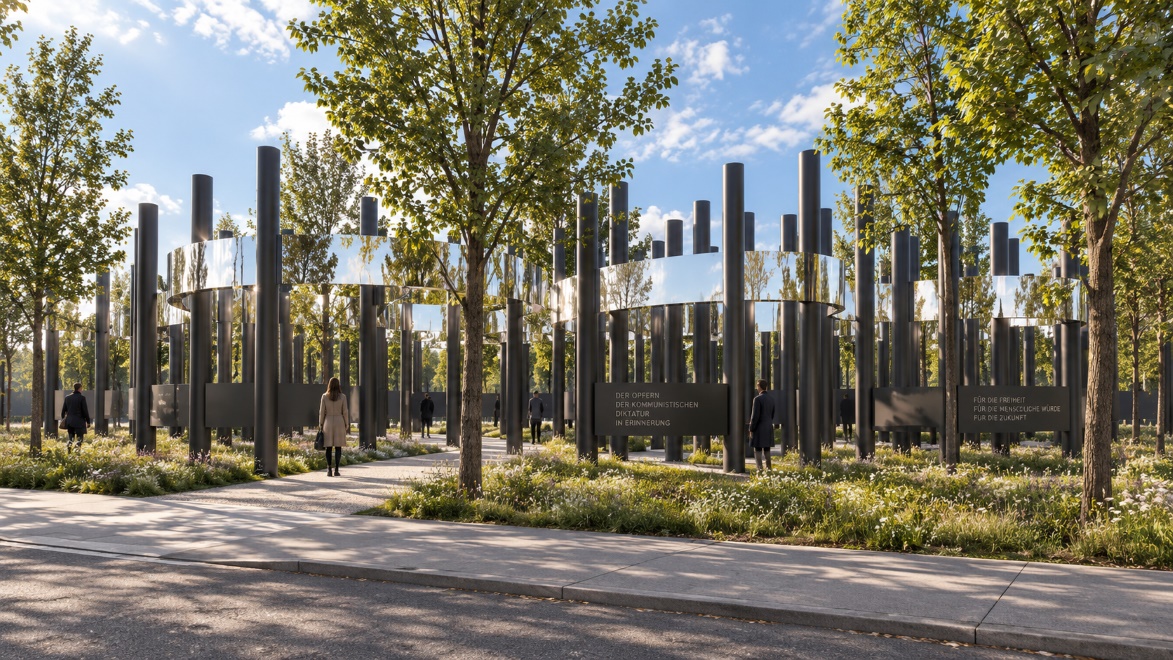
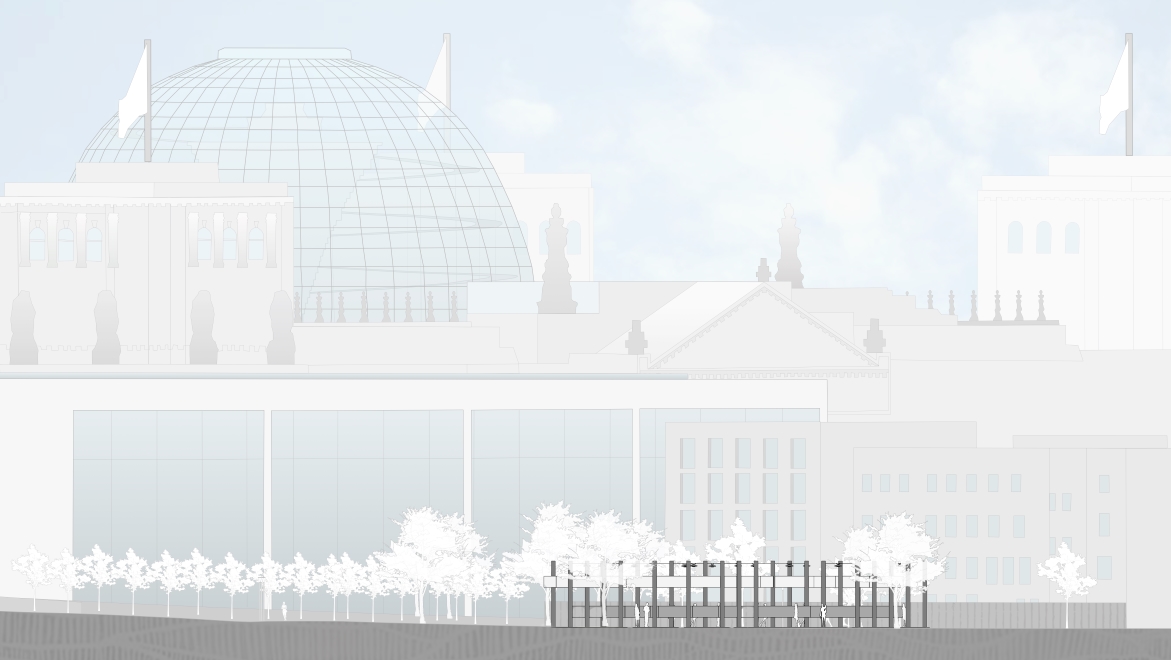
A regular grid of robust, vertical steel columns extends across the entire site. It creates a spatial field of tension that can already be perceived from a distance as a distinct presence within the park. It defines a place without completely enclosing it – simultaneously open and closed, accessible yet unsettling. As visitors approach, they are drawn into a kind of steel forest.
Only upon entering does the true character of the space begin to reveal itself.
At the lower level, dark steel bands weave through the field of columns. They interrupt sightlines, divide spaces, and deliberately block certain routes. A path that initially appears accessible suddenly comes to an end. Further movement is prevented. Visitors are forced to turn back, search, and find another way.
Movement is no longer straightforward or predictable. Views become fragmented. There is no single vantage point from which the entire structure can be fully understood. Other paths, however, remain open and eventually lead to the central place of remembrance.
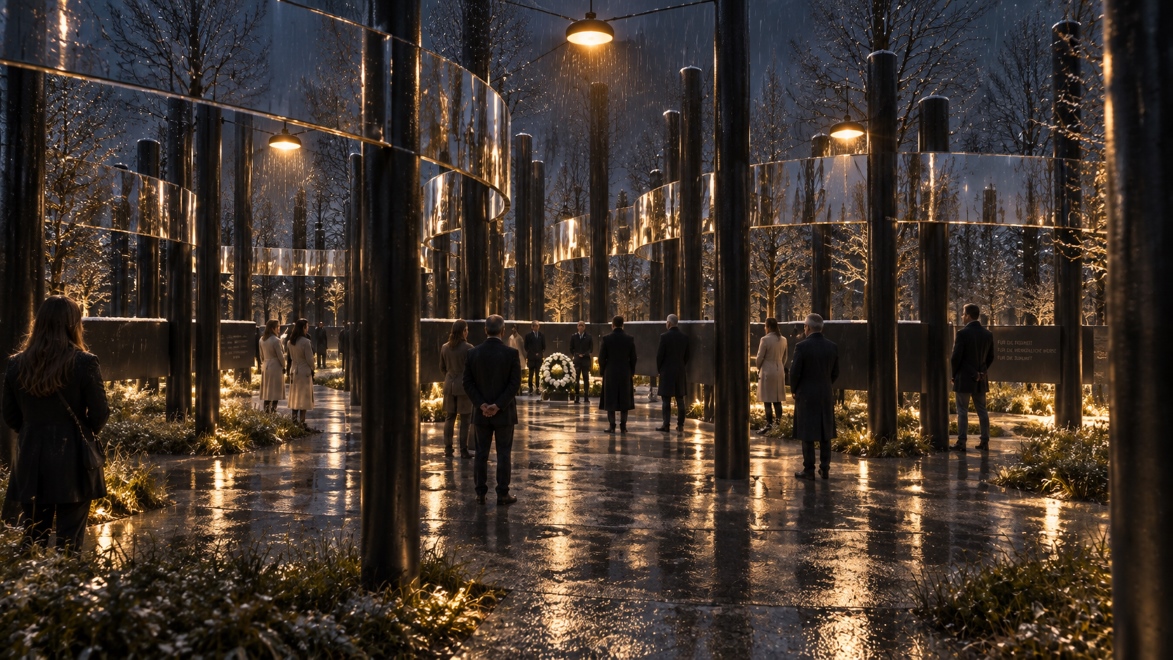
Above this darker and more restrictive world, a second system emerges. Curved bands of polished, mirror-finished stainless steel move freely through the vertical structure. They reflect daylight, the changing sky, trees, movement, and the images of other people. At night, light gives these upper bands an almost immaterial presence above the darker landscape below.
Both levels exist simultaneously.
Below lies the physical weight of history: restriction, interruption, separation, and lives that were obstructed or brought to an end by the communist dictatorship. These experiences cannot be erased. They remain present in the hard, dark materiality of the memorial.
Above, however, the space opens up. Light, reflection, and sky create a new horizon. The reflective bands direct the gaze beyond the immediate barriers – towards openness, freedom, and the future.
The memorial therefore does not end in darkness. It commemorates the reality of oppression and the lives damaged or lost as a result. At the same time, it offers visitors an experience of orientation, encounter, and hope.
The past remains physically present beneath us – while above, light and reflection open the space towards the future