Luther Monument, Berlin
Enhancement through lighting in conjunction with art and architecture
Design proposal submitted as part of the competitive bidding process for monuments and memorials; competition organizer: GRÜN BERLIN GmbH
Artistic Concept
This proposal is founded on the belief that powerful public spaces do not require many elements.
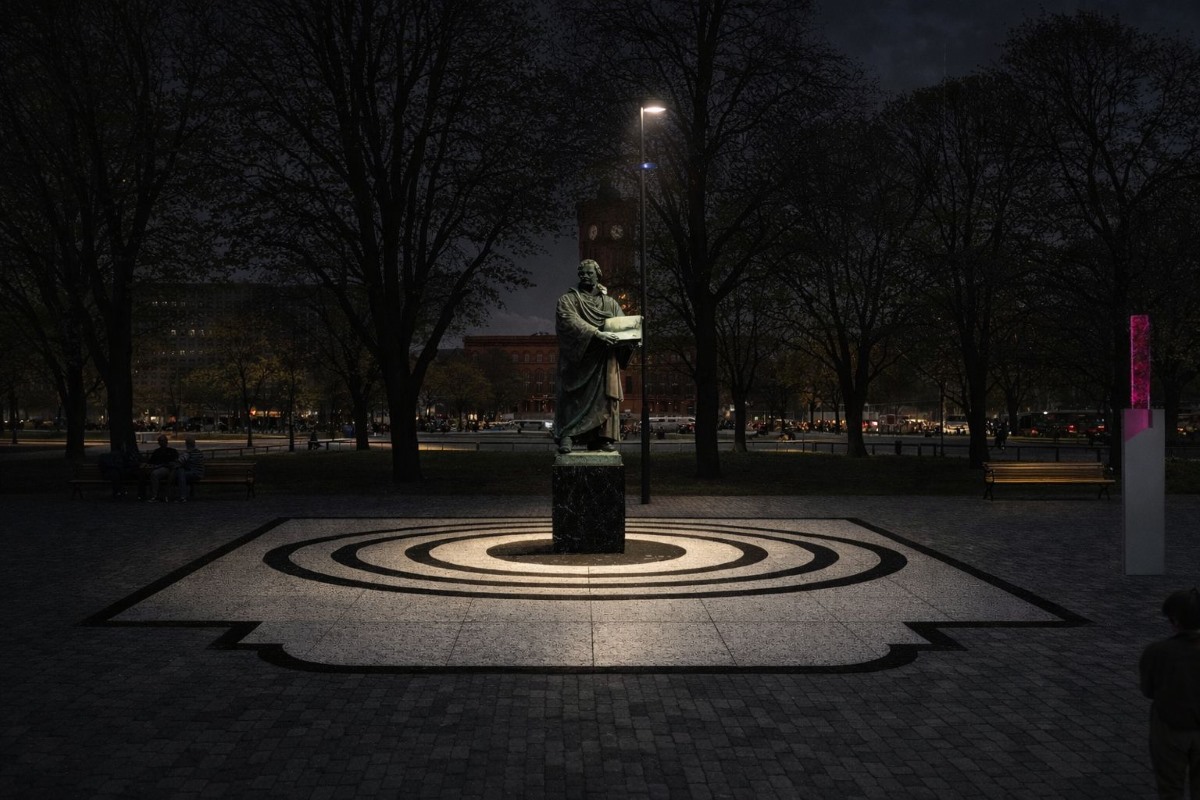
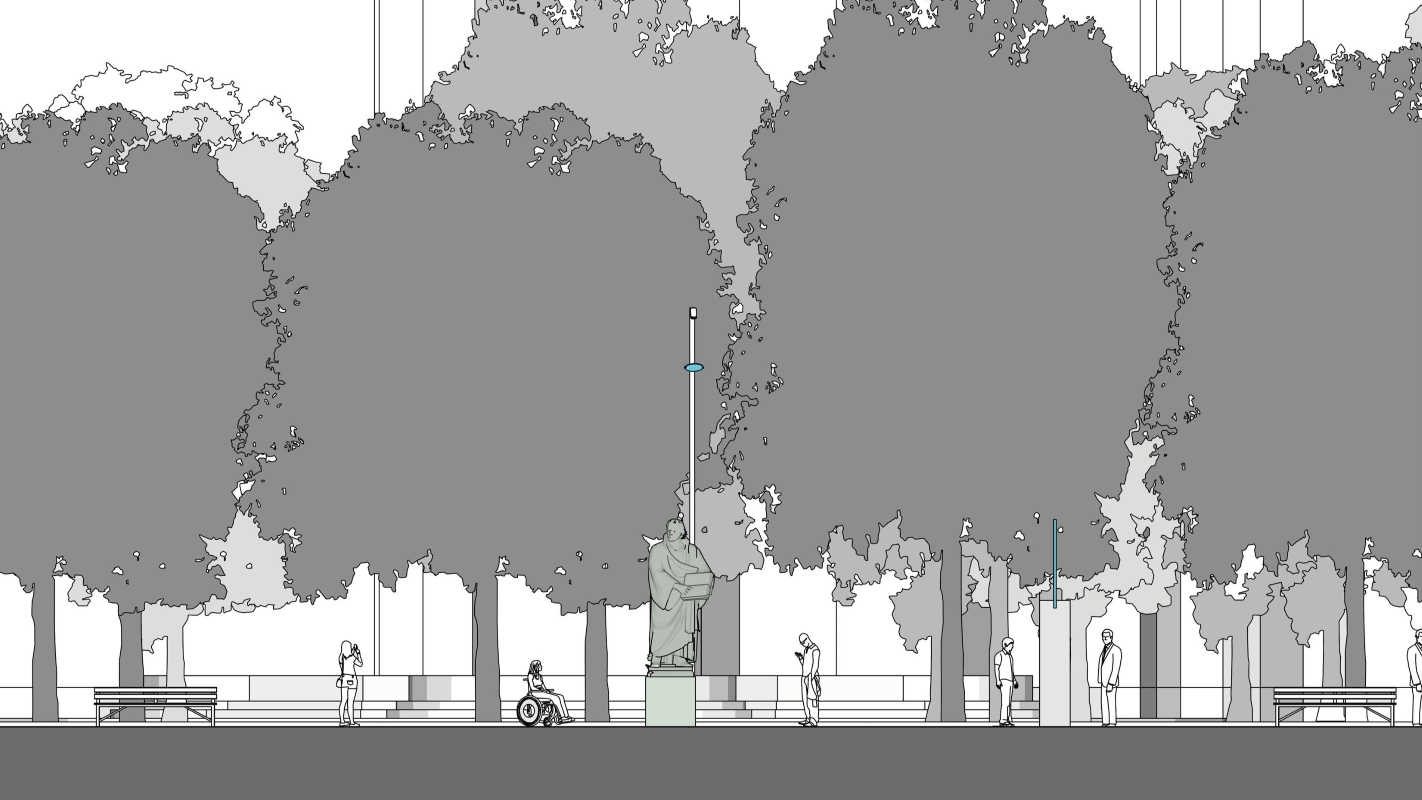
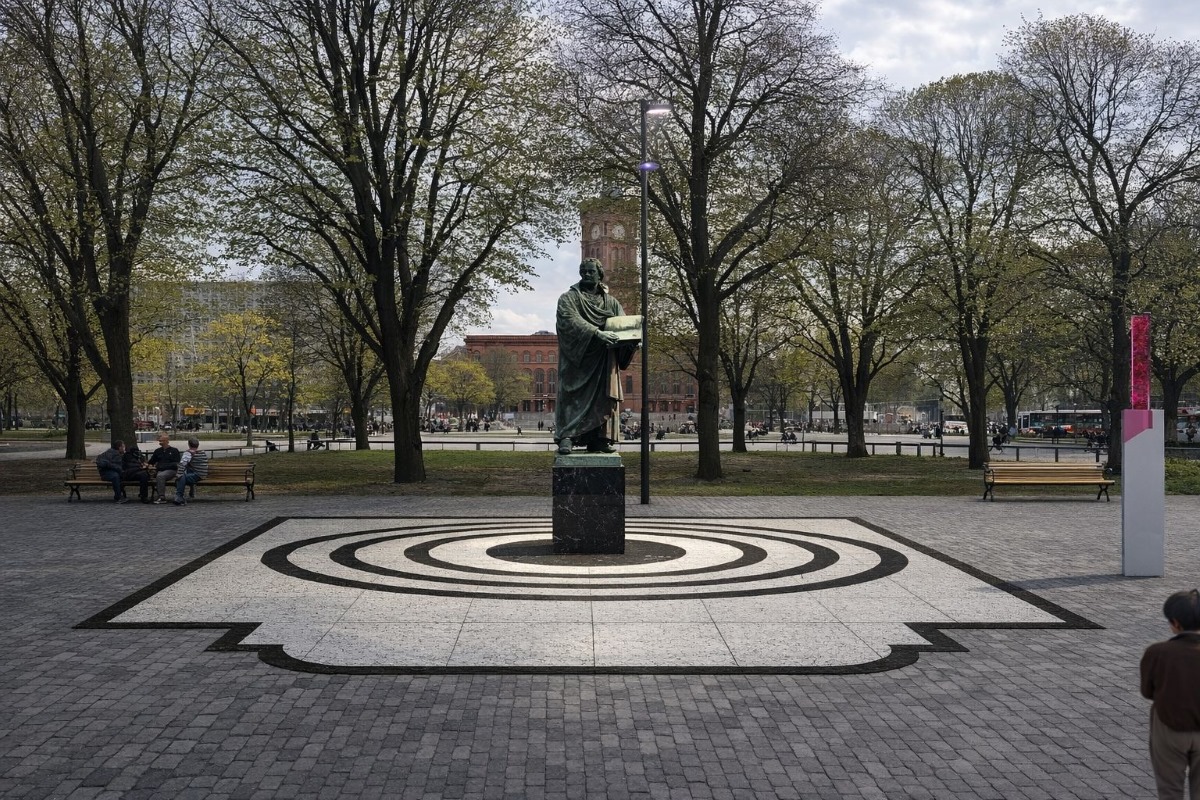
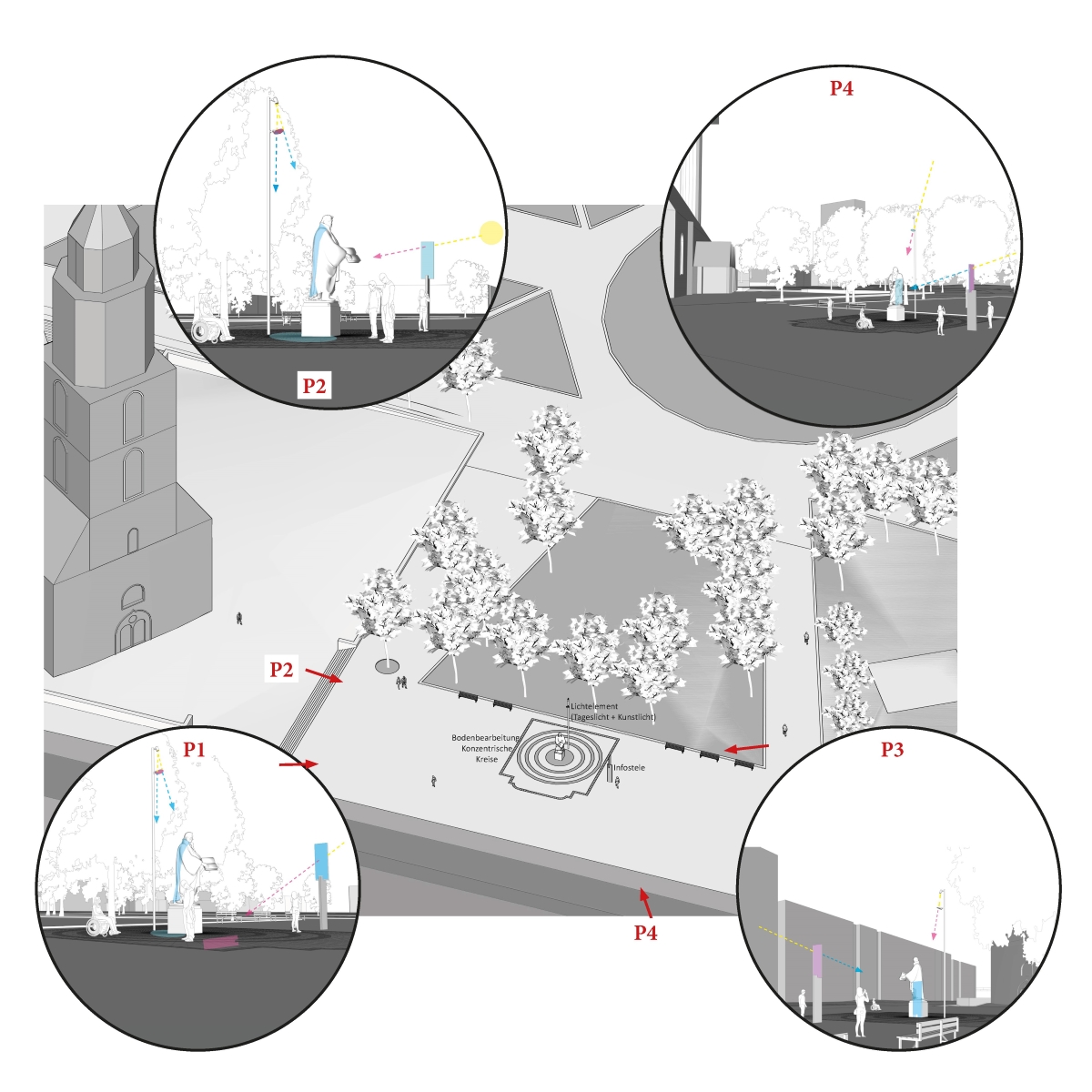
Rather than elevating Luther above the people, the monument returns him to ground level, restoring a direct human relationship. The sculpture is part of everyday life, inviting reflection rather than reverence. There are no monumental barriers, no stone seating, walls or physical obstacles that separate the figure from the public street. Instead, the design expresses the idea of Volksnähe—Luther among the people.
The intervention is composed of four elements:
- Luther
- The Ground
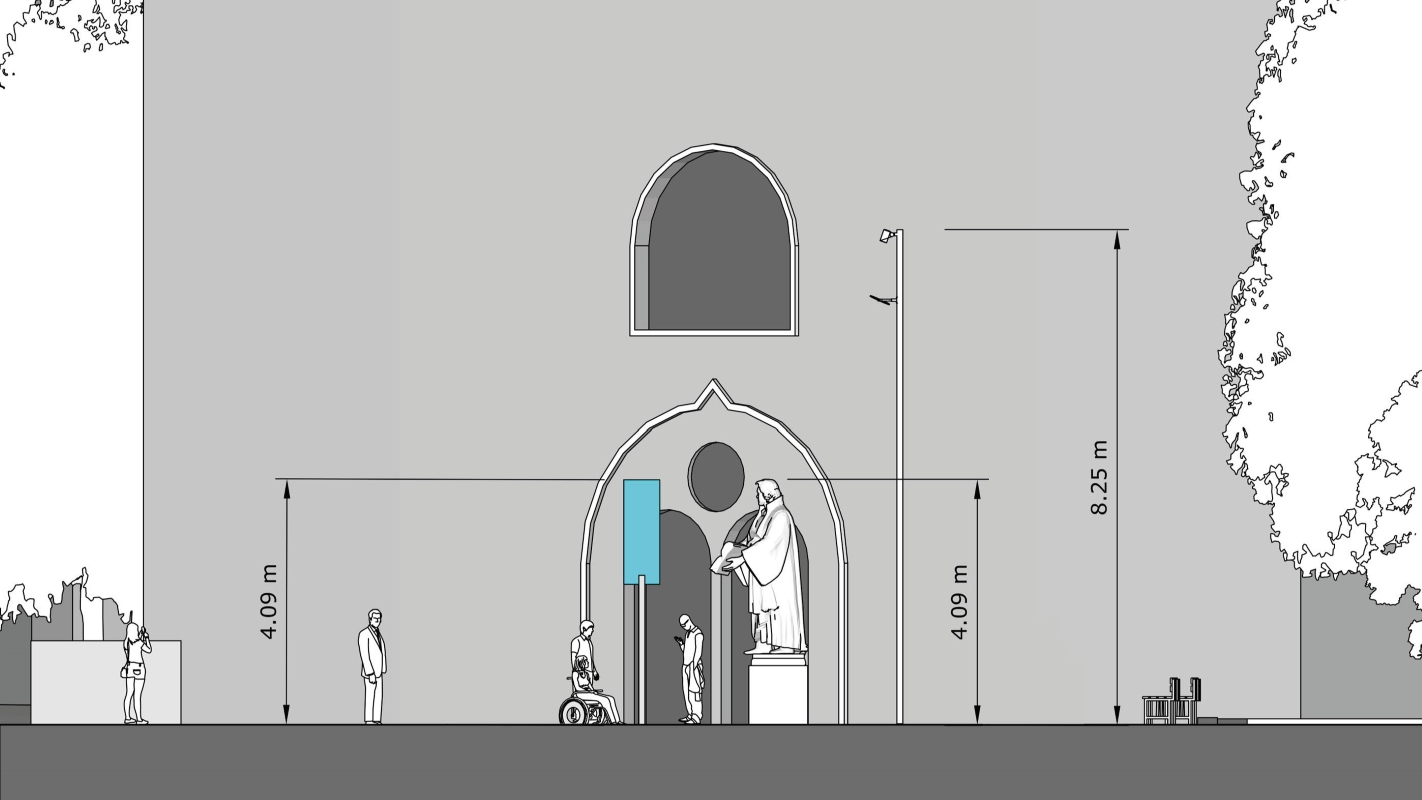
- A Light Mast
- An Information Point
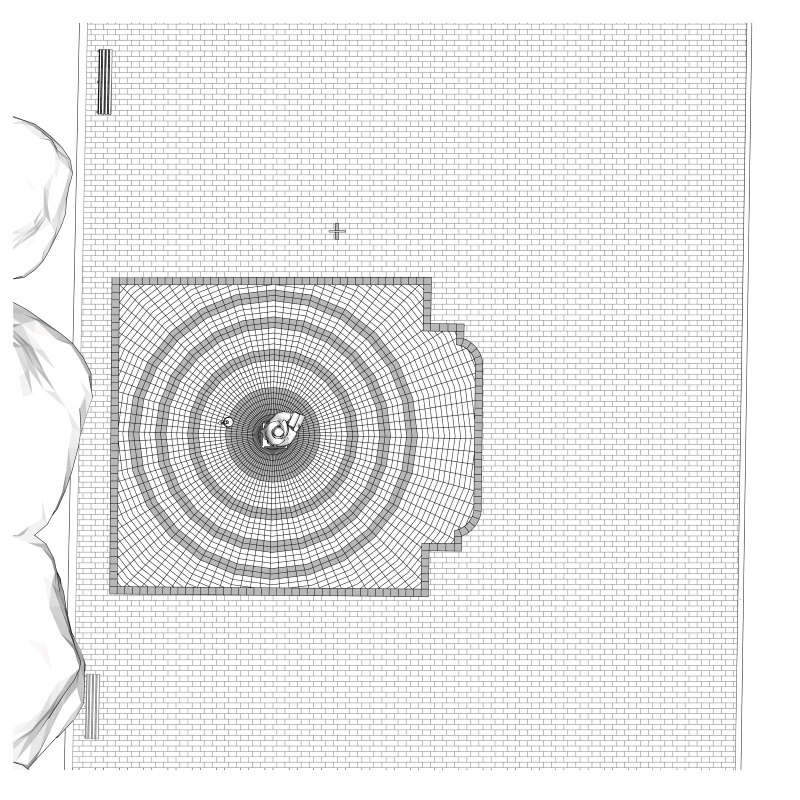
Concentric circles radiate from the monument, expressing the continuing influence of Luther’s ideas. They represent the outward expansion of his revolutionary thinking—from the individual to society, from the local to the global. The black and white stone circles suggest a pulsating energy going out from Luther’s revolutionary personality and moment in time that resonates today and into the future.
Light is used with precision and restraint. A single luminaire illuminates Luther’s face and the open book, drawing attention to the moment of reading. It symbolises the light of the Reformation—the illumination of knowledge, language and individual thought. Here, light becomes more than illumination; it becomes the medium through which an idea continues to be heard and seen across time.
The illuminated information point provides historical interpretation through text and QR access to further digital content. Its dichroic glass changes continuously with daylight, weather and the movement of the observer, while after dark it becomes a quiet beacon within the square. The monument is therefore never static, but constantly renewed through the changing qualities of natural and artificial light and movement of the viewer.
The result is a place of reflection that is historically sensitive, spatially calm and unmistakably contemporary—a restrained intervention where architecture, art and light work together to make history present and access